Saguaro Cactus
Carnegiea gigantea
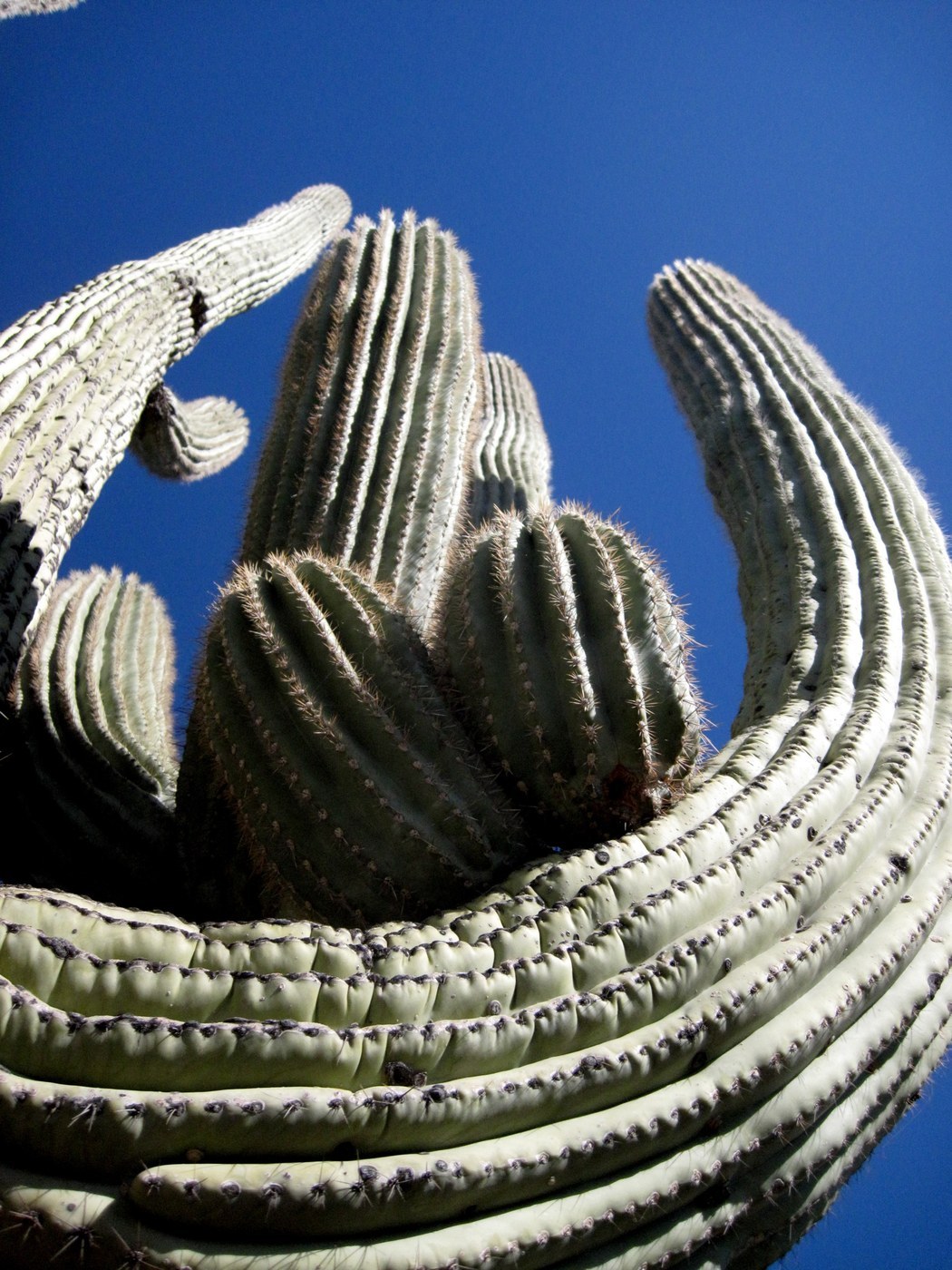
The saguaro is the iconic giant columnar cactus of the Sonoran Desert, growing into a towering tree-like form with upraised arms. It is slow-growing and extraordinarily long-lived, reaching well over 150 years.
- Light
- Full, intense sun
- Water
- Very rarely; drought-adapted
- Difficulty
- Moderate
Got a plant like this?
Identify any plant from a photo, free.
Overview
The saguaro (Carnegiea gigantea) is the largest cactus in the United States and a defining symbol of the American Southwest. A mature plant can exceed 40 feet tall and weigh several tons when full of stored water.
Growth is famously slow: a saguaro may be only an inch tall after a decade and does not grow its first arm until 50 to 75 years of age. Plants can live 150 to 200 years.
Its internal skeleton of woody ribs supports the massive pleated stem, which expands and contracts like an accordion to store water from infrequent desert rains.
How to identify it
- Massive columnar, tree-like stem, ribbed and accordion-pleated
- Mature plants develop characteristic upward-curving arms
- Stems are covered in clusters of stiff grey spines along the ribs
- White, waxy, night-opening flowers crown the stem tips in late spring (Arizona's state flower)
- Followed by red, fleshy fruit filled with tiny black seeds
Care & growing
- Light: Full, intense sun; it cannot tolerate shade
- Water: Extremely drought-tolerant; in cultivation water deeply but very infrequently, and almost never in winter
- Soil: Sharp-draining mineral, sandy or gravelly mix
- Temperature: Loves heat; tolerates light frost but is damaged by hard freezes
- Feeding: Minimal; a light cactus feed in summer
- Propagation: Grown from seed; germination is easy but growth is extraordinarily slow
Habitat & origin
Endemic to the Sonoran Desert, spanning southern Arizona, a sliver of southeastern California, and the Mexican state of Sonora. It is protected by law in Arizona.
It grows on rocky desert slopes and flats, often relying on 'nurse trees' like palo verde to shelter seedlings. Saguaro National Park near Tucson preserves vast stands of these cacti.
Frequently asked questions
How fast does a saguaro grow?
Very slowly. A seedling may be just one to two inches tall after ten years, and it can take 50 to 75 years before the first arm appears.
Is it legal to remove a saguaro?
No. In Arizona saguaros are protected, and harvesting, moving, or destroying them without permits is illegal.
How long do saguaros live?
A healthy saguaro commonly lives 150 to 200 years, with the largest individuals among the oldest desert plants.
Can I grow one at home?
Yes, from seed, but expect extreme patience. They need intense sun, sharp drainage, and protection from hard frost.
Saguaro Cactus guides
In-depth guides for identifying, growing, and caring for Saguaro Cactus.
How to Care for Saguaro Cactus
Grow the iconic Saguaro Cactus (Carnegiea gigantea), a slow, majestic desert giant that demands intense sun and sharp drainage.
Saguaro Cactus Identification Guide
How to identify the giant Saguaro cactus by its towering ribbed column, upturned arms, and white night-blooming flowers of the Sonoran Desert.