Tiger Jaws
Faucaria tigrina
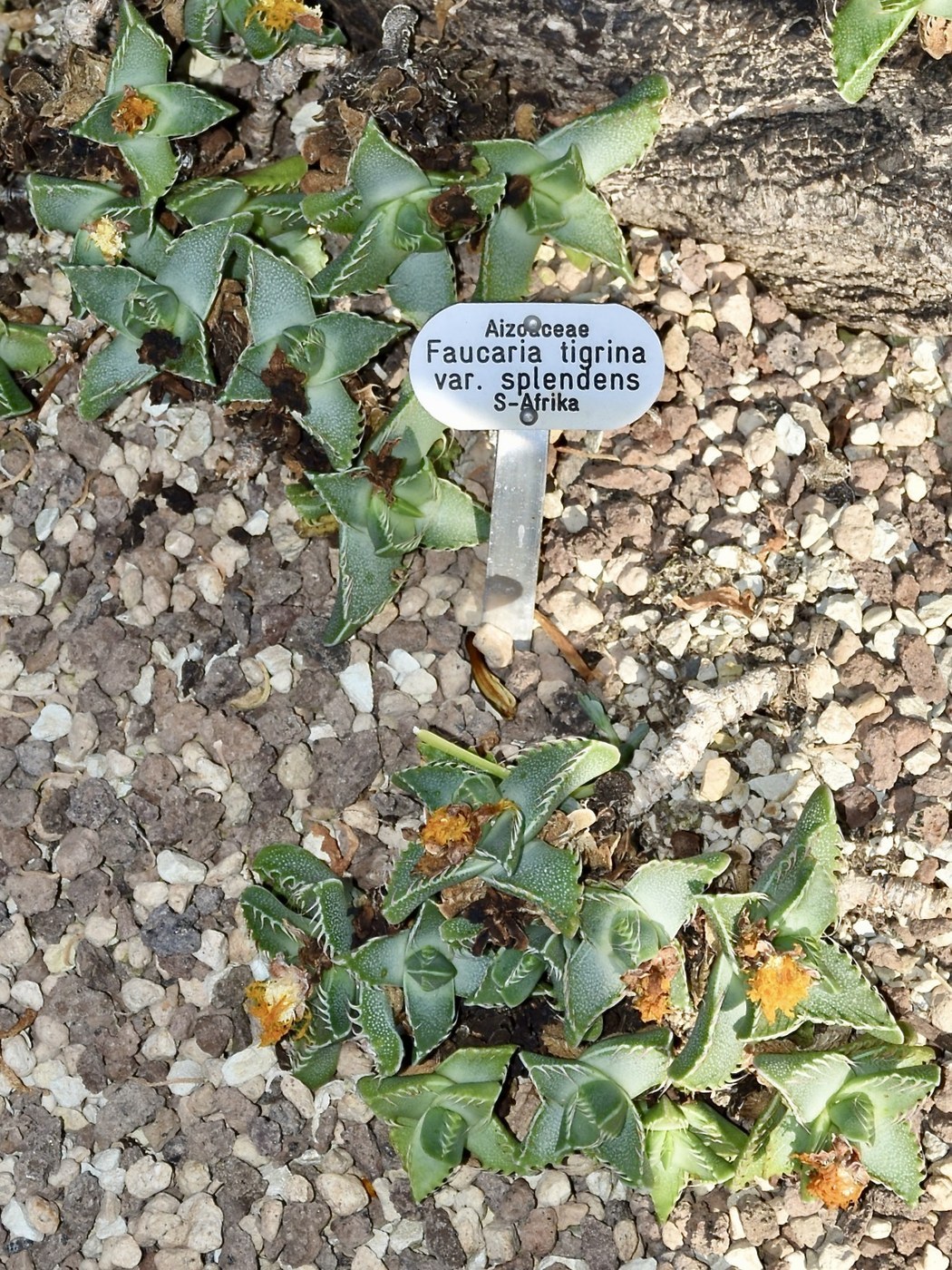
A small clumping succulent with paired, triangular fleshy leaves edged in soft, tooth-like spines that resemble a tiger's open jaws. It produces large golden-yellow daisy-like flowers in autumn.
- Light
- Bright light to full sun
- Water
- Sparingly; let soil dry fully
- Difficulty
- Easy
Got a plant like this?
Identify any plant from a photo, free.
Overview
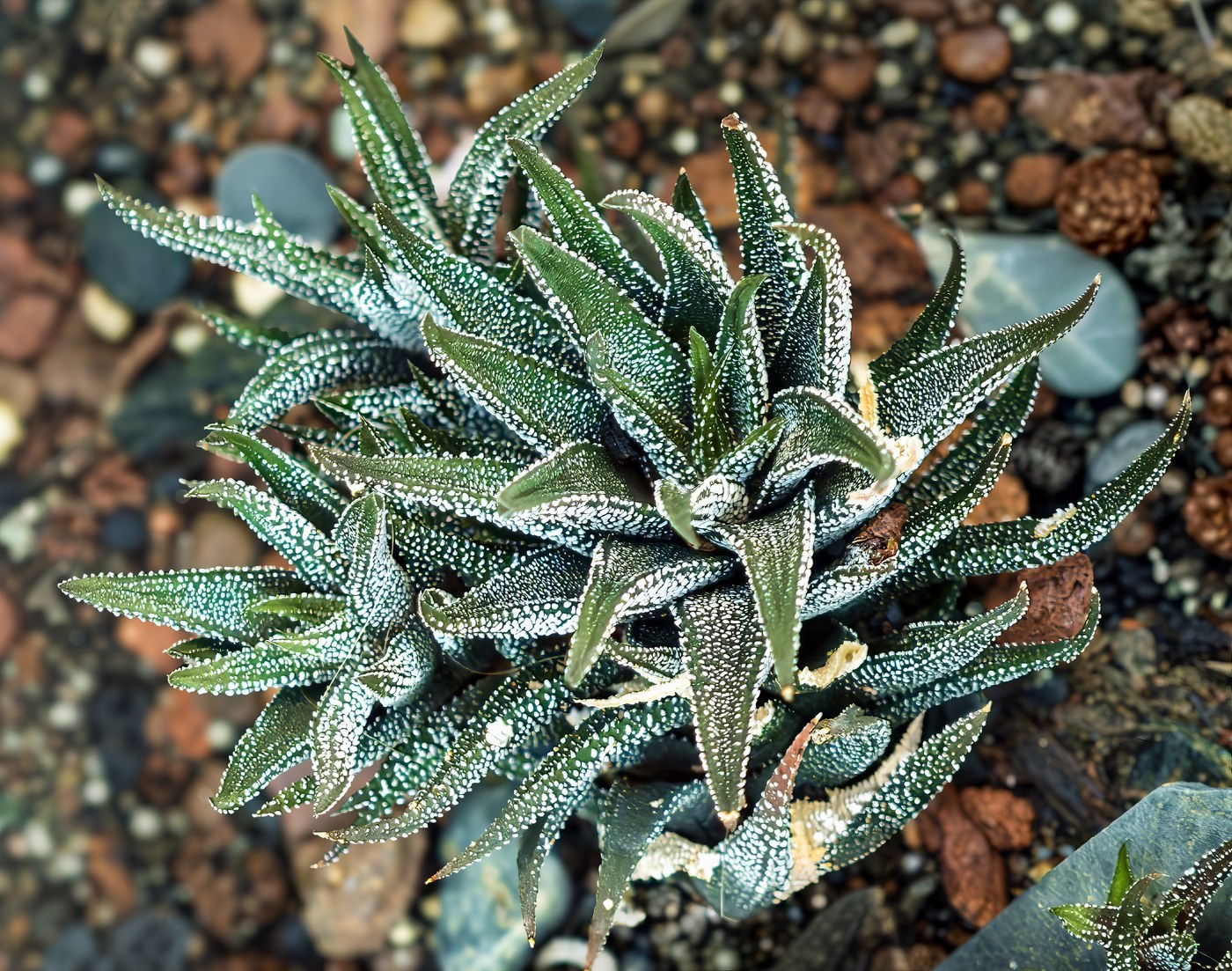
Tiger Jaws is a low-growing South African succulent named for its menacing-looking but harmless foliage: pairs of thick, triangular, grey-green leaves lined with soft, recurved, tooth-like projections along their edges, giving the look of a tiger's open jaws.
The leaves are often speckled with tiny white dots. In autumn the plant rewards growers with surprisingly large, bright golden-yellow, daisy-like flowers that open in the afternoon sun.
Compact, slow, and tough, it stays small enough for a windowsill and is one of the more forgiving succulents for beginners.
How to identify it
- Leaves: Thick, triangular, grey-green, arranged in opposite pairs forming a clump; edges lined with soft, hair-like teeth
- Spots: Surfaces often dotted with small raised white flecks
- Flowers: Large, golden-yellow, many-petaled daisy-like blooms in autumn, opening in afternoon sun
- Size: Small and clumping, usually under 6 in (15 cm) tall
- The 'teeth' are soft and harmless despite the fierce appearance
Care & growing
Light: Bright light to full sun encourages compact growth and flowering.
Water: Water only when the soil is completely dry; very drought tolerant and prone to rot if overwatered. Keep nearly dry in winter.
Soil: Gritty, fast-draining cactus or succulent mix.
Temperature: Warm in growth; tolerates cool, dry winters and helps trigger autumn flowering.
Feeding: Light succulent fertilizer once during the growing season.
Propagation: From division of clumps, leaf cuttings, or seed.
Habitat & origin
Faucaria tigrina is native to the Eastern Cape of South Africa, where it grows in rocky, well-drained, semi-arid grassland and scrub.
It is grown worldwide as a compact ornamental succulent, well suited to small pots and bright windowsills.
Frequently asked questions
Are the teeth on Tiger Jaws sharp?
No. Despite the fearsome look, the tooth-like edges are soft and harmless to handle.
When does Tiger Jaws bloom?
It produces large golden-yellow daisy-like flowers in autumn, which open in the warmth of afternoon sun.
How often should I water it?
Only when the soil is fully dry. It is very drought tolerant and rots easily if kept too wet, especially in winter.
How do I propagate Tiger Jaws?
Divide established clumps, take leaf cuttings, or grow from seed; division is the easiest and most reliable method.
Tiger Jaws guides
In-depth guides for identifying, growing, and caring for Tiger Jaws.
How to Care for Tiger Jaws
A distinctive clumping succulent with toothed, jaw-like leaves that thrives in bright light and needs only sparing water.
Tiger Jaws Identification Guide
Identify Tiger Jaws (Faucaria tigrina) by its paired triangular leaves edged with soft, tooth-like spines that look like a snapping jaw.