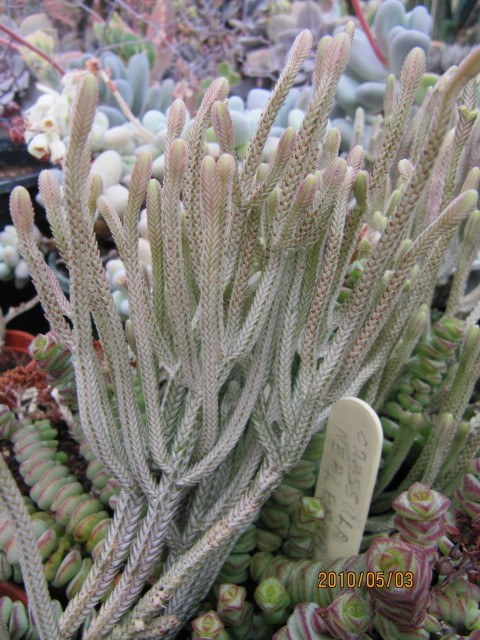
String of Buttons
Crassula perforata
An easy succulent whose triangular leaves are stacked in pairs around the stem, looking like buttons threaded on a string. Forms tidy spirals that sprawl and trail as they lengthen.
- Light
- Bright light, some direct sun
- Water
- When soil is dry; drought tolerant
- Difficulty
- Easy
Got a plant like this?
Identify any plant from a photo, free.
Overview
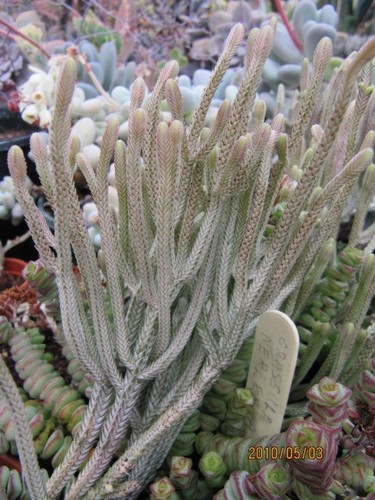
String of Buttons is a popular South African succulent named for the way its paired, triangular leaves clasp the stem in evenly stacked tiers, resembling buttons strung along a cord. The stem appears to pierce through the center of each leaf pair.
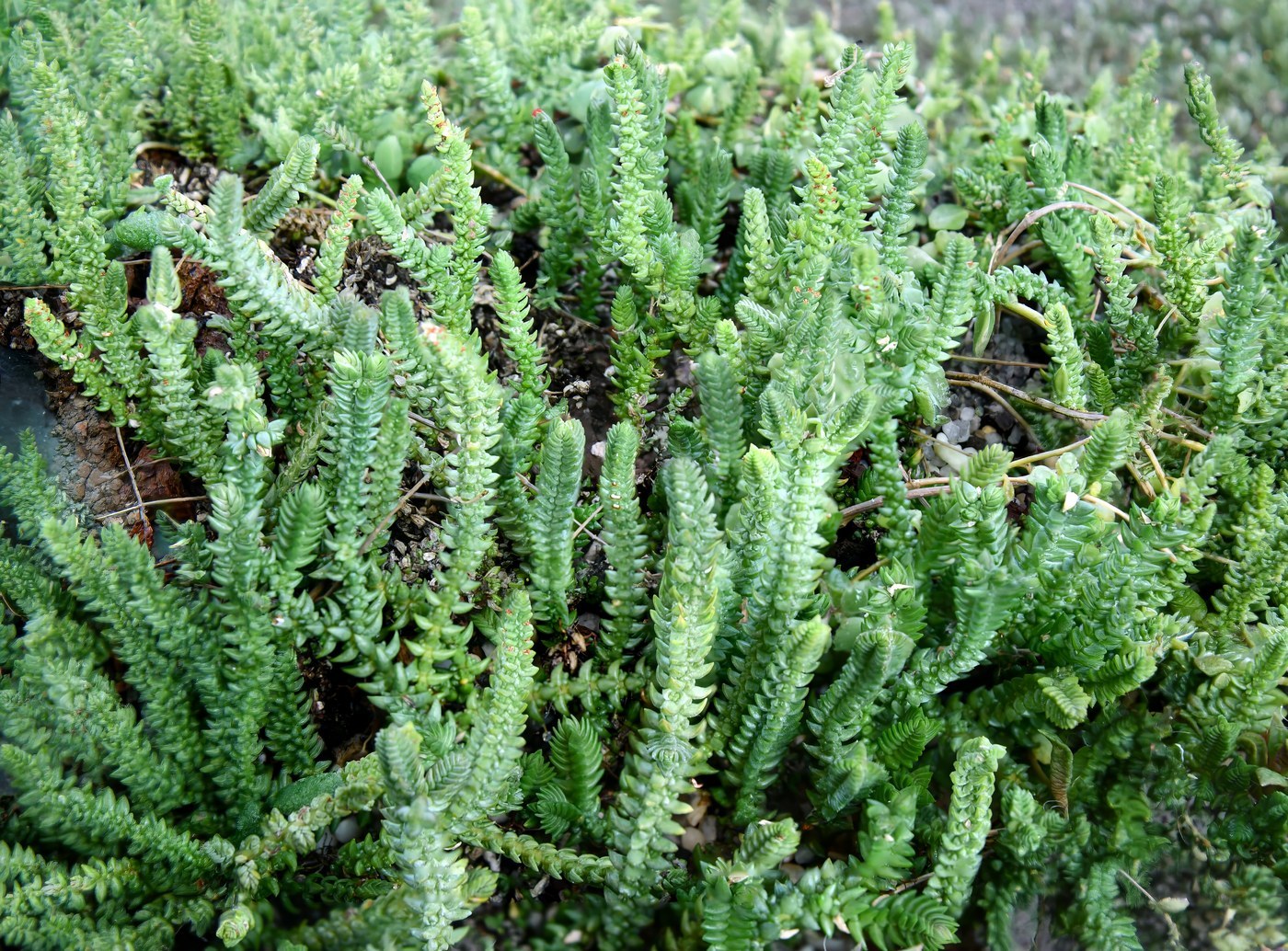
Leaves are gray-green and often edged in pink or red, with color deepening in bright light and cooler weather. The stems grow upright at first, then arch and trail with age, making it well suited to both pots and hanging displays.
It is one of the easier crassulas to grow, tolerating neglect and propagating readily from cuttings.
How to identify it
- Leaves: Triangular to wedge-shaped, gray-green, stacked in opposite pairs that rotate up the stem in a spiral
- Stem: Appears threaded through the center of each leaf pair, creating the 'buttons on a string' look
- Color: Edges flush pink to red in strong light or cool temperatures
- Flowers: Small, pale yellow to white star-shaped flowers in clusters
- Size: Stems reach about 8-18 in, upright then sprawling
Care & growing
Light: Bright light with some direct sun keeps it compact and brings out edge color; low light causes stretching with spaced-out leaves.
Water: Water thoroughly when the soil is dry, then let it dry again. Highly drought tolerant.
Soil: Gritty, fast-draining succulent or cactus mix.
Temperature: Warm to average room temperatures; protect from frost.
Feeding: Optional light feeding in the growing season.
Propagation: Very easy from stem cuttings or individual segments laid on dry mix.
Habitat & origin
Native to South Africa and Mozambique, where it grows in rocky, well-drained sites in scrubland and on slopes, often in bright, exposed conditions.
Widely cultivated worldwide as an undemanding houseplant and outdoor succulent in frost-free climates, popular in dish gardens and hanging arrangements.
Frequently asked questions
Why are my plant's leaves spaced far apart?
That stretching (etiolation) means it needs more light. Move it to a brighter spot to keep new growth tightly stacked.
How do I propagate it?
Snip a stem segment, let the cut end callus for a day, then lay it on dry succulent mix; roots form readily.
Why are the leaf edges turning red?
That is a healthy stress response to bright light and cool temperatures, not a problem; it intensifies the plant's color.
Does it flower?
Yes, mature plants produce small clusters of pale yellow-white star-shaped flowers, often in late winter to spring.
String of Buttons guides
In-depth guides for identifying, growing, and caring for String of Buttons.