Whale's Tongue Agave
Agave ovatifolia
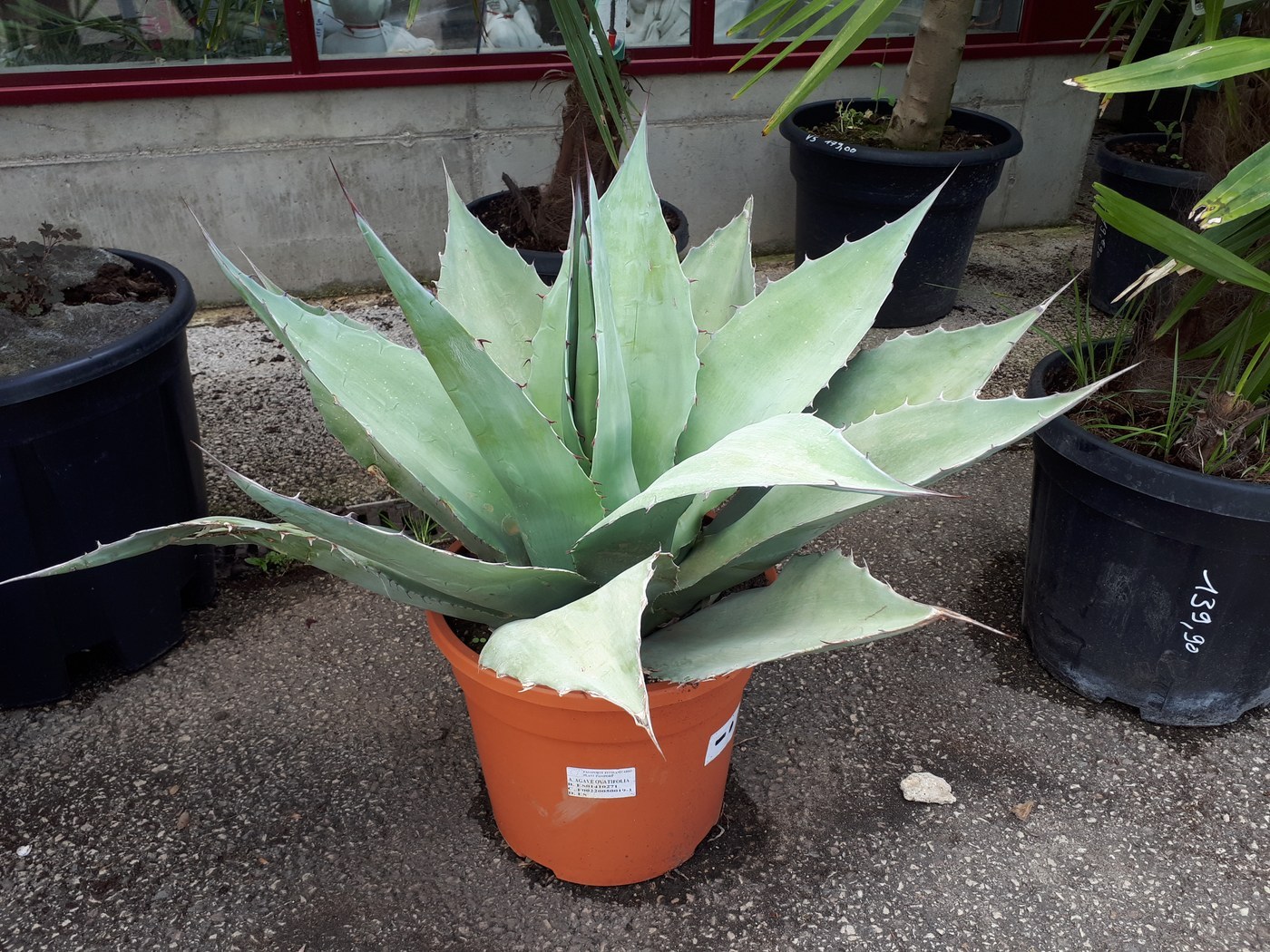
A bold, symmetrical agave with wide, cupped, powdery blue-gray leaves resembling a whale's tongue. A cold-hardy, architectural centerpiece for dry gardens.
- Light
- Full sun
- Water
- Sparingly; very drought tolerant
- Difficulty
- Easy
Got a plant like this?
Identify any plant from a photo, free.
Overview
Whale's Tongue Agave is a large, handsome agave forming a broad, symmetrical rosette of unusually wide, cupped, powdery blue-gray leaves. The broad, spoon-like leaves give rise to the common name.
Native to a limited area of northeastern Mexico, it was only formally described in 2002 yet quickly became a landscape favorite for its striking form and notable cold hardiness compared with many other large agaves.
The leaf margins bear regular teeth and each leaf ends in a stout spine. After many years a mature plant produces a towering flower spike, then the rosette dies, typically leaving few or no offsets.
How to identify it
- Leaves: Very broad, cupped or spoon-shaped, powdery blue-gray (glaucous), with toothed margins and a stout terminal spine
- Rosette: Large, dense, symmetrical, typically 3-5 ft wide
- Flower spike: Massive, tall (10-15+ ft) candelabra-like spike of greenish-yellow flowers
- Habit: Usually solitary, producing few offsets
- Hardiness: Among the more cold-tolerant large agaves
Care & growing
Light: Full sun for the best form and color.
Water: Water sparingly; very drought tolerant once established and rot-prone if overwatered.
Soil: Well-draining gritty or sandy soil.
Temperature: Notably cold hardy for a large agave, tolerating brief temperatures into the low teens Fahrenheit when dry.
Feeding: Minimal.
Propagation: Mainly from seed, as it offsets sparingly; bulbils may form on the spent flower stalk.
Habitat & origin
Native to a restricted region of northeastern Mexico, chiefly the Sierra de Lima and surrounding mountains of Nuevo Leon, where it grows on grassy, rocky slopes at moderate to high elevation.
Its montane origin gives it greater cold tolerance, and it is now widely grown as an ornamental in temperate and Mediterranean dry gardens worldwide.
Frequently asked questions
Why is it called whale's tongue agave?
Its broad, wide, cupped blue-gray leaves resemble the shape of a whale's tongue.
How cold hardy is it?
It is among the more cold-tolerant large agaves, surviving brief dips into the low teens Fahrenheit when kept dry.
How big does it get?
The rosette typically reaches 3-5 ft wide, and the flower spike can soar 10-15 ft or more.
Does it produce pups?
It offsets only sparingly and is usually solitary, so it is most often propagated from seed.
Whale's Tongue Agave guides
In-depth guides for identifying, growing, and caring for Whale's Tongue Agave.
How to Care for Whale's Tongue Agave
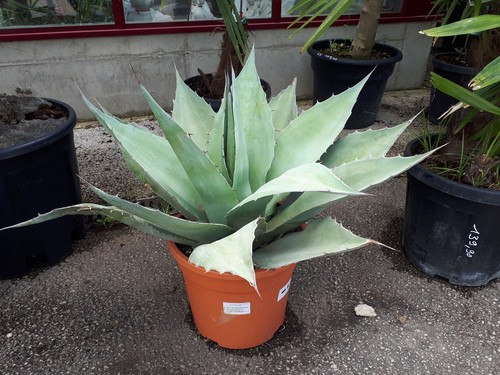
A striking cold-hardy agave with broad blue-gray leaves; give it full sun, sharp drainage, and infrequent water for an easy, sculptural specimen.
Whale's Tongue Agave Identification Guide
Identify the Whale's Tongue Agave (Agave ovatifolia) by its wide, cupped, powdery blue-gray leaves forming a large symmetrical rosette with toothed margins.