
How to Care for Whale's Tongue Agave
A striking cold-hardy agave with broad blue-gray leaves; give it full sun, sharp drainage, and infrequent water for an easy, sculptural specimen.
Read the full Whale's Tongue Agave encyclopedia entry →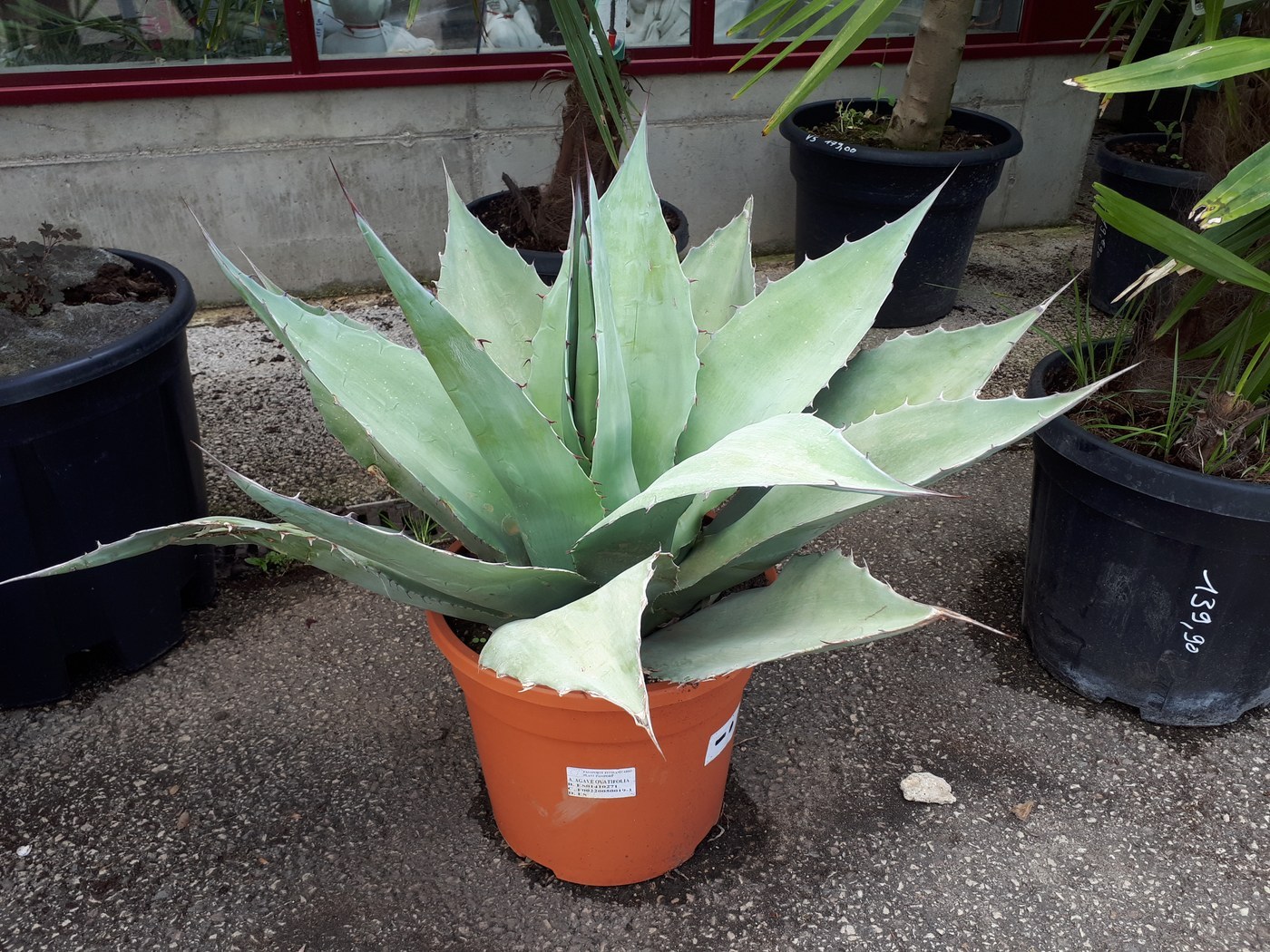
Whale's Tongue Agave (Agave ovatifolia) is a bold, symmetrical succulent forming a solitary rosette of wide, cupped, powdery blue-gray leaves that resemble a whale's tongue. Among the most cold-hardy and easy-going agaves, it makes a low-maintenance architectural centerpiece for dry gardens and containers.
Light
Grow in full sun for the tightest, most symmetrical rosette and the best blue coloration. It accepts at least 6 or more hours of direct light and thrives in blazing exposures. In deep shade the rosette loosens, leaves stretch, and the color fades. Indoors, place at the brightest possible window.
Water
Water sparingly; this is a very drought-tolerant plant. Soak deeply only when the soil has dried out completely, roughly every 2 to 4 weeks in the heat of summer and far less in cooler months. During winter dormancy water minimally. The most common mistake is overwatering, which rots the crown and roots. When in doubt, keep it dry.
Soil & Potting
Use a gritty, fast-draining mineral soil. A cactus and succulent mix amended with extra pumice, perlite, or coarse sand is ideal. In the garden it tolerates poor, rocky ground as long as water drains freely. For containers choose a wide, heavy pot with generous drainage holes to balance the top-heavy rosette and prevent tipping.
Humidity & Temperature
Agave ovatifolia prefers warm, dry air and is notably cold hardy for an agave, tolerating temperatures down to about 0 to 10 F once established, roughly USDA zones 7b through 11. It dislikes prolonged humidity and wet cold, which invite rot, so ensure excellent drainage where winters are damp.
Feeding
Feeding is largely optional. A single light application of a dilute, low-nitrogen or balanced succulent fertilizer in spring supports steady growth. Avoid heavy feeding, which produces soft, weak leaves and can distort the clean rosette form. Established landscape plants generally need no fertilizer at all.
Propagation
Unlike many agaves, Agave ovatifolia is mostly solitary and offsets sparingly, so pups are less common. When offsets do form at the base they can be separated once they have some roots, allowed to callus for a few days, then potted in dry succulent mix. It can also be grown from seed after the plant's once-in-a-lifetime flowering, though seedlings are slow.
Repotting / Pruning
Repot container plants only every few years when the rosette outgrows its pot, handling the stiff, sometimes spine-tipped leaves with care. No routine pruning is needed; simply trim away the occasional dried or damaged lower leaf at the base to keep the form crisp. Do repotting in the warm growing season so roots re-establish quickly.
Common Problems & Pests
Root and crown rot from overwatering or poor drainage is the primary threat, especially in cold, wet winters. Agave snout weevil can bore into the core and cause sudden collapse. Scale and mealybugs may lodge between leaves; treat promptly. Water pooling in the central cup during cold weather can cause rot, so site the plant where it drains and dries.
Seasonal Care Tips
Water most in the warm growing season and taper off sharply in fall. Keep the plant dry and protected from prolonged freezing wet through winter; in borderline zones improve drainage or grow in a container that can be sheltered. Resume normal watering and any light feeding in spring as growth restarts.
Frequently asked questions
How cold hardy is Whale's Tongue Agave?
It is one of the most cold-hardy agaves, tolerating roughly 0 to 10 F once established, about USDA zones 7b to 11. The key in cold regions is sharp drainage and dry roots, since wet cold causes far more damage than the cold itself.
How often should I water it?
Sparingly. Soak deeply only after the soil has fully dried, roughly every 2 to 4 weeks in summer heat and much less in cool months. Overwatering is the main cause of failure, so err on the dry side.
Does Whale's Tongue Agave produce pups?
It is largely solitary and offsets only sparingly, so pups are uncommon compared with other agaves. When they do appear at the base, separate rooted offsets, let them callus, and pot in dry succulent mix.
Why is my agave's center turning soft or brown?
A soft, browning crown usually means rot from overwatering, water pooling in the central cup, or snout weevil damage. Improve drainage, avoid overhead water in cold weather, and inspect the core for weevil activity.