Snake Plant
Dracaena trifasciata
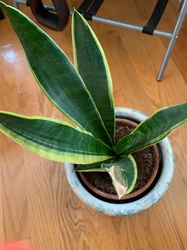
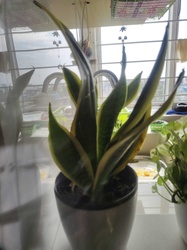
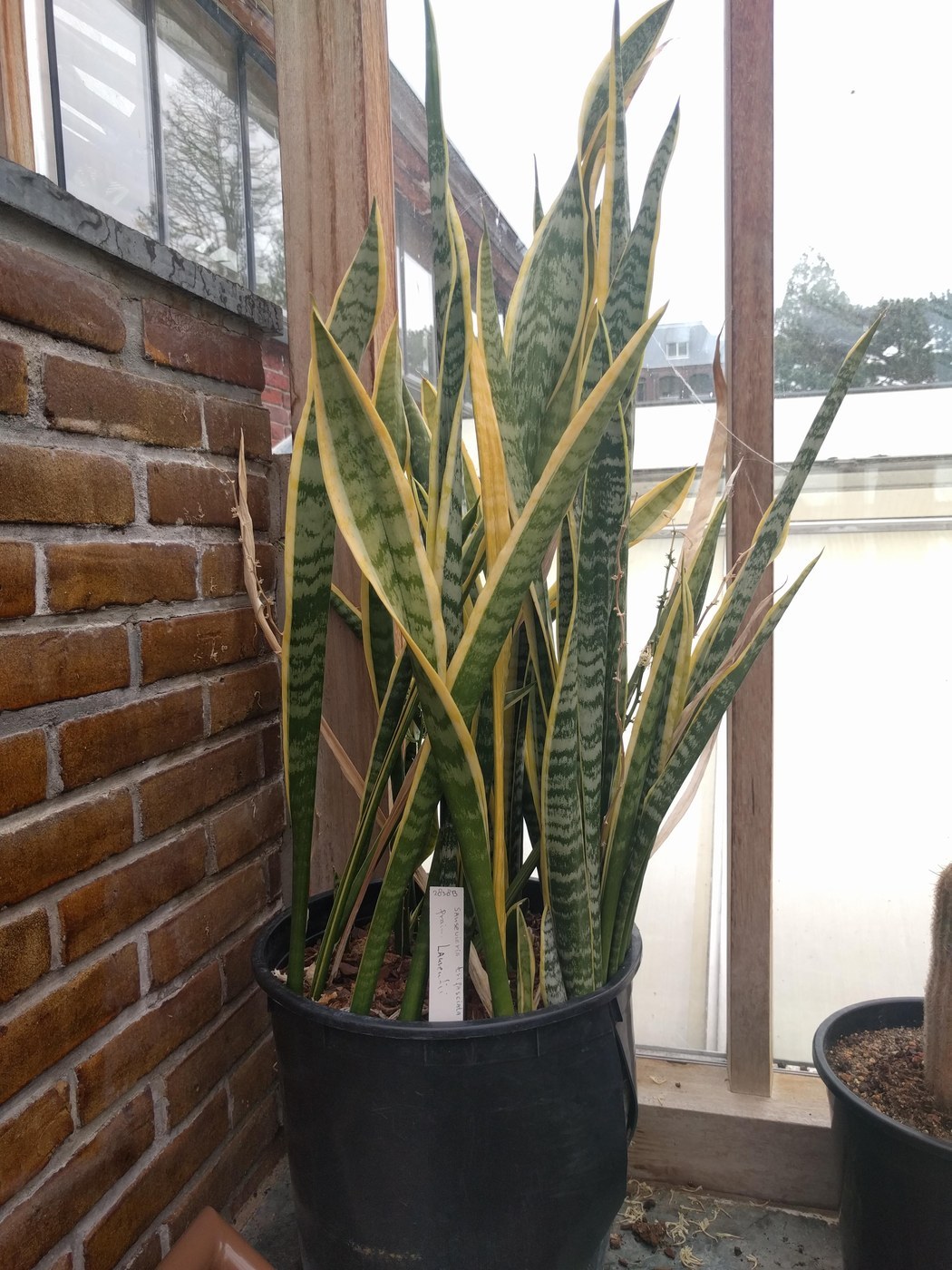
The snake plant is a tough, drought-tolerant succulent with stiff, upright sword-shaped leaves banded in green and yellow. It thrives on neglect and tolerates low light, making it one of the most beginner-friendly houseplants available.
- Light
- Low to bright indirect light
- Water
- Sparingly; let soil dry fully
- Difficulty
- Easy
Got a plant like this?
Identify any plant from a photo, free.
Overview
The snake plant, long known as Sansevieria trifasciata and now reclassified as Dracaena trifasciata, is an evergreen perennial native to tropical West Africa. It forms dense clumps of rigid, upright leaves that grow from a creeping underground rhizome.
It is celebrated for being nearly indestructible — surviving low light, irregular watering, and a wide range of temperatures. The popular cultivar 'Laurentii' is edged with bright yellow margins.
With its bold vertical form and striking banded foliage, it is a longtime favorite as an easy-care indoor accent.
How to identify it
- Leaves: Stiff, erect, sword-shaped leaves up to 2-4 feet tall, dark green with light gray-green horizontal banding; many cultivars have yellow margins
- Habit: Clumping, upright rosettes spreading by underground rhizomes
- Texture: Thick, succulent, leathery leaves with a sharp pointed tip
- Flowers: Occasionally produces fragrant, greenish-white tubular flowers on a tall spike
- Size: Typically 1-4 feet indoors depending on cultivar
Care & growing
Light: Extremely adaptable — tolerates low light but grows best in bright, indirect light.
Water: Water sparingly, only when the soil is completely dry. In winter, water once a month or less. Overwatering and root rot are the main killers.
Soil: Fast-draining cactus or succulent mix.
Temperature: Prefers 60-85°F (15-29°C); protect from frost.
Feeding: Light feeding with a diluted succulent fertilizer once or twice in the growing season.
Propagation: Divide rhizomes or root leaf cuttings in soil or water (note that variegated cultivars revert to plain green from leaf cuttings).
Habitat & origin
Dracaena trifasciata is native to the rocky, dry tropical regions of West Africa, from Nigeria east to the Congo. It grows in arid, well-drained soils and tolerates extended drought.
It is now grown worldwide as a houseplant and as a landscape plant in frost-free climates (USDA zones 9-11), where it can spread vigorously and is considered invasive in some areas.
Frequently asked questions
How often should I water a snake plant?
Only when the soil is fully dry — typically every 2-4 weeks, and even less in winter. When in doubt, wait longer.
Can it really grow in low light?
Yes, it tolerates low light better than almost any houseplant, though growth slows and colors are richer in brighter light.
Why are the leaves wrinkling or drooping?
Drooping or wrinkling usually signals either underwatering (thirsty, shriveled leaves) or overwatering and root rot (soft, mushy bases).
Snake Plant guides
In-depth guides for identifying, growing, and caring for Snake Plant.
How to Care for Snake Plant
Grow the near-indestructible Snake Plant (Dracaena trifasciata) in low to bright light with sparing water and gritty soil.
Snake Plant Identification Guide
Identify the snake plant (Dracaena trifasciata, formerly Sansevieria) by its stiff, upright, banded sword-shaped leaves and rosette growth, and distinguish it from similar succulents.
Snake Plant identified by the community
Real specimens identified with Plant Identifier.