
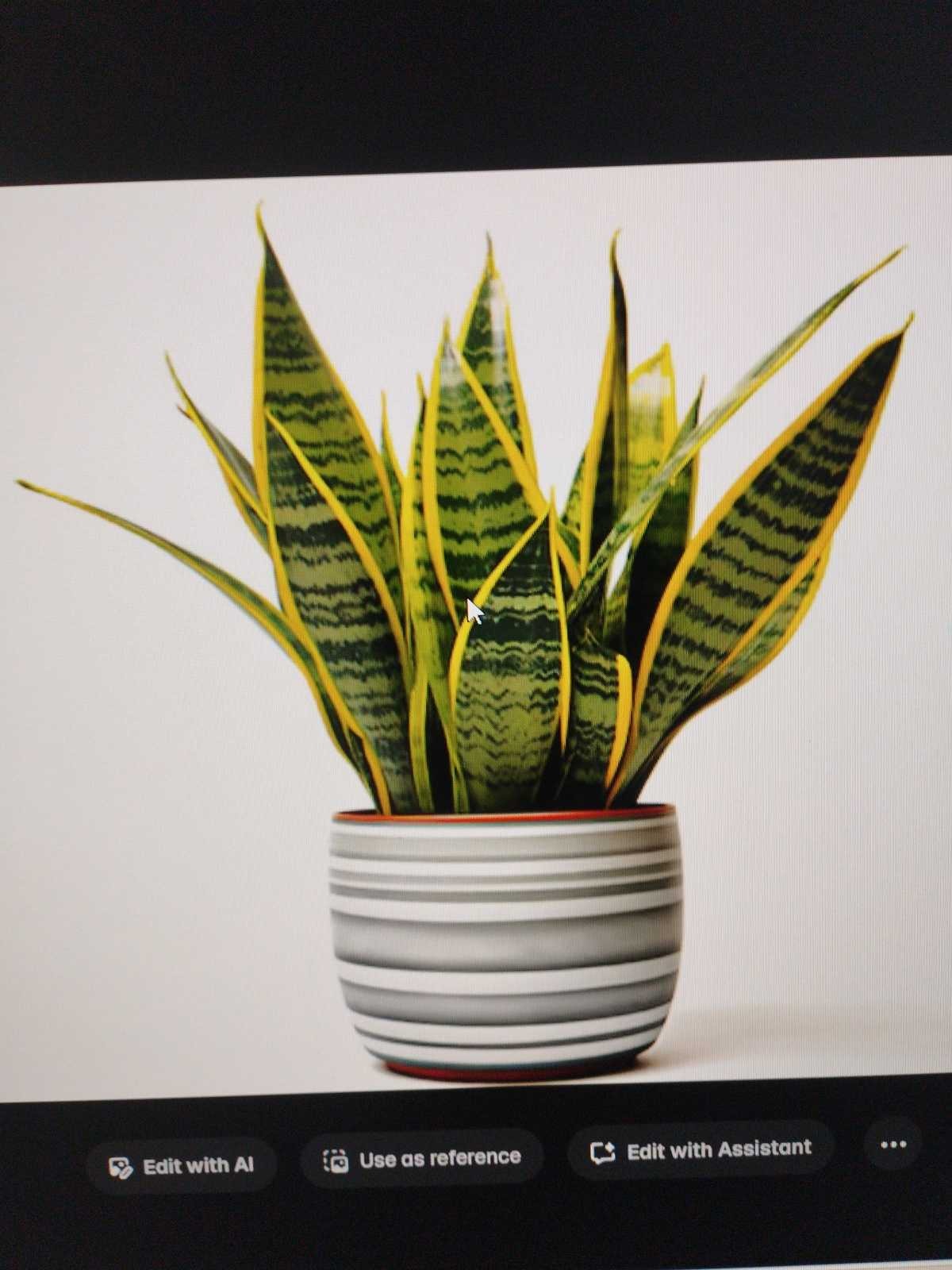
Snake Plant (Variegated)
Dracaena trifasciata 'Laurentii'
An evergreen perennial with stiff, sword-shaped leaves that grow vertically. The 'Laurentii' cultivar is distinguished by its dark green centers with gray-green cross-banding and prominent yellow margins.
- Light
- Adaptable from low light to full sun; prefers bright indirect light for 6-8 hours a day.
- Water
- Low water requirements. Allow soil to dry out entirely between waterings. Overwatering can lead to root degradation; signs include mushy leaf bases.
- Growth
- Rhizomatous perennial with an upright, rosette-forming habit. Can reach 2 to 4 feet in height indoors with a slow growth rate.
Care instructions
Provide bright indirect light, though it tolerates low light. Water only when the soil is completely dry to the touch. Use a well-draining cactus mix and fertilize sparingly during the growing season.
Growing details
Sunlight
Adaptable from low light to full sun; prefers bright indirect light for 6-8 hours a day.
Watering
Low water requirements. Allow soil to dry out entirely between waterings. Overwatering can lead to root degradation; signs include mushy leaf bases.
Soil
Loose, well-draining potting medium such as a cactus or succulent mix with a slightly acidic to neutral pH (6.0-7.0).
Hardiness zone
USDA Zones 10-12; it is not frost-tolerant and should be kept above 50°F (10°C).
Growth habit
Rhizomatous perennial with an upright, rosette-forming habit. Can reach 2 to 4 feet in height indoors with a slow growth rate.
Bloom season
Rarely blooms indoors; when it does, it produces small, greenish-white, lily-like flowers on a long stalk in spring or summer.
Propagation
Typically propagated by leaf cuttings or by dividing the rhizomes during repotting in the spring.
Common pests & issues
Susceptible to mealybugs and spider mites. The most common cultural problem is root rot due to excessive moisture.
Similar species
Sansevieria zeylanica lacks the yellow margins; Dracaena trifasciata 'Hahnii' is a dwarf variety that forms a low, bird-nest-like rosette.