
How to Care for Tiger Jaws
A distinctive clumping succulent with toothed, jaw-like leaves that thrives in bright light and needs only sparing water.
Read the full Tiger Jaws encyclopedia entry →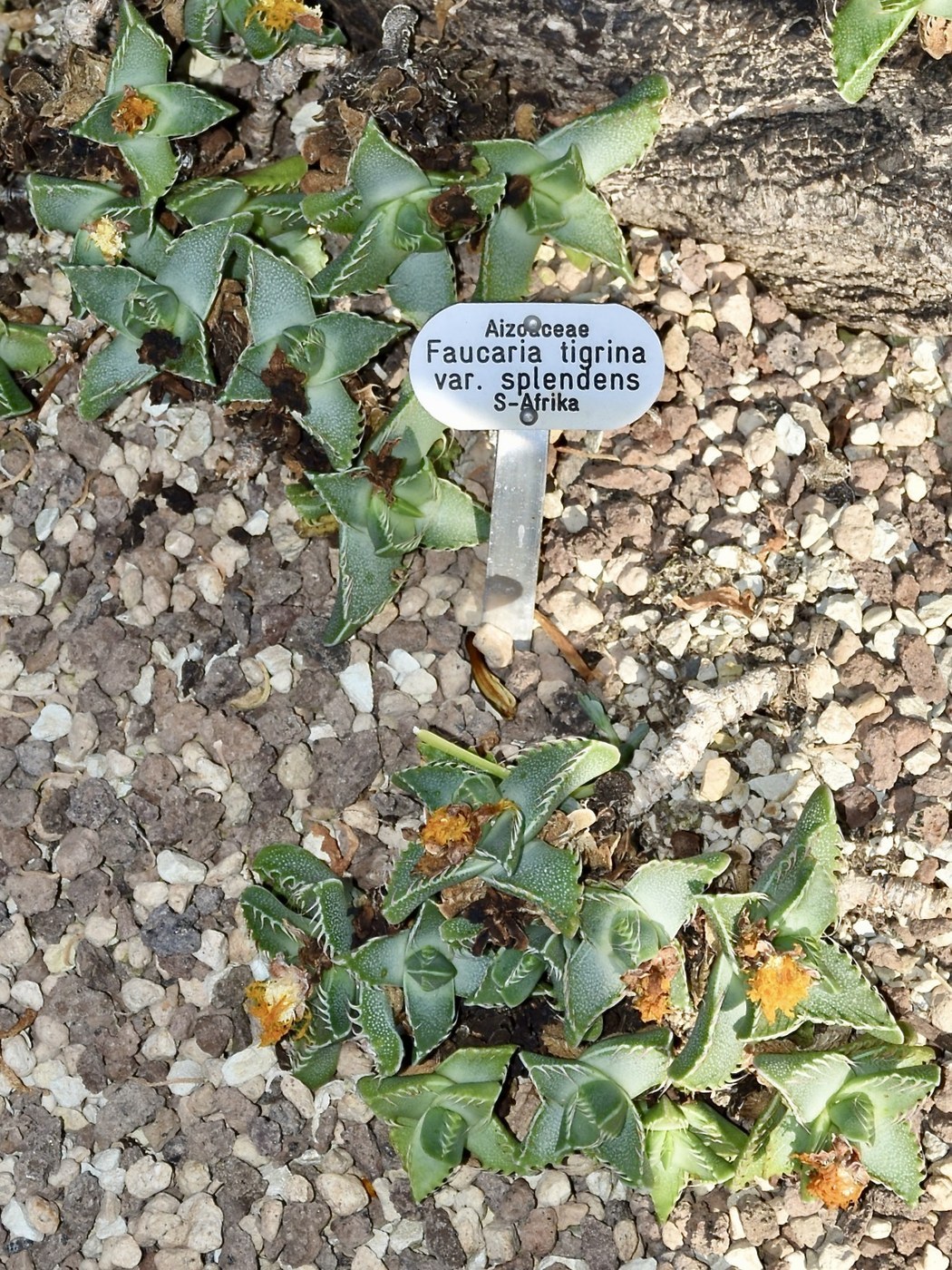
Tiger Jaws (Faucaria tigrina) is a compact, clumping succulent named for its triangular leaves lined with soft, tooth-like projections that resemble an open jaw. It is an easy, drought-loving plant that rewards bright light with cheerful yellow blooms in autumn.
Light
Give Tiger Jaws bright light to full sun. A south- or west-facing window indoors, or a sunny spot outdoors, keeps the leaves compact and well-colored. Insufficient light causes the rosette to stretch and the characteristic teeth to become less pronounced. Introduce it to intense sun gradually to avoid sunburn.
Water
Water sparingly and let the soil dry out completely between waterings. During the active growing seasons of spring and fall, a thorough soak every couple of weeks is plenty. In summer and winter, when the plant rests, reduce watering further. Overwatering is the most common cause of failure, so when in doubt, wait.
Soil & Potting
Plant in a gritty, fast-draining cactus and succulent mix. Amend commercial mix with extra pumice, coarse sand, or perlite to ensure water moves through quickly. A shallow terracotta pot with drainage holes helps excess moisture evaporate and prevents root rot.
Humidity & Temperature
Tiger Jaws prefers dry air and warm conditions, thriving between 65 and 80 F (18 to 27 C) during the growing season. It tolerates cooler nights, which can help trigger blooming, but protect it from frost. Keep it in a well-ventilated spot to discourage rot.
Feeding
Feed lightly, no more than once or twice during the growing season, using a diluted low-nitrogen succulent fertilizer. These slow growers need little supplemental feeding, and too much encourages soft, weak growth.
Propagation
Propagate by division or from seed. Mature clumps can be gently separated during repotting, with each division potted into dry succulent mix and watered lightly after a few days. Leaf cuttings are less reliable than division for this species.
Repotting / Pruning
Repot only every few years, as Tiger Jaws likes to be somewhat snug. Refresh the soil and divide crowded clumps in spring. Little pruning is needed; simply remove any shriveled or dried outer leaves to keep the rosette tidy.
Common Problems & Pests
Mushy, translucent leaves signal overwatering and rot, the primary threat to this plant. Stretched, floppy growth means it needs more light. Mealybugs can hide between the leaves, so inspect the crevices and treat with a dab of alcohol or insecticidal soap if found.
Seasonal Care Tips
Expect the most growth in spring and fall, when watering and light feeding are appropriate. Cool autumn nights encourage the daisy-like yellow flowers. In winter, keep the plant cool, bright, and nearly dry so it can rest.
Frequently asked questions
Why is my Tiger Jaws stretching out?
Stretching, or etiolation, happens when the plant does not get enough light. Move it to a brighter window or full sun and the new growth will stay compact.
How often should I water Tiger Jaws?
Water only when the soil is completely dry, roughly every two weeks during active growth and much less in summer and winter dormancy.
When does Tiger Jaws bloom?
It typically blooms in autumn, producing bright yellow daisy-like flowers. Cool nights and plenty of light help trigger flowering.
What kind of soil does Tiger Jaws need?
Use a gritty, fast-draining cactus and succulent mix amended with pumice or coarse sand, planted in a pot with drainage holes.