How to Care for Beautyberry
Grow easy, arching beautyberry shrubs for their spectacular clusters of vivid violet autumn berries along the stems.
Read the full Beautyberry encyclopedia entry →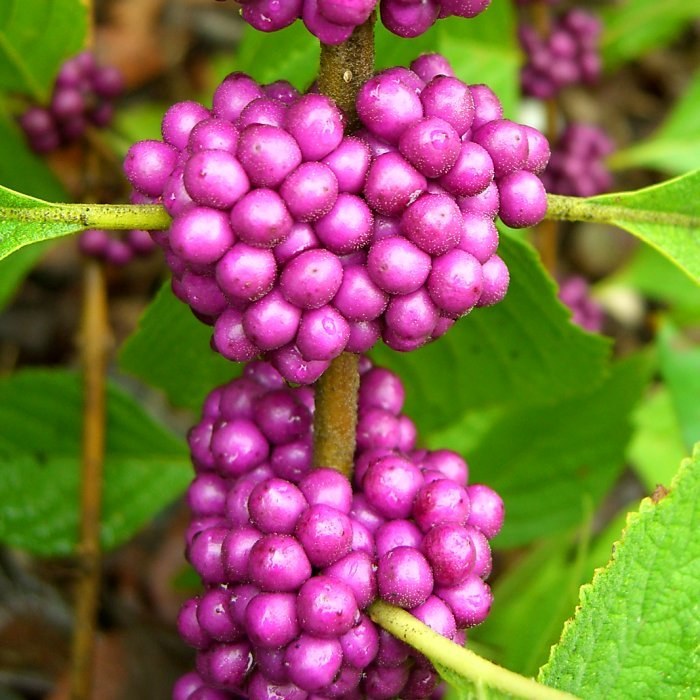
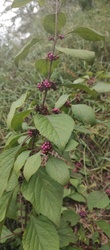
Beautyberry (Callicarpa americana) is an easygoing, arching deciduous shrub celebrated for the astonishing clusters of glossy, iridescent violet berries that ring its stems in autumn. Adaptable and low-maintenance, it thrives across a wide range of garden conditions and rewards minimal care with a spectacular fall display.
Light
Beautyberry grows in full sun to part shade. The heaviest, most vivid berry set comes with more sun, while in hot climates a bit of afternoon shade is welcome. In deep shade the shrub grows loose and open and produces fewer fruits, so give it at least a half-day of direct light for the best berry show.
Water
Provide medium, regular moisture while the shrub is establishing in its first year or two. Once settled in, beautyberry is quite drought-tolerant and needs supplemental water only during extended dry spells. Consistent moisture through summer supports a fuller berry crop, but the plant forgives neglect and rarely suffers from occasional dryness.
Soil & Potting
Beautyberry is unfussy about soil and adapts to sandy, loamy, or clay conditions as long as drainage is reasonable. A slightly acidic to neutral pH suits it well. It tolerates poor soils but grows lushest in soil enriched with organic matter. Good drainage prevents root problems, though the shrub handles occasional damp better than many.
Humidity & Temperature
Native to warm temperate and subtropical regions, beautyberry thrives in warm summers and tolerates humidity effortlessly. It handles moderate frost, dying back in the coldest parts of its range and resprouting from the base. Ambient outdoor humidity is ideal, and no special protection is needed in suitable climates.
Feeding
Beautyberry needs little feeding. A single spring application of balanced, all-purpose fertilizer or a topdressing of compost supports vigorous growth and heavy fruiting. Avoid overfeeding with nitrogen, which pushes leafy growth at the expense of berries. In decent soil, an annual compost mulch is often all it requires.
Propagation
Beautyberry propagates readily. Take softwood cuttings in early summer or hardwood cuttings in late fall and root them in moist medium. Seeds can be cleaned from ripe berries and sown, germinating the following spring. The shrub also self-sows where berries drop, and volunteer seedlings are easy to transplant while young.
Repotting / Pruning
Because beautyberry flowers and fruits on new wood, prune hard in late winter or early spring before growth resumes. Cutting stems back to a foot or two from the ground each year keeps the shrub compact, encourages vigorous new shoots, and maximizes berry production. Neglected plants become leggy but can be rejuvenated by cutting the whole shrub back hard.
Common Problems & Pests
Beautyberry is remarkably pest- and disease-resistant. Occasional leaf spots may appear in wet weather but rarely cause harm. Root rot can occur in permanently waterlogged soil, so ensure drainage. Otherwise this is one of the most trouble-free flowering shrubs, seldom bothered by significant insect problems.
Seasonal Care Tips
Prune hard in late winter to spur the new wood that carries flowers and fruit. Water and mulch through spring as growth accelerates. Enjoy the small summer flowers, which give way to the signature violet berry clusters in early autumn. The berries persist after the leaves drop, extending interest into late fall and winter until they finally fade.
Frequently asked questions
When and how should I prune beautyberry?
Prune hard in late winter or early spring, cutting stems back to one or two feet. Beautyberry fruits on new wood, so this hard pruning drives fresh growth and the heaviest berry display.
Why does my beautyberry have few berries?
Too little sun and skipped pruning are the usual causes. Give it at least a half-day of direct light and cut it back hard each late winter to promote the vigorous new wood that bears fruit.
Is beautyberry drought-tolerant?
Yes, once established it handles dry spells well. Water regularly the first year or two while roots develop, then supplement only during extended droughts for the fullest berry crop.
Will beautyberry come back if it dies to the ground in winter?
In colder parts of its range it often dies back and resprouts vigorously from the base in spring. Since it flowers on new wood, this actually keeps it compact and fruitful.
Beautyberry identified by the community
Recent Beautyberry specimens identified with Plant Identifier.