
How to Care for Bee Balm
Grow Bee Balm (Monarda didyma), an easy perennial with shaggy tubular flowers and aromatic foliage that draws pollinators all summer.
Read the full Bee Balm encyclopedia entry →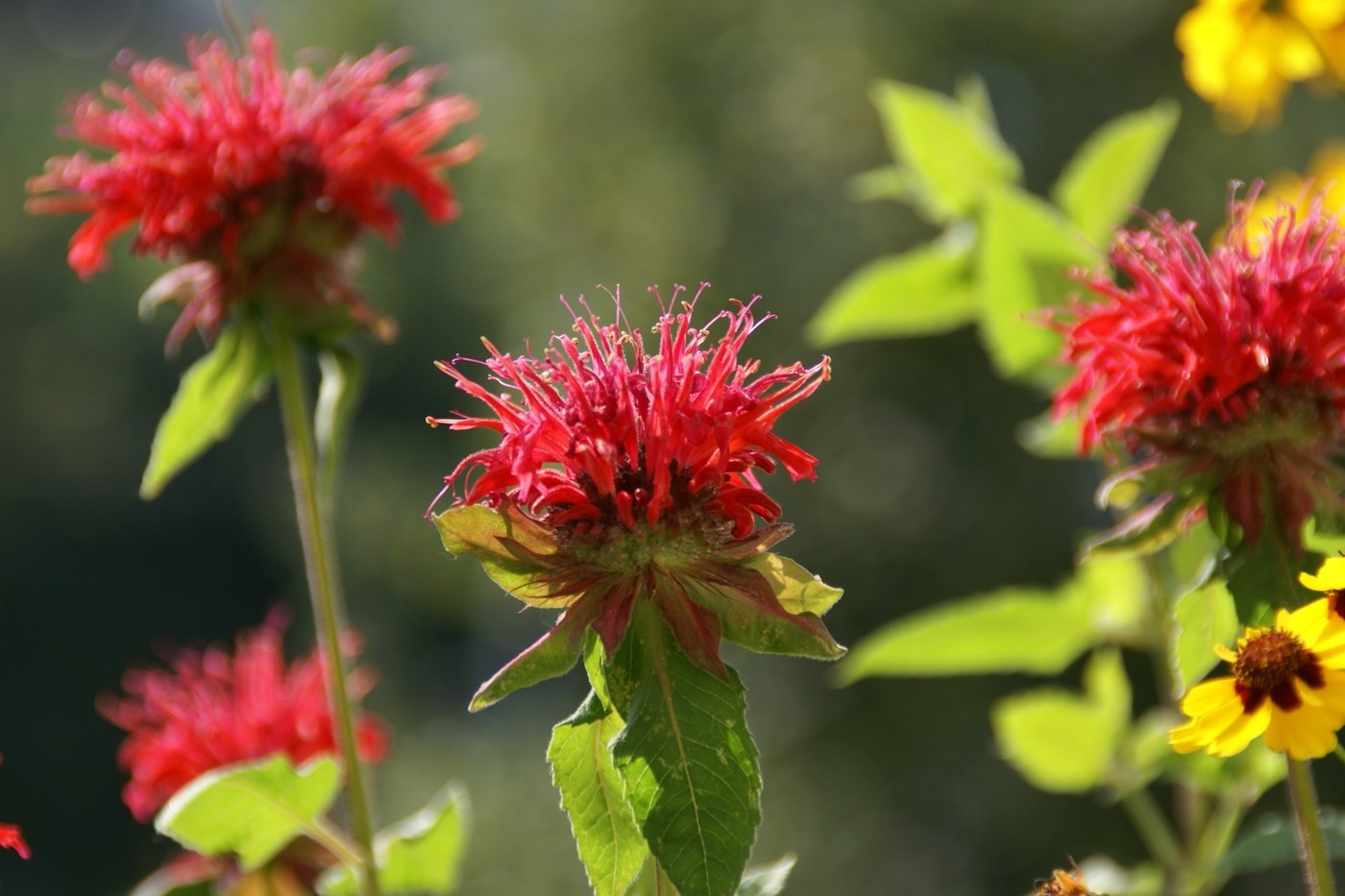
Bee Balm (Monarda didyma) is a cheerful, clump-forming perennial grown for its shaggy, tubular summer flowers in reds, pinks, and purples and its aromatic foliage. Easy and vigorous, it is a pollinator-garden favorite that thrives in moist, sunny borders and spreads to form generous stands.
Light
Grow Bee Balm in full sun to part shade. Full sun produces the most abundant flowering and sturdiest stems, while a little afternoon shade is welcome in hot climates and can reduce heat stress. Too much shade weakens bloom, encourages floppy growth, and makes plants more prone to foliar disease.
Water
Keep the soil evenly moist. Bee Balm is naturally a moist-meadow and streamside plant and dislikes drying out, wilting quickly in drought. Water regularly, especially during hot spells and the first season after planting, aiming for consistent moisture without waterlogging. A layer of mulch helps retain soil moisture between waterings.
Soil & Potting
Bee Balm prefers rich, moisture-retentive soil with plenty of organic matter, ideally slightly acidic to neutral. It tolerates clay better than many perennials as long as it stays evenly moist. Improve lean or sandy soil with compost. Space plants generously and choose an open site, since good air movement is key to keeping foliage healthy.
Humidity & Temperature
A hardy temperate perennial, Bee Balm withstands cold winters and returns reliably each spring from its roots. It handles warm summers but is more prone to powdery mildew in humid, crowded, or poorly ventilated conditions. Ample spacing and airflow matter more than any special temperature or humidity control.
Feeding
Feeding needs are moderate. Work compost into the soil at planting and topdress annually in spring. A light application of balanced fertilizer in spring supports strong growth and bloom, but avoid excess nitrogen, which promotes lush, mildew-prone foliage at the expense of flowers.
Propagation
Bee Balm is easily propagated by division, the preferred method to keep clumps vigorous. Divide established clumps in spring or early autumn every two to three years, replanting the healthy outer sections and discarding the woody center. It can also be grown from seed or from softwood stem cuttings taken in late spring.
Repotting / Pruning
Divide clumps periodically to prevent overcrowding, which also improves airflow and reduces mildew. Cut plants back after flowering to tidy them and sometimes encourage a second flush of bloom. In late autumn or early spring, cut spent stems to the ground. Pinching stems in early summer produces bushier, better-branched plants.
Common Problems & Pests
Powdery mildew is the signature problem, coating leaves with grayish film in humid or crowded conditions; combat it with wide spacing, good airflow, adequate moisture at the roots (not on the leaves), and mildew-resistant cultivars. Rust can also appear. Bee Balm spreads aggressively by underground runners, so contain or divide it to keep it in bounds. Serious insect pests are uncommon.
Seasonal Care Tips
In spring, cut back old stems, topdress with compost, and divide crowded clumps. Through summer, water consistently, deadhead spent blooms to prolong flowering, and watch for mildew. In autumn, do a final tidy-up and divide if needed. In winter, the plant dies back to the ground and rests, needing no attention until spring.
Frequently asked questions
Why do my Bee Balm leaves develop a white powdery coating?
That is powdery mildew, the plant's most common issue in humid or crowded conditions. Space plants widely for airflow, keep roots consistently moist while avoiding wetting the foliage, and choose mildew-resistant cultivars.
Does Bee Balm spread?
Yes, it spreads by underground runners and can form large clumps quickly. Divide it every two to three years or contain it to keep it from overtaking neighboring plants.
How do I get more flowers from Bee Balm?
Grow it in full sun, keep the soil evenly moist, and deadhead spent blooms through summer to encourage continued flowering. Avoid heavy nitrogen, which favors leaves over flowers.
How is Bee Balm propagated?
Most easily by dividing established clumps in spring or early autumn, replanting the vigorous outer portions. It can also be grown from seed or softwood cuttings.