Bee Balm
Monarda didyma
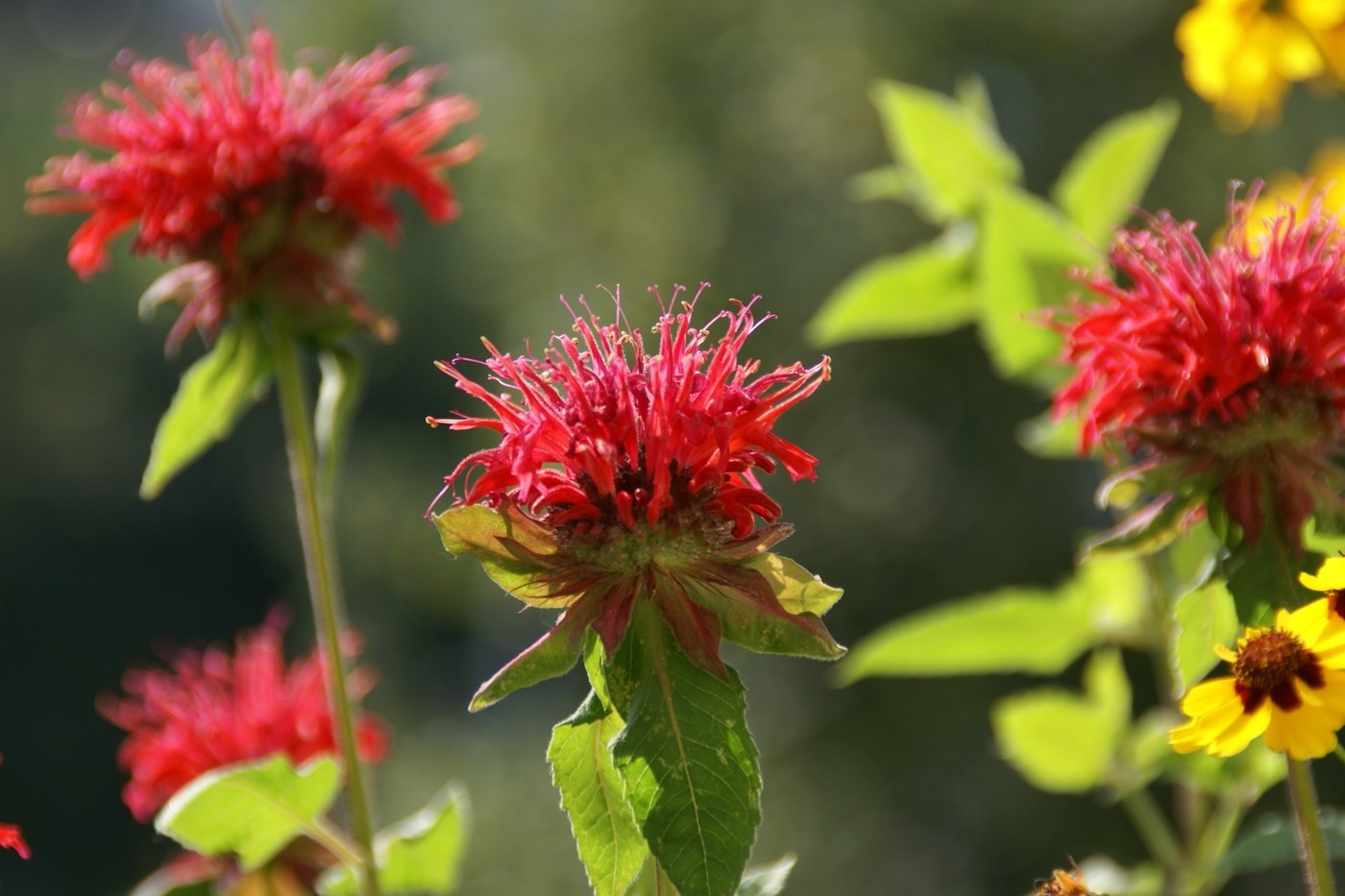
A fragrant North American native with shaggy, crown-like flowers in red, pink, or purple that are irresistible to bees, butterflies, and hummingbirds. Its aromatic leaves release a citrusy, minty scent when crushed.
- Light
- Full sun to part shade
- Water
- Keep soil evenly moist
- Difficulty
- Easy
Got a plant like this?
Identify any plant from a photo, free.
Overview
Bee balm is a beloved pollinator perennial whose unusual, ragged-looking flower heads resemble bursts of fireworks atop square, mint-family stems. The whole plant is aromatic, releasing a citrusy, oregano-like scent when the leaves are crushed.
Native to eastern North America, Monarda didyma has leaves that share a fragrance with the bergamot orange, hence the common name bergamot.
Vigorous and spreading, it lights up summer borders and wildlife gardens but is prone to powdery mildew in crowded or dry conditions.
How to identify it
- Flowers: Shaggy, crown-shaped clusters of tubular flowers in scarlet, pink, lavender, or purple
- Leaves: Opposite, lance-shaped, toothed, aromatic (minty-citrus scent) on square stems
- Habit: Upright clump 2-4 ft tall that spreads by underground runners
- Bloom time: Mid to late summer
- Family trait: Square stems and opposite leaves mark it as a mint relative
Care & growing
Light: Full sun to partial shade; full sun with good air circulation reduces mildew.
Water: Keep soil evenly moist; drought stress worsens powdery mildew.
Soil: Rich, moist, well-drained soil.
Temperature: Hardy in USDA zones 4-9.
Feeding: Light spring feeding; avoid excess nitrogen.
Propagation: Divide every 2-3 years in spring to control spread and improve air flow. Choose mildew-resistant cultivars and thin stems to keep foliage healthy.
Habitat & origin
Bee balm is native to eastern North America, growing wild in moist woodlands, meadows, thickets, and along stream banks.
Its preference for damp, rich ground reflects these origins. It is widely cultivated in pollinator, cottage, and herb gardens across temperate regions and has naturalized in parts of Europe.
Frequently asked questions
Why do my bee balm leaves have white powdery spots?
That is powdery mildew, common in bee balm. Improve air circulation by thinning and dividing, keep soil moist, and grow mildew-resistant cultivars.
Does bee balm spread aggressively?
Yes, it spreads by underground runners and can form large colonies. Divide it every few years or plant where it has room to roam.
Is bee balm good for pollinators?
Exceptionally so. Its tubular flowers are a favorite of hummingbirds, bees, and butterflies, making it a top wildlife-garden plant.
Bee Balm guides
In-depth guides for identifying, growing, and caring for Bee Balm.
How to Care for Bee Balm
Grow Bee Balm (Monarda didyma), an easy perennial with shaggy tubular flowers and aromatic foliage that draws pollinators all summer.
Bee Balm Identification Guide
Identify bee balm (Monarda) by its square stems, aromatic mint-family leaves, and shaggy, ragged crowns of tubular flowers loved by pollinators.