Soapwort
Saponaria officinalis
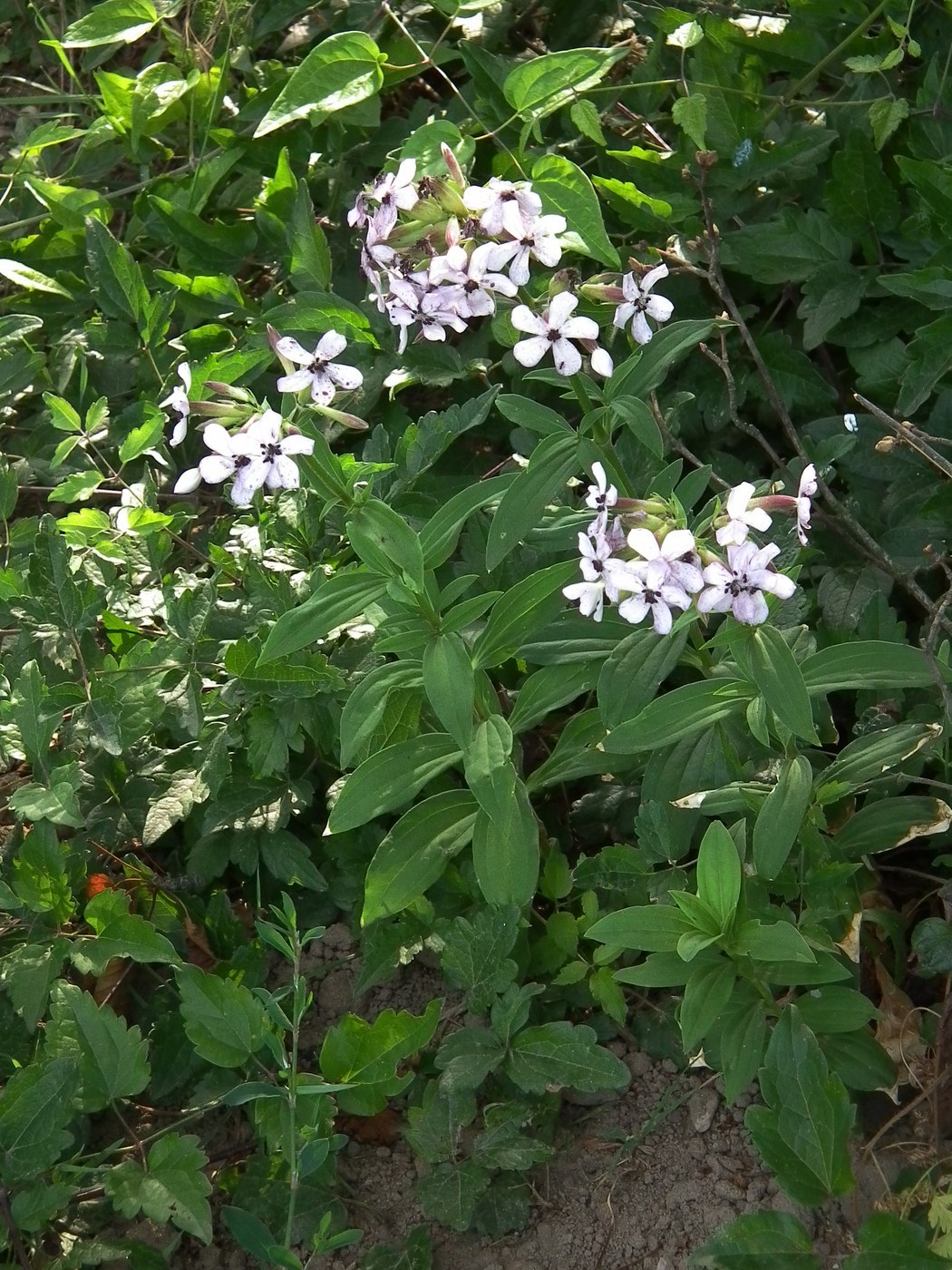
Soapwort is a vigorous perennial whose roots and leaves lather in water, historically used as a gentle natural soap. It bears fragrant pink-to-white flowers and spreads readily by runners.
- Light
- Full sun to part shade
- Water
- Moderate; tolerates dry spells
- Difficulty
- Easy
Got a plant like this?
Identify any plant from a photo, free.
Overview
Soapwort (Saponaria officinalis), also called bouncing bet, is a spreading perennial herb rich in saponins, natural compounds that foam in water. For centuries it served as a mild cleanser for delicate fabrics and historic textiles.
It produces clusters of softly scented pink or white flowers from summer into fall. Easy and vigorous, it can become invasive, spreading by both seed and underground rhizomes.
How to identify it
- Leaves: Smooth, oval to lance-shaped leaves in opposite pairs with prominent veins
- Flowers: Clusters of five-petaled, pale pink to white flowers, fragrant and often semi-double
- Stems: Stout, jointed, slightly swollen at the nodes, 1-3 ft tall
- Habit: Spreading, rhizomatous perennial that forms colonies
- Bloom: Mid- to late summer, often into autumn
Care & growing
Light: Full sun to partial shade.
Water: Average moisture; tolerates dry conditions once established.
Soil: Adaptable to most soils, including poor and alkaline ground.
Temperature: Hardy to USDA zone 3.
Feeding: Not needed; rich soil increases its spread.
Propagation: Easily divided or grown from seed and cuttings. Contain its rhizomes or deadhead to limit aggressive spread.
Habitat & origin
Native to Europe and western Asia, soapwort grows along roadsides, riverbanks, railway lines, and waste ground.
It has naturalized widely across North America and is grown in cottage gardens, though gardeners should site it where its spreading habit can be managed.
Frequently asked questions
Can soapwort really be used as soap?
Yes. Boiling its roots or leaves releases saponins that create a mild lather, traditionally used for washing delicate fabrics and historic textiles.
Does soapwort spread aggressively?
Yes. It spreads by underground rhizomes and seed and can form large colonies, so it may need containment in the garden.
Why is it called bouncing bet?
The folk name likely refers to the plant's frothy, sudsing quality, evoking a washerwoman ('Bet') doing laundry.
What do the flowers look like?
It bears clusters of fragrant, five-petaled, pale pink to white flowers, often semi-double, from mid-summer into autumn.
Soapwort guides
In-depth guides for identifying, growing, and caring for Soapwort.
How to Care for Soapwort
Grow Soapwort (Saponaria officinalis): an easy, spreading cottage-garden perennial with fragrant pink summer blooms that thrives in sun and poor soil.
Soapwort Identification Guide
Identify soapwort (Saponaria officinalis) by its smooth paired leaves with three prominent veins and clusters of fragrant pale pink five-petaled flowers.