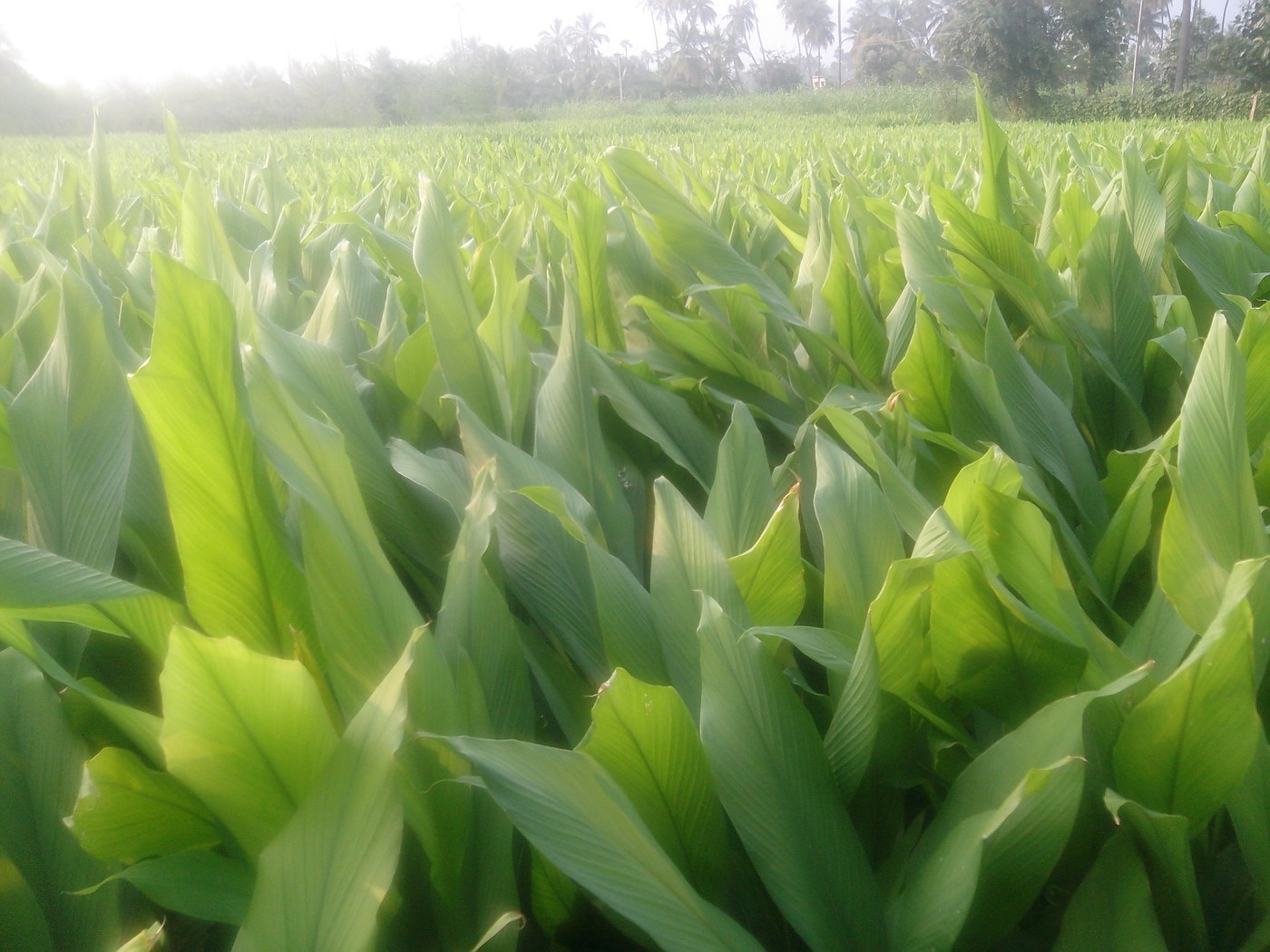
Turmeric
Curcuma longa
Turmeric is an aromatic tropical perennial in the ginger family, grown for its vivid orange rhizome.
- Light
- Bright indirect light to partial shade
- Water
- Keep soil consistently moist
- Difficulty
- Moderate
Got a plant like this?
Identify any plant from a photo, free.
Overview
Turmeric is a tropical herbaceous perennial in the ginger family, cultivated for its bright orange rhizome.
Like its relative ginger, turmeric grows large leafy shoots above ground while the rhizome develops below. Its vivid orange color comes from curcumin, a natural pigment.
Turmeric has been cultivated in South Asia for thousands of years and carries cultural and ceremonial significance in India.
How to identify it
Turmeric resembles ginger above ground but has a vivid orange interior to its rhizome.
- Leaves: Large, broad, oblong and bright green, with long sheathing stalks forming pseudostems
- Height: Reaches about 1 m (3 ft) tall
- Rhizome: Dull orange-brown skin with intensely orange aromatic flesh
- Flowers: Showy spike of pale yellow blooms among waxy green-and-pink bracts (less common in cultivation)
- Stain: The cut rhizome stains skin and surfaces bright yellow
Care & growing
Turmeric needs warmth, moisture and a long frost-free season.
- Light: Bright indirect light or partial shade; protect from harsh midday sun
- Water: Keep soil consistently moist during growth; let it dry as foliage dies back for dormancy
- Soil: Rich, loose, well-drained soil with abundant organic matter
- Temperature: Tropical; thrives at 20-35C (68-95F) and cannot tolerate frost
- Feeding: Feed regularly during the growing season with a balanced fertilizer
- Propagation: Plant rhizome pieces with a bud about 5 cm deep in warm soil
Habitat & origin
Turmeric is native to the Indian subcontinent and Southeast Asia and is not known in the wild, having been cultivated for over 4,000 years. India remains the world's largest producer.
It is grown throughout the tropics where conditions are warm and humid. In cooler climates it can be raised in pots in greenhouses or brought indoors over winter dormancy.
Frequently asked questions
Can I grow turmeric at home?
Yes, in warm climates or containers. Plant a fresh rhizome piece in rich, moist soil and keep it warm and humid.
Why does turmeric stain everything yellow?
Its bright color comes from curcumin, a strong natural pigment. The cut rhizome and powder readily stain skin, cloth and surfaces, which is why it is also used as a dye.
Is turmeric the same as ginger?
They are close relatives in the same family and look similar above ground, but turmeric has bright orange flesh while ginger's is pale yellow.
Turmeric guides
In-depth guides for identifying, growing, and caring for Turmeric.
How to Care for Turmeric
Grow lush turmeric as a tropical foliage plant with warmth, consistent moisture, and rich soil around its underground rhizomes.
Turmeric Identification Guide
Recognize turmeric by its vivid orange-fleshed rhizome, large broad oblong leaves, and cone-like flower spike with pink-tipped bracts. Includes how to separate it from ginger and other Curcuma species.