Zucchini
Cucurbita pepo
Zucchini is a prolific summer squash in the gourd family, grown as a bushy warm-season annual. A single healthy plant produces vigorously through the summer.
- Light
- Full sun
- Water
- Deep, regular watering
- Difficulty
- Easy
Got a plant like this?
Identify any plant from a photo, free.
Overview
Zucchini (Cucurbita pepo) is a variety of summer squash, a bushy annual in the Cucurbitaceae (gourd) family grown in vegetable gardens. Though the species is native to the Americas, the zucchini form was developed in Italy, and its name comes from the Italian for "little squash."
It grows quickly and bears heavily through summer, producing long cylindrical fruit on a compact plant.
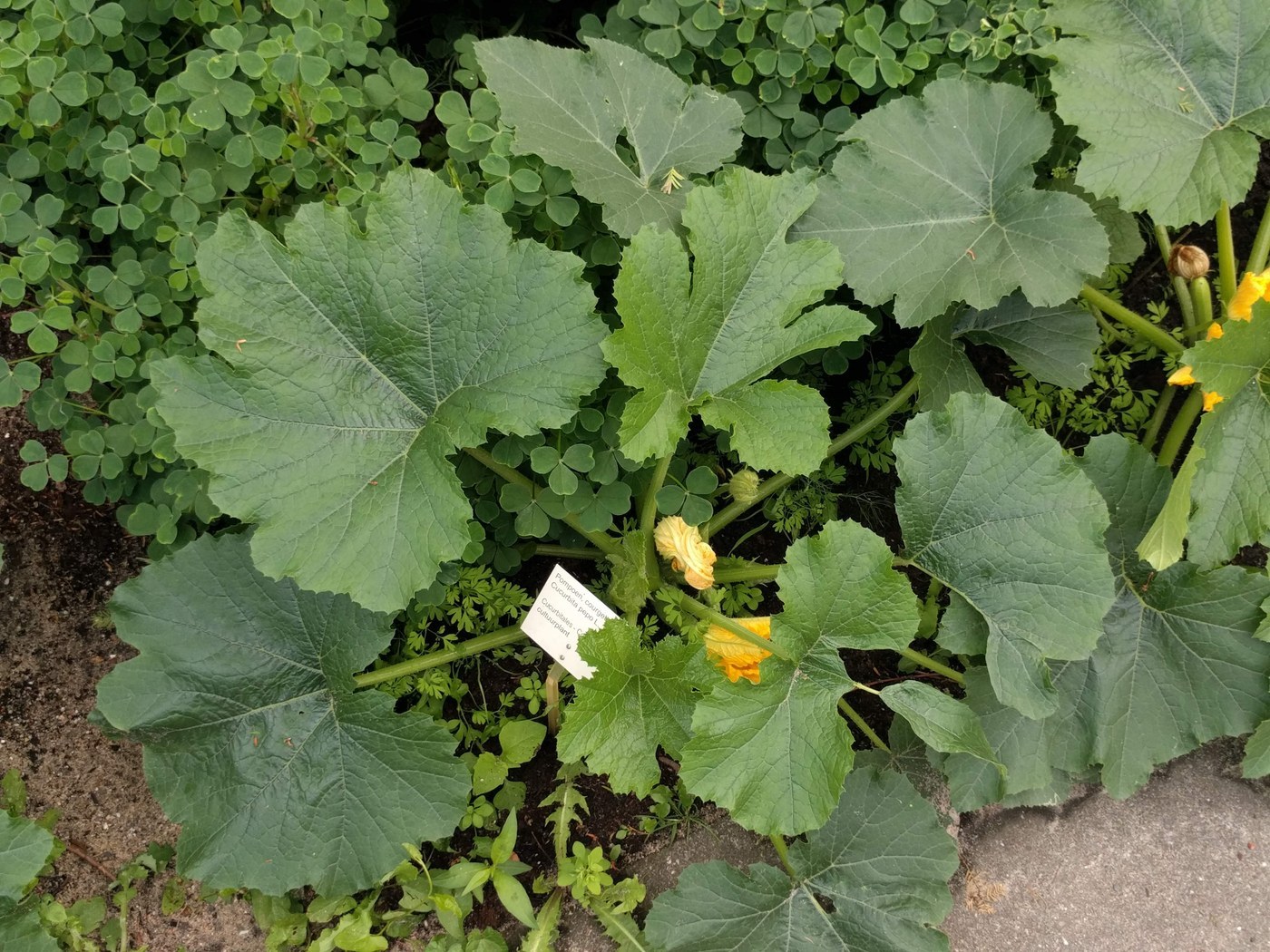
The plant is typically bushy rather than vining, with large leaves and big yellow flowers.
How to identify it
Zucchini is a large, bushy plant with broad leaves and long cylindrical fruit.
- Leaves: Large, lobed, dark green, often with silvery markings, on stout prickly stalks
- Habit: Bushy and sprawling, 2 to 3 feet across
- Flowers: Large, yellow-orange, trumpet-shaped; separate male and female flowers
- Fruit: Long, cylindrical, usually green (sometimes yellow or striped), with smooth skin
- Size: Fruit typically picked at 6 to 8 inches long; left on the plant it grows much larger and seedy
Care & growing
Zucchini is easy and famously productive given heat and space.
- Light: Full sun, 6 to 8 hours
- Water: Deep, regular watering at the base; consistent moisture supports heavy fruiting
- Soil: Rich, well-draining soil with abundant organic matter; pH 6.0 to 7.5
- Temperature: Warm-season; needs soil above 60 F and is frost-sensitive
- Feeding: Feed with balanced fertilizer; too much nitrogen favors leaves over fruit
- Propagation: Direct sow seed after frost, or transplant. Give each plant plenty of room and good airflow to reduce mildew.
Habitat & origin
The species Cucurbita pepo was domesticated in Mexico and Central America thousands of years ago, making it one of the oldest cultivated crops in the Americas. The specific zucchini cultivar arose in 19th-century Italy.
It is now grown in warm-season gardens worldwide and is a mainstay of summer vegetable plots because of its speed and yield.
Frequently asked questions
Why does my zucchini set tiny fruit that then rots?
Small fruit that yellows and shrivels usually signals poor pollination. Encourage bees, or hand-pollinate by transferring pollen from male to female flowers in the morning.
Why is there white powder on the leaves?
That is powdery mildew, common in late summer. Improve airflow, water at the base rather than overhead, and remove badly affected leaves.
How many zucchini plants do I need?
One or two plants is plenty for most gardens, since each is extremely productive during peak season.
How do I identify a zucchini plant?
Look for a bushy, sprawling plant with large lobed dark-green leaves on prickly stalks, big yellow trumpet-shaped flowers, and long cylindrical smooth-skinned fruit.
Zucchini guides
In-depth guides for identifying, growing, and caring for Zucchini.
How to Care for Zucchini
Grow productive zucchini plants with this care guide on sun, deep watering, feeding, pollination and pest control.
Zucchini Identification Guide
Identify the zucchini plant (Cucurbita pepo) by its large bushy form, big silver-flecked lobed leaves, huge yellow flowers, and long cylindrical fruit.