White Clover
Trifolium repens
White clover is a low, creeping perennial legume with three-part leaves and round white flower heads, found in lawns, pastures and meadows worldwide. It fixes nitrogen in the soil and is a favorite of bees, making it both a beneficial cover plant and a common lawn 'weed'.
- Light
- Full sun to part shade
- Water
- Moderate; prefers moist soil
- Difficulty
- Easy
Got a plant like this?
Identify any plant from a photo, free.
Overview
White clover (Trifolium repens) is a low-growing perennial legume in the pea family, native to Europe and central Asia and now naturalized across the globe. It spreads by creeping stems (stolons) that root as they go, forming dense, persistent mats.
Like other legumes, it hosts nitrogen-fixing bacteria in its roots, enriching the soil. This makes it valuable in pastures, as a cover crop, and increasingly in 'bee lawns' and low-maintenance turf, even though traditional lawn culture has long treated it as a weed.
Its white, rounded flower heads are a major nectar source for honeybees and bumblebees throughout the growing season.
How to identify it
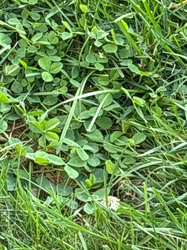
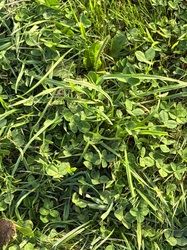
A creeping, mat-forming perennial usually only 4-8 in tall.
- Leaves: classic clover trifoliate (three leaflets), each oval leaflet often marked with a pale crescent or 'V'; long leaf stalks; occasional lucky four-leaflet forms
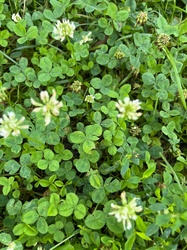
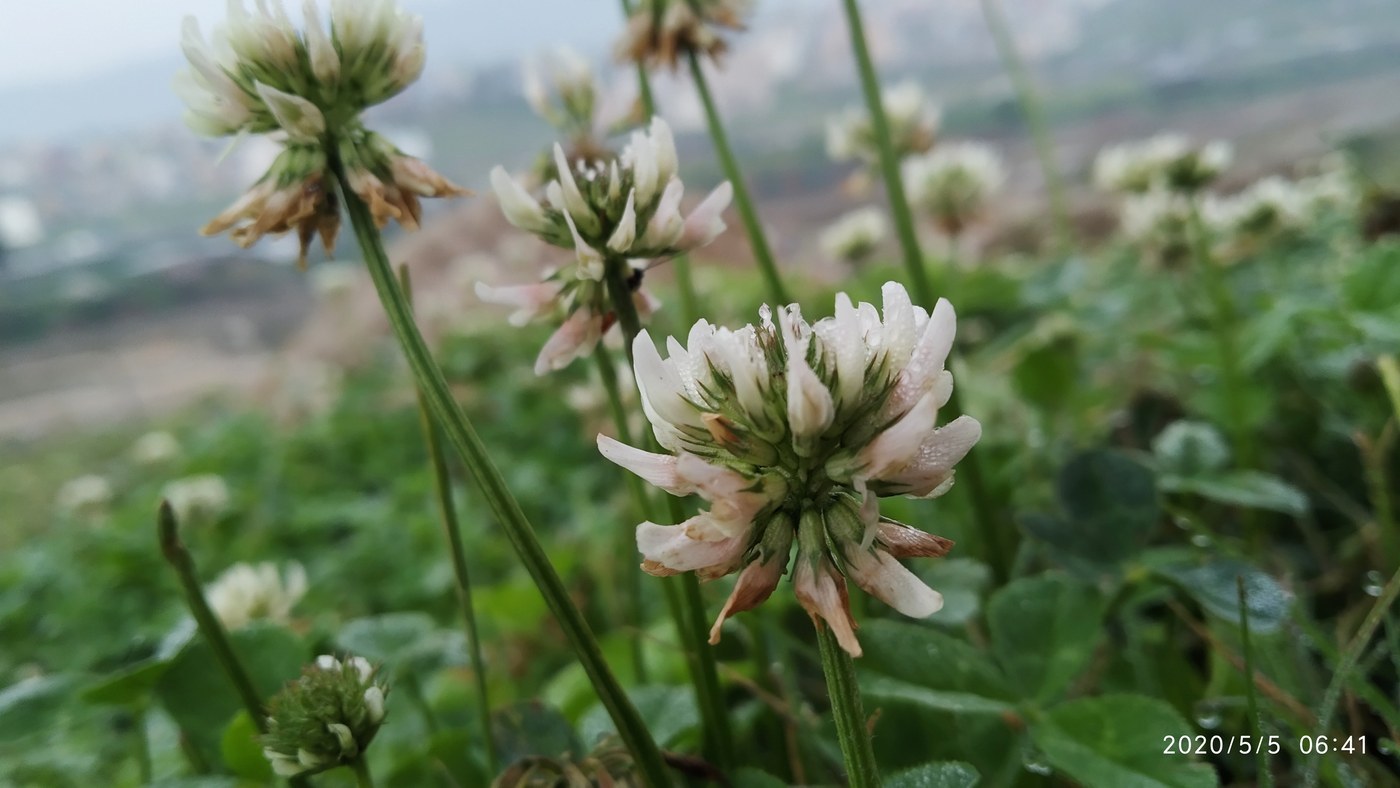
- Flowers: rounded heads about 1/2-1 in across of many small white (sometimes pink-tinged) florets; on leafless stalks above the foliage
- Stems: slender, creeping stolons that root at the nodes
- Habit: low, spreading, evergreen in mild climates
- Roots: shallow with nitrogen-fixing nodules
Care & growing
Tough, adaptable and easy to grow whether by intention or accident.
- Light: Full sun to part shade
- Water: Prefers moist soil; fairly drought tolerant once established but goes dormant in extended drought
- Soil: Tolerates a wide range; performs best in well-drained loams and improves poor soils through nitrogen fixation
- Temperature: Hardy in USDA zones 3-10
- Feeding: Needs little to no nitrogen fertilizer since it makes its own
- Mowing: Tolerates mowing well; mow high to keep it lush
- Propagation: Easily from seed (often broadcast into lawns) or by rooted stolons
Habitat & origin
Native to Europe and central Asia, white clover has been spread by agriculture to every inhabited continent and is now one of the most widely distributed legumes in the world.
It grows in lawns, pastures, meadows, roadsides, parks and disturbed ground, favoring sunny, moist, moderately fertile sites but tolerating heavy use and foot traffic.
Frequently asked questions
Is white clover good or bad for a lawn?
It depends on your goals. It fixes nitrogen, stays green in drought and feeds bees, so many people now welcome it; purists consider it a weed in pure turf.
Does white clover come back every year?
Yes. It is a perennial that spreads by creeping stems and reseeds, persisting for many years.
Will clover attract bees?
Very much so. The flowers are excellent bee forage, which is a benefit for pollinators but worth noting if people walk barefoot on the lawn.
Do I need to fertilize clover?
No. As a legume it fixes its own nitrogen from the air, so it needs little or no nitrogen fertilizer and can even feed nearby grass.
White Clover guides
In-depth guides for identifying, growing, and caring for White Clover.
How to Care for White Clover
Easy, low-growing White Clover thrives in sun to part shade with moist soil — a resilient groundcover and lawn companion.
White Clover Identification Guide
How to identify white clover (Trifolium repens), a low creeping legume with three-part leaves and round white flower heads.
White Clover identified by the community
Real specimens identified with Plant Identifier.