White Clover Identification Guide
How to identify white clover (Trifolium repens), a low creeping legume with three-part leaves and round white flower heads.
Read the full White Clover encyclopedia entry →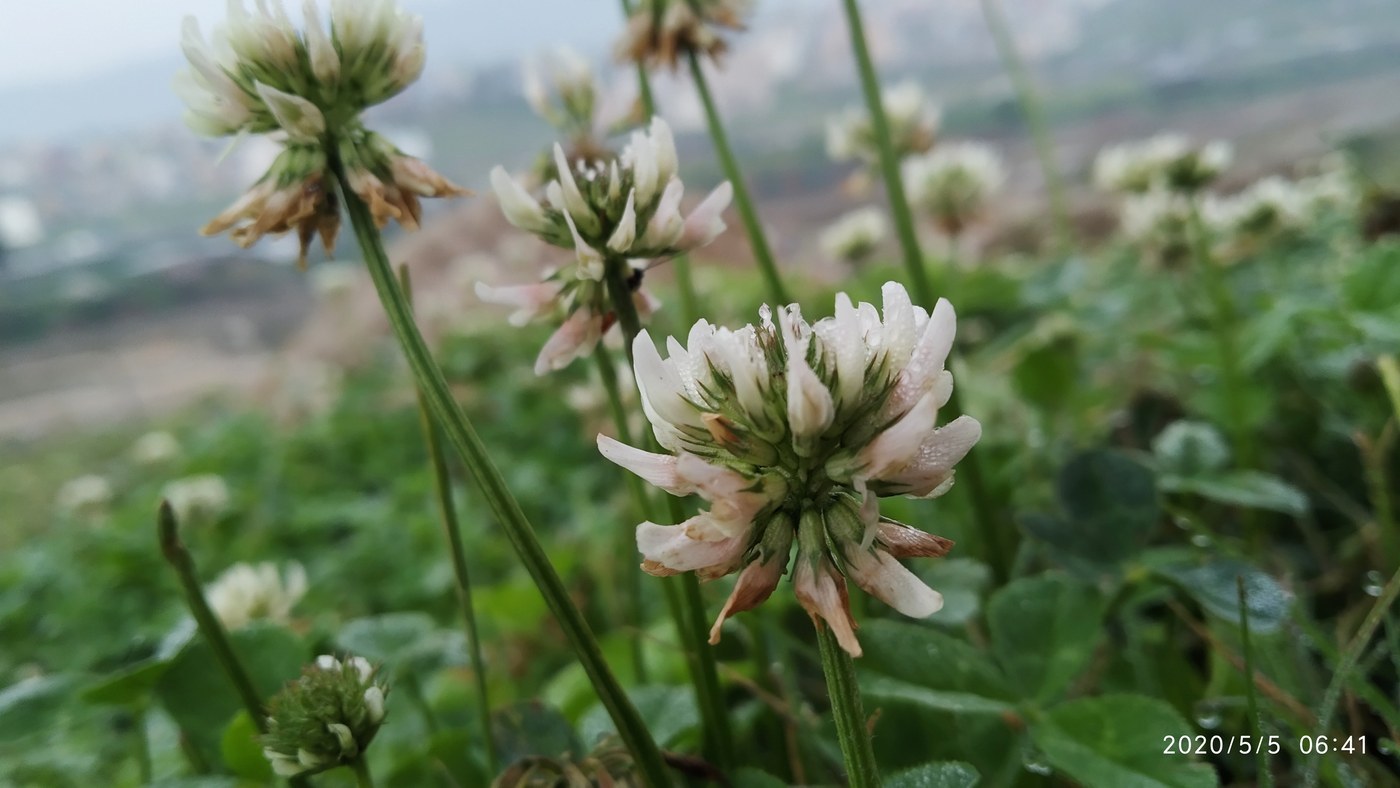
Key Identifying Features
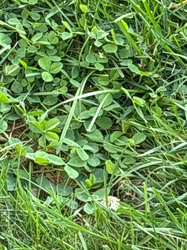
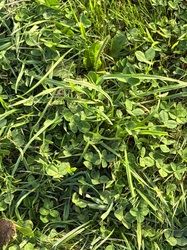
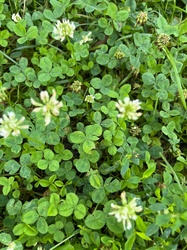
White clover (Trifolium repens) is a low, creeping perennial legume found in lawns, pastures, and roadsides worldwide. The classic clues are three-part (trifoliate) leaves, each leaflet usually marked with a pale whitish crescent (watermark), and rounded white to pinkish flower heads held on leafless stalks above the foliage.
- Low, mat-forming plant rooting along the ground (stolons)
- Leaflets typically in threes (rare four-leaf clovers are mutations)
- Globe-shaped white flower clusters about 1/2-1 inch across
Leaves & Stems
Leaves are alternate along creeping stems, each on a long stalk and divided into three oval leaflets. Each leaflet has finely toothed edges and commonly a faint light-green or white V-shaped band across it. Stems are stolons that creep along the soil surface and root at the nodes, letting white clover spread into dense patches. There are no tendrils or spines. The combination of three watermarked leaflets and ground-hugging rooting stems is definitive.
Flowers & Fruit
Flower heads are rounded balls of 20-40 small white (sometimes pink-tinged) pea-like florets, borne singly on leafless stalks rising above the leaves. They bloom from spring through fall and are a major bee plant. As florets age they turn brown and droop downward. The fruit is a tiny pod with a few seeds hidden within the spent flower head.
How to Tell It Apart from Look-Alikes
- Red clover (Trifolium pratense): larger, upright, with pink-purple flowers and leaves usually marked with a pale crescent, and flower heads sitting amid leaves rather than on bare stalks.
- Black medic (Medicago lupulina): also trifoliate but has tiny yellow flower clusters and the middle leaflet on a short stalk.
- Oxalis (wood sorrel): leaflets are heart-shaped and fold down at night; clover leaflets are oval.
- Lespedeza: trifoliate but with small woody stems and different flowers.
Where You'll Find It
White clover thrives in lawns, pastures, parks, roadsides, and disturbed ground, especially where nitrogen is low (it fixes its own). It tolerates mowing and foot traffic, prefers full sun to part shade, and is common across temperate climates globally. It is often deliberately seeded in lawns and pasture mixes.
Quick ID Checklist
- Three oval leaflets, often with a pale crescent mark
- Creeping stems that root at the nodes
- Round white (to pink) flower heads on leafless stalks
- Low, mat-forming habit in lawns and pastures
- Pea-like florets that brown and droop with age
Frequently asked questions
How do I tell white clover from oxalis?
White clover has three oval leaflets, often with a pale crescent mark, while oxalis (wood sorrel) has three heart-shaped leaflets that fold down at night and bears yellow or pink flowers.
Are four-leaf clovers a different plant?
No. A four-leaf clover is just an occasional genetic variation of normal three-leaflet white clover; the rest of the plant is identical.
What is the difference between white and red clover?
White clover is low and creeping with round white flower heads on bare stalks, while red clover is taller and more upright with pink-purple flower heads nestled among the leaves.
Is white clover good or bad in a lawn?
It is often welcomed because it fixes nitrogen, stays green in drought, and feeds pollinators, though some people consider it a weed in formal turf. Either way its three watermarked leaflets and white flower balls make it easy to identify.
White Clover identified by the community
Recent White Clover specimens identified with Plant Identifier.