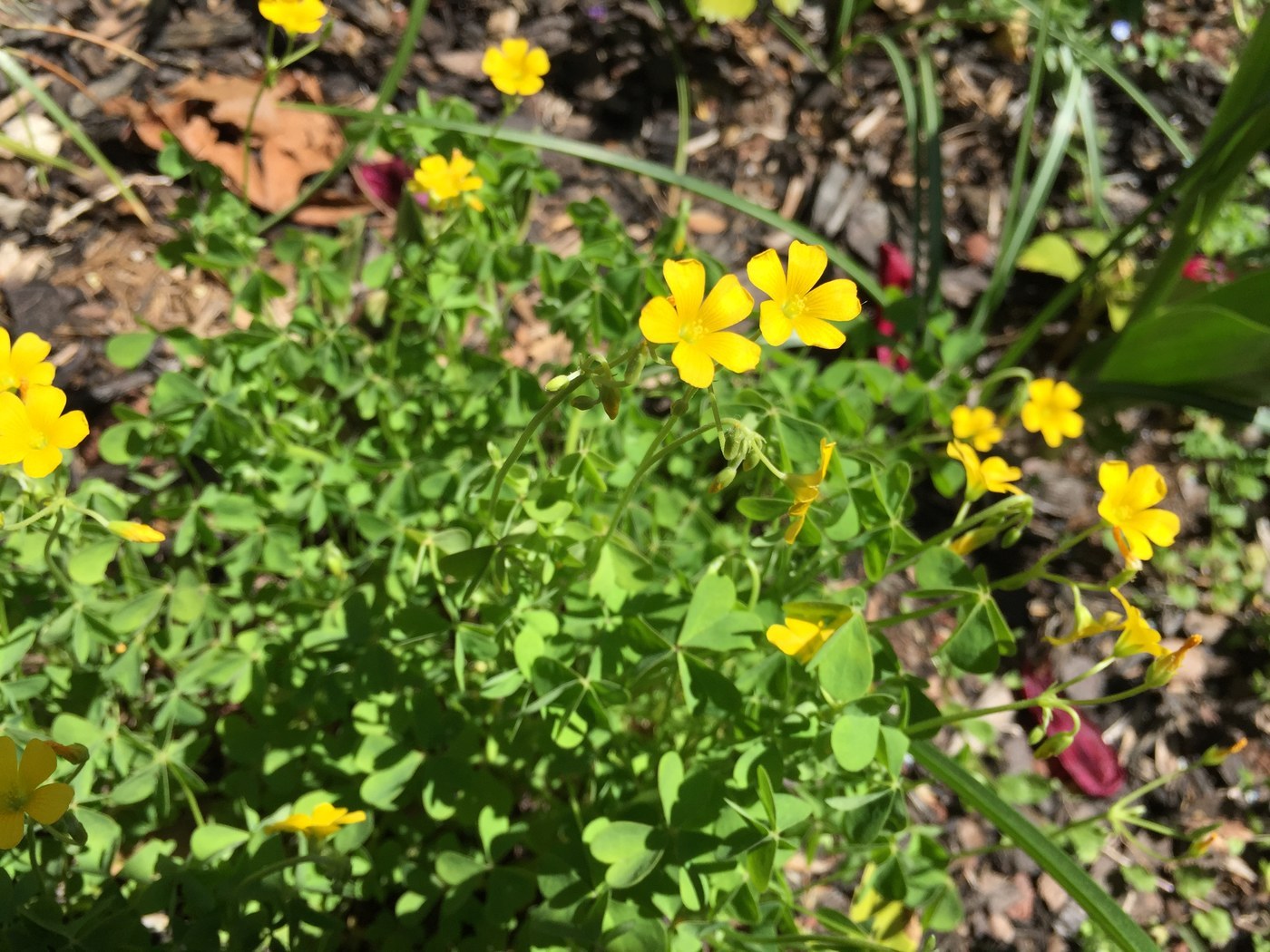
Yellow Woodsorrel
Oxalis stricta
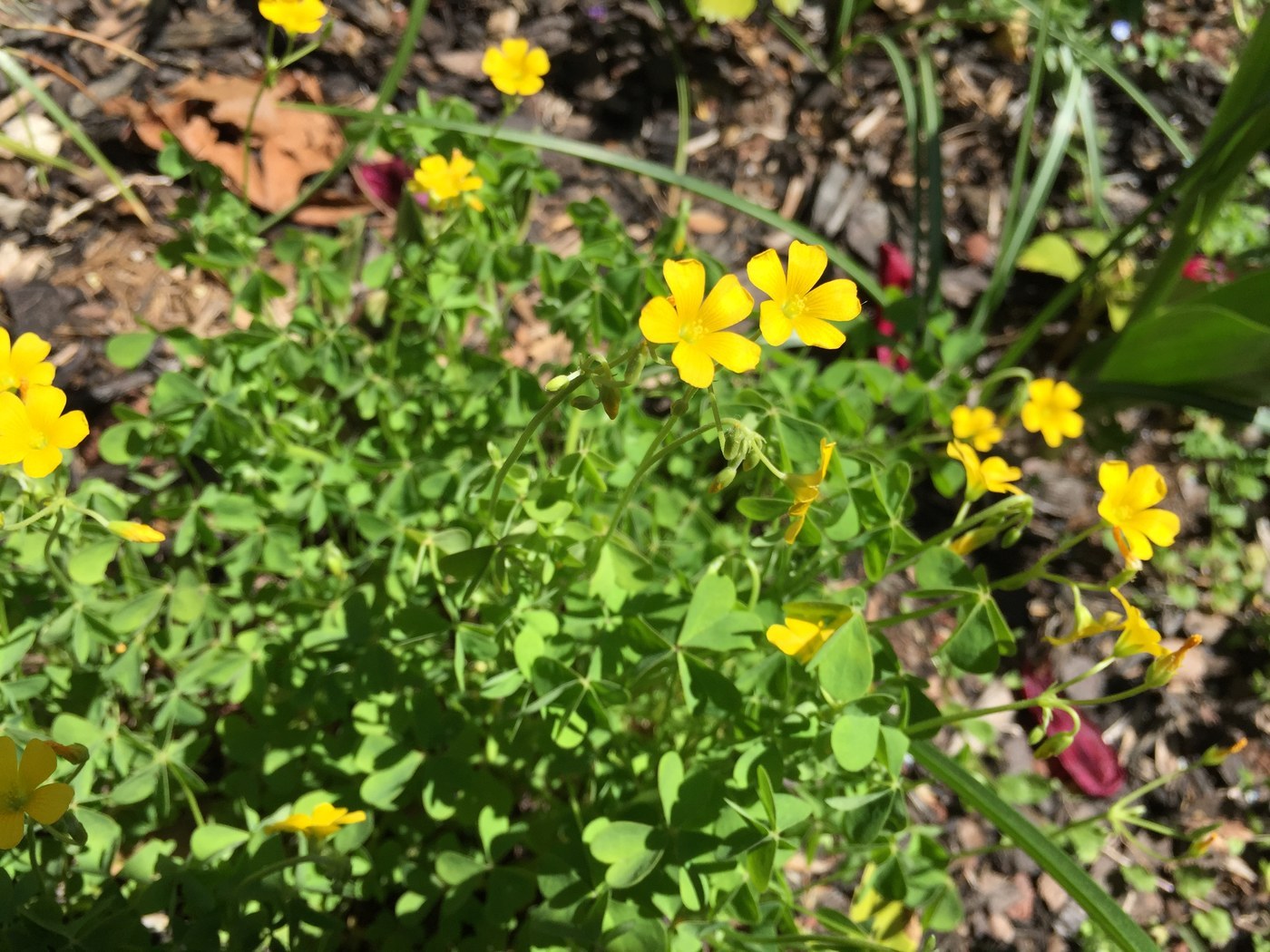
Yellow woodsorrel is a common clover-like weed with heart-shaped leaflets and small yellow flowers. It self-sows aggressively in lawns, gardens, and pots.
- Light
- Sun to part shade
- Water
- Average; tolerates dry spells
- Difficulty
- Easy
Got a plant like this?
Identify any plant from a photo, free.
Overview
Yellow woodsorrel (Oxalis stricta) is a low-growing herbaceous plant native to North America and East Asia, now a familiar weed across temperate gardens worldwide. Its clover-like leaves and bright yellow flowers make it easy to recognize, and its leaves fold down at night and in bright sun.
The plant spreads enthusiastically by seed, ejecting ripe seeds explosively from slender pods, and it readily colonizes lawns, flower beds, container plants, and cracks in pavement.
Several similar Oxalis species share the woodsorrel name and look nearly identical.
How to identify it
Identify yellow woodsorrel by its three heart-shaped leaflets, yellow flowers, and exploding seed pods.
- Leaves: Three inverted-heart-shaped leaflets (like a shamrock), often folding down at night
- Flowers: Small, five-petaled, bright yellow, about 1/2 inch across
- Pods: Slender, upright, okra-like capsules that burst to fling seeds several feet
- Habit: Branching, erect to sprawling, usually 6-15 inches tall
- Stems: Slender, branching, often rooting where they touch the ground
Care & growing
Often grown unintentionally; managed as an easy-to-pull but persistent weed.
- Control: Hand-pull young plants before pods form; remove the whole root
- Mulch: Discourages seed germination in beds
- Persistence: Explosive seed dispersal and a soil seed bank make it recurrent
- If grown intentionally, it thrives in sun to part shade in almost any soil with average moisture
Habitat & origin
Native to eastern North America and parts of East Asia, yellow woodsorrel is now widespread across temperate regions worldwide.
It grows in disturbed, open ground: lawns, gardens, fields, roadsides, woodland edges, and container plants. It tolerates a wide range of soils and both sun and partial shade, making it nearly ubiquitous in cultivated areas.
Frequently asked questions
Is yellow woodsorrel the same as clover?
No. Its leaflets are heart-shaped and notched, while true clovers have oval leaflets and round pink or white flower heads. They only superficially resemble each other.
Why does it spread so quickly?
Its seed pods burst open and fling seeds several feet, so it self-sows aggressively across lawns, beds, and even potted plants.
How do I get rid of it?
Hand-pull plants with their roots before the pods mature, mulch garden beds, and stay consistent, since the seed bank keeps producing new plants.
Yellow Woodsorrel guides
In-depth guides for identifying, growing, and caring for Yellow Woodsorrel.
How to Care for Yellow Woodsorrel
Grow Yellow Woodsorrel (Oxalis stricta), an easy, cheerful clover-leaved plant with bright yellow flowers that tolerates sun, shade, and dry spells.
Yellow Woodsorrel Identification Guide
Identify yellow woodsorrel (Oxalis stricta) by its clover-like heart-shaped leaflets in threes, small five-petaled yellow flowers, and okra-like seed capsules that burst.