Wood Betony
Stachys officinalis
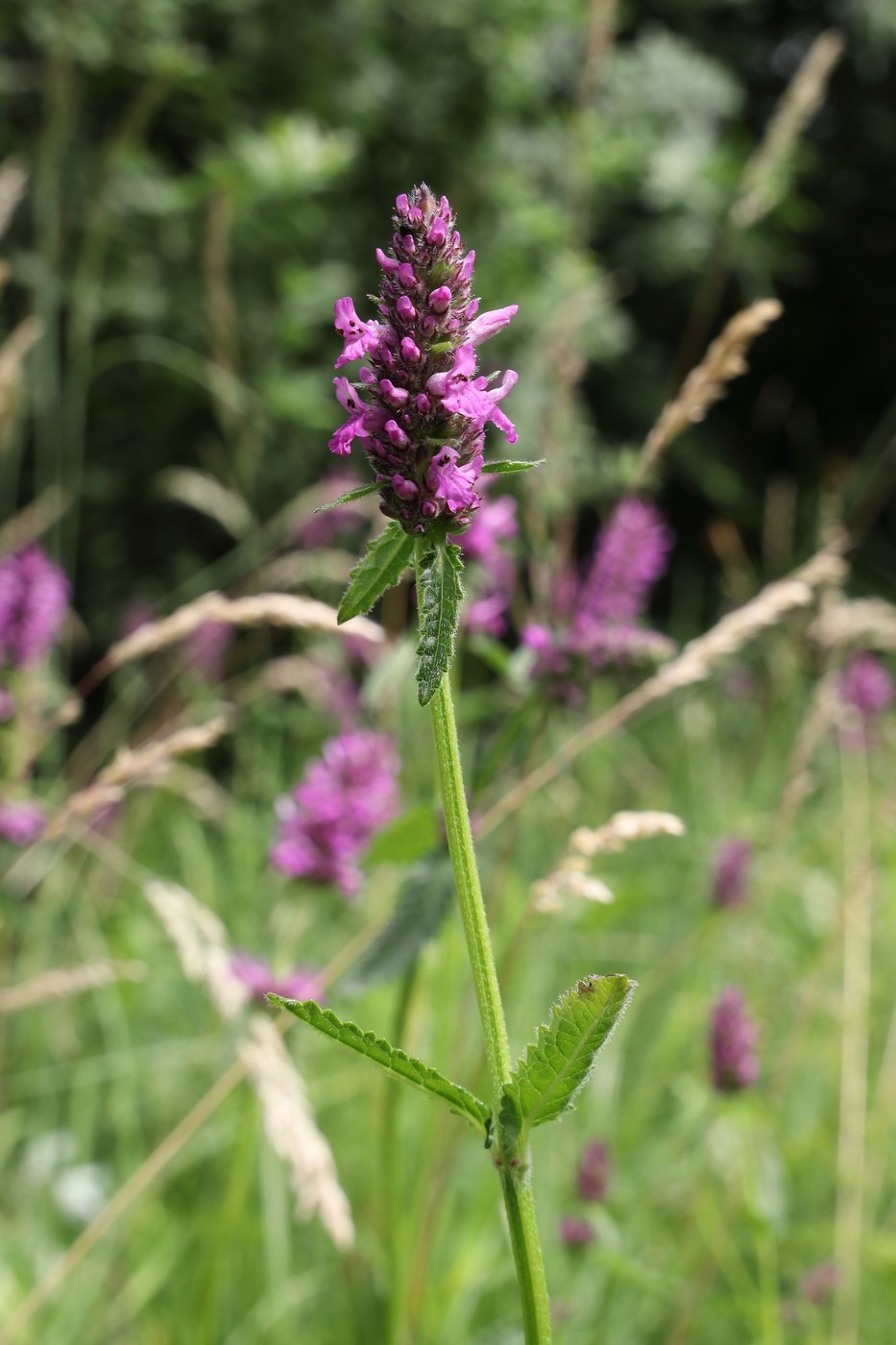
Wood betony is a clump-forming perennial herb with crinkled, scalloped leaves and spikes of reddish-purple flowers beloved by bees. It was a widely grown garden plant in medieval Europe.
- Light
- Full sun to part shade
- Water
- Moderate; keep evenly moist
- Difficulty
- Easy
Got a plant like this?
Identify any plant from a photo, free.
Overview
Wood betony (Stachys officinalis) is a mint-family perennial that forms tidy rosettes of textured foliage topped by dense spikes of magenta to purple blooms in summer.
In medieval times it was a celebrated garden plant, grown in monastery and churchyard gardens. Today it is valued as a reliable border plant in cottage and pollinator gardens. It should not be confused with the unrelated lousewort betonies (Pedicularis).
How to identify it
- Foliage: Oblong, deeply veined, scallop-edged leaves forming a basal rosette
- Flowers: Dense, interrupted spikes of two-lipped reddish-purple to magenta flowers
- Habit: Clumping perennial 1-2 ft tall in bloom
- Stems: Square stems typical of the mint family, but the plant is only faintly aromatic
- Bloom time: Early to midsummer
Care & growing
Light: Full sun to partial shade.
Water: Prefers consistently moist but well-drained soil; tolerates some drought once established.
Soil: Average to humus-rich, well-drained soil.
Temperature: Hardy to USDA zone 4.
Feeding: Minimal; an annual compost topdressing suffices.
Propagation: Divide clumps in spring or fall, or sow seed. Deadhead to prolong bloom.
Habitat & origin
Wood betony is native to Europe, western Asia, and North Africa, where it grows in meadows, open woodlands, grassy heaths, and hedgerows.
It is widely cultivated in cottage gardens, pollinator borders, and naturalistic plantings across temperate regions.
Frequently asked questions
Is wood betony related to mint?
Yes, it belongs to the mint family (Lamiaceae) and has the characteristic square stems, though it is only mildly aromatic.
Is wood betony good for pollinators?
Very much so. Its dense purple flower spikes are highly attractive to bees and butterflies through summer.
Does wood betony spread aggressively?
No. Unlike many mint relatives it stays in tidy clumps and is easy to manage in the garden.
Wood Betony guides
In-depth guides for identifying, growing, and caring for Wood Betony.
How to Care for Wood Betony
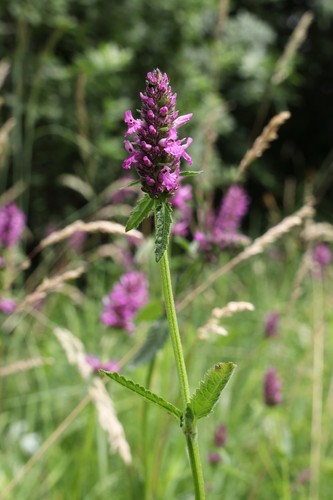
Grow Wood Betony (Stachys officinalis) with tips on light, watering, soil and dividing for tidy rosettes and spikes of purple summer blooms.
Wood Betony Identification Guide
Recognize wood betony (Betonica/Stachys officinalis) by its crinkled, scalloped basal leaves and dense terminal spikes of reddish-purple flowers.