
Bee Balm Identification Guide
Identify bee balm (Monarda) by its square stems, aromatic mint-family leaves, and shaggy, ragged crowns of tubular flowers loved by pollinators.
Read the full Bee Balm encyclopedia entry →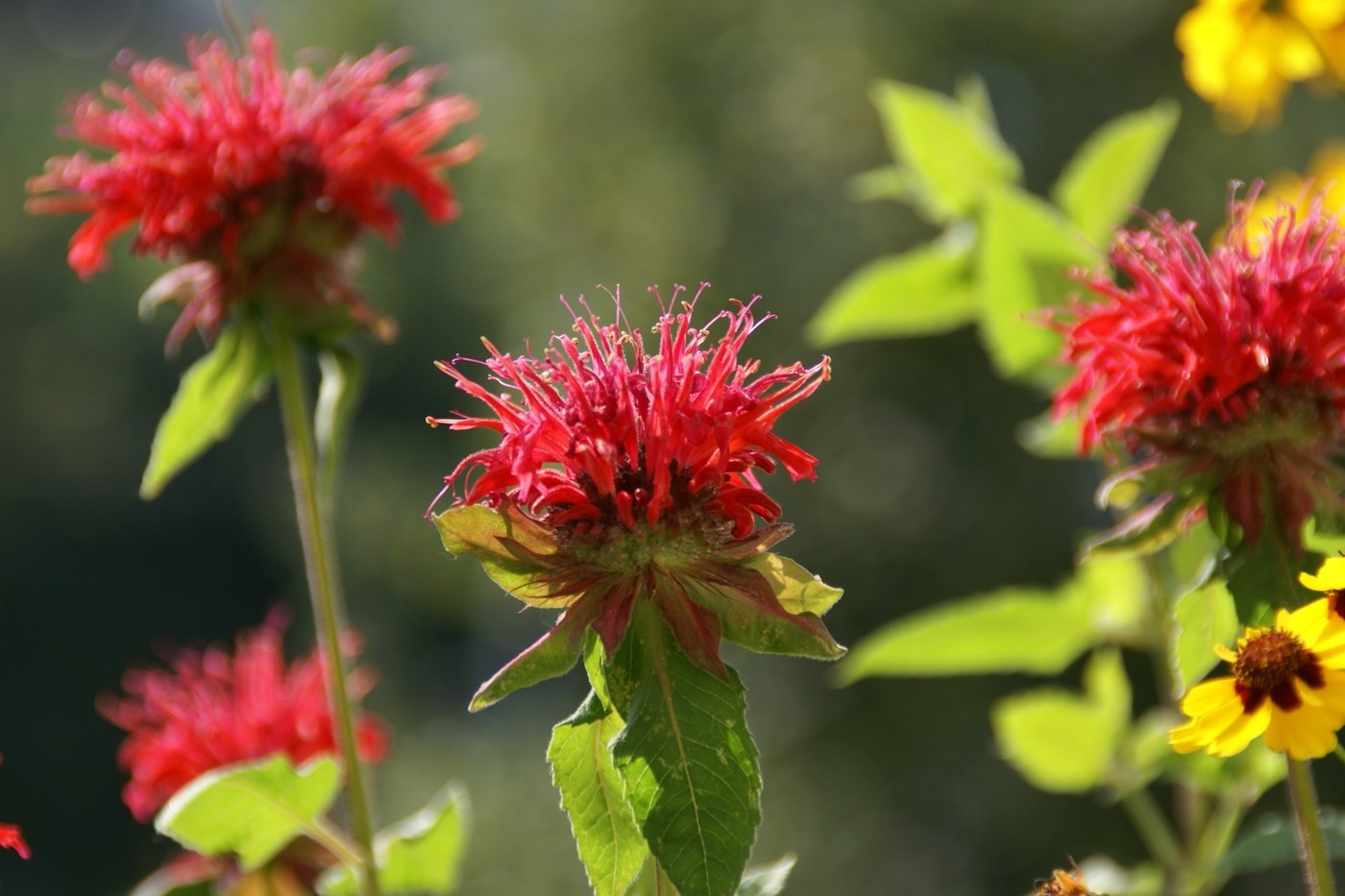
Key Identifying Features
Bee balm (Monarda), also called bergamot or Oswego tea, is a mint-family perennial instantly recognized by its shaggy, pom-pom-like flower heads of slender tubular flowers, on square stems with strongly aromatic leaves.
- Flowers: ragged whorled clusters of tubular, two-lipped blooms (red, pink, purple, lavender, white)
- Stems: square (four-sided)
- Leaves: aromatic, opposite, toothed
- Habit: upright, 2-4 ft, spreading clumps
Leaves & Stems
The square stems confirm the mint family. Leaves are opposite, ovate to lance-shaped, with toothed (serrated) margins and prominent veins, often with a reddish tinge near the flowers. Crushing the leaves releases a strong, pleasant, oregano-thyme-like aroma (the scent recalls bergamot orange, hence the alternate name). Plants spread by rhizomes to form colonies.
Flowers & Fruit
At the stem tips sit dense, rounded heads of many narrow, tubular, two-lipped flowers that radiate outward in a tousled, fireworks-like burst. Colorful, leaf-like bracts beneath the head often share the flower color. Wild scarlet bee balm (Monarda didyma) is brilliant red; wild bergamot (Monarda fistulosa) is lavender-pink. The heads attract bees, butterflies, and hummingbirds. After bloom, small nutlets form, and the dried seed heads persist.
How to Tell It Apart from Look-Alikes
- Other mints: square stems and aromatic leaves are shared, but bee balm's large shaggy terminal flower heads are distinctive; most mints have small flowers in leaf axils.
- Bergamot vs. scarlet: M. fistulosa (lavender, often a single head, gray-green leaves, dry uplands) vs. M. didyma (red, moist sites).
- Wild basil / horsemint: smaller, less showy heads.
- Phlox: flat five-petaled flowers in clusters, round stems, not tubular two-lipped flowers.
The sure combo is square stem + aromatic toothed leaves + shaggy tubular flower head.
Where You'll Find It
Bee balm grows in moist meadows, stream banks, woodland edges, and pollinator gardens; wild bergamot favors dry prairies and roadsides. It is native to North America and widely planted. Powdery mildew on the leaves is common and can be a supporting clue.
Quick ID Checklist
- Square stems (mint family)
- Aromatic leaves when crushed
- Opposite, toothed leaves
- Shaggy, ragged heads of tubular two-lipped flowers
- Colored bracts beneath the flower head
- Spreading clumps, loved by bees and hummingbirds
Frequently asked questions
How do I know it's bee balm and not another mint?
All mints have square stems and aromatic leaves, but bee balm is set apart by its large, shaggy, pom-pom flower heads of tubular two-lipped blooms at the stem tips, often with colored bracts beneath.
What's the difference between scarlet bee balm and wild bergamot?
Scarlet bee balm (Monarda didyma) has bright red flowers and likes moist soil, while wild bergamot (Monarda fistulosa) has lavender-pink flowers, grayer leaves, and grows in dry prairies and roadsides.
Does bee balm really smell good?
Yes. Crushed leaves give off a strong, pleasant aroma resembling oregano, thyme, and bergamot orange, which is why it's also called bergamot and was used for tea.
Why does my bee balm have white powdery leaves?
That's powdery mildew, a very common fungal issue on Monarda, especially in humid or crowded conditions. It won't usually kill the plant and can actually help confirm the ID.