Beet Identification Guide
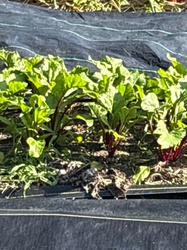
Identify the beet plant (Beta vulgaris) by its glossy red-veined leaves, swollen round root, and deep red sap that stains.
Read the full Beet encyclopedia entry →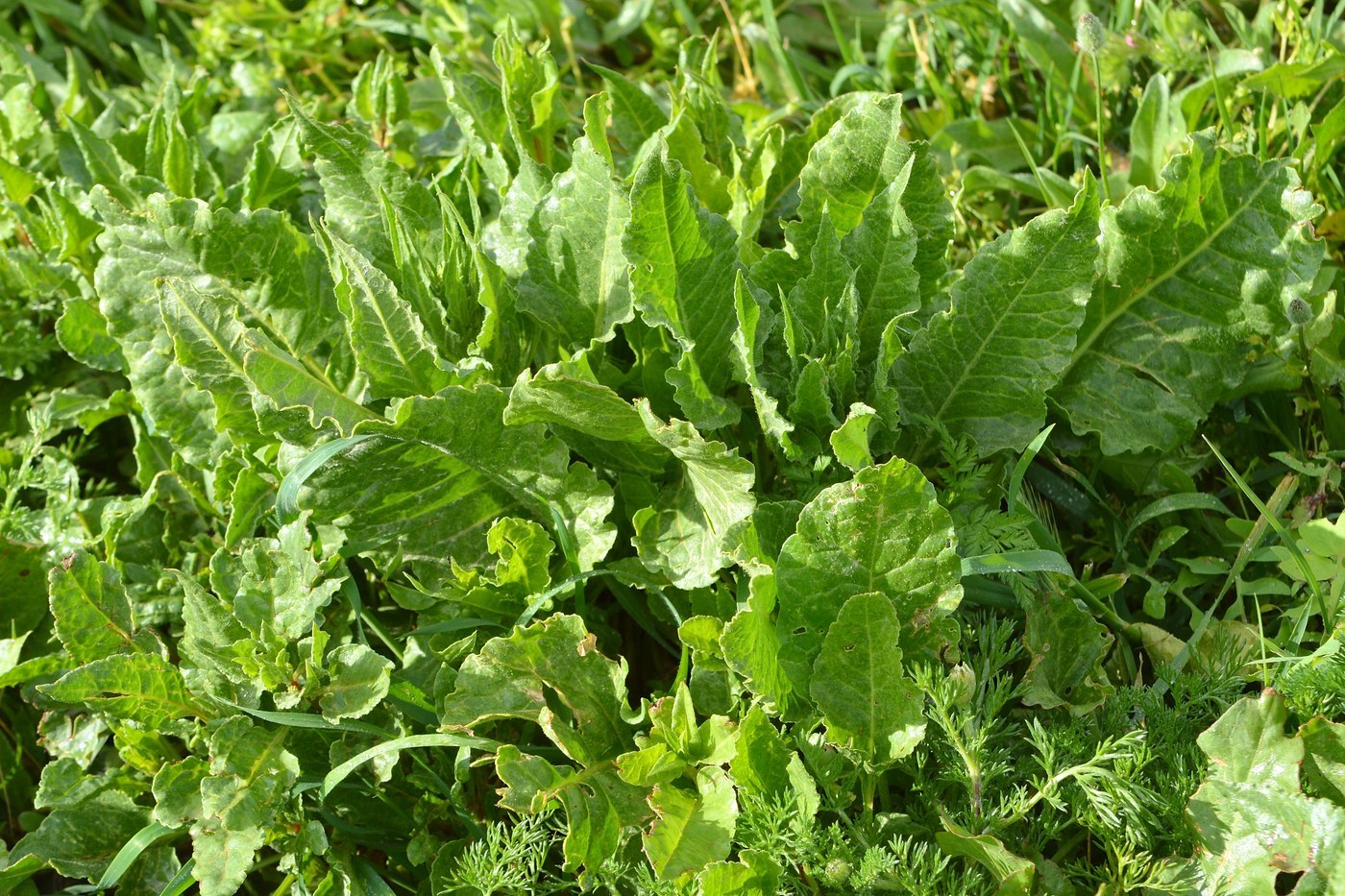
Key Identifying Features
The beet (Beta vulgaris) is a cool-season biennial root vegetable in the amaranth family (Amaranthaceae). Identify it by glossy dark-green leaves with strikingly red or pink veins and stalks, a swollen rounded root (usually deep red-purple but also golden, white, or candy-striped), and red sap that stains hands and cutting boards.
Leaves & Stems
- Leaves grow in a rosette from the root crown, on succulent stalks (petioles) that are often bright red, pink, or yellow.
- Leaf blades are oval to heart-shaped, glossy, and smooth-edged or slightly wavy, with conspicuous colored veins.
- The leaves resemble those of Swiss chard, a close relative.
Roots
- The signature feature is the swollen, globe- to top-shaped storage root sitting at the soil surface, often with shoulders exposed.
- Most familiar beets are deep red-purple inside and out, but varieties include golden-yellow, white, and concentric red-and-white "Chioggia" rings.
- Cut flesh bleeds a vivid red (betalain) juice that stains readily — a near-definitive ID clue.
- A single thin taproot tail extends below the bulb.
Flowers & Fruit
- In its second year, the beet bolts into a tall, branched flower spike up to 1.5 m (5 ft).
- Flowers are tiny, green, and petal-less, clustered along the stalk.
- Seeds form in corky multigerm clusters that each yield several seedlings.
How to Tell It Apart from Look-Alikes
- Swiss chard (Beta vulgaris subsp. cicla): the same species bred for leaves — colorful stalks but no swollen root.
- Radish/turnip: brassica roots with bristly or lobed leaves; beet leaves are smooth by contrast.
- Spinach (same family): rosette of dark leaves but no enlarged root and no red sap.
Where You'll Find It
Beets are a cool-season garden crop grown in rows, beds, and containers in full sun and loose soil. They tolerate frost and are grown in spring and fall. Look for clusters of red-stalked, red-veined glossy leaves with a rounded root crown showing at the soil line.
Quick ID Checklist
- Rosette of glossy leaves with red/pink veins and stalks
- Swollen round storage root at the soil surface
- Deep red (or gold/white/striped) flesh
- Red staining sap when cut
- Tall green petal-less flower spike in second year
Frequently asked questions
How can I be sure a plant is a beet and not chard?
Beet and chard are the same species, so check the root: beets form a swollen, round storage root while chard does not. Both share colorful stalks and red-veined leaves, but only the beet has the bulb.
Why does cutting a beet stain everything red?
Beets contain betalain pigments that produce a vivid, fast-spreading red (or yellow in golden types) juice. This staining sap is one of the most reliable ways to confirm you have a beet.
Are all beets red inside?
No. While the classic beet is deep red-purple, varieties include golden-yellow, white, and the candy-striped Chioggia with concentric red-and-white rings. The swollen round root still identifies them as beets regardless of internal color.
What does the beet flower stalk look like?
In its second year the beet bolts into a tall, branched flower spike up to 1.5 m, lined with tiny green, petal-less flowers that form corky multigerm seed clusters.
Beet identified by the community
Recent Beet specimens identified with Plant Identifier.