
Bellflower Identification Guide
Identify bellflower by its bell- or star-shaped five-lobed flowers, usually blue-violet, with milky sap and alternate leaves.
Read the full Bellflower encyclopedia entry →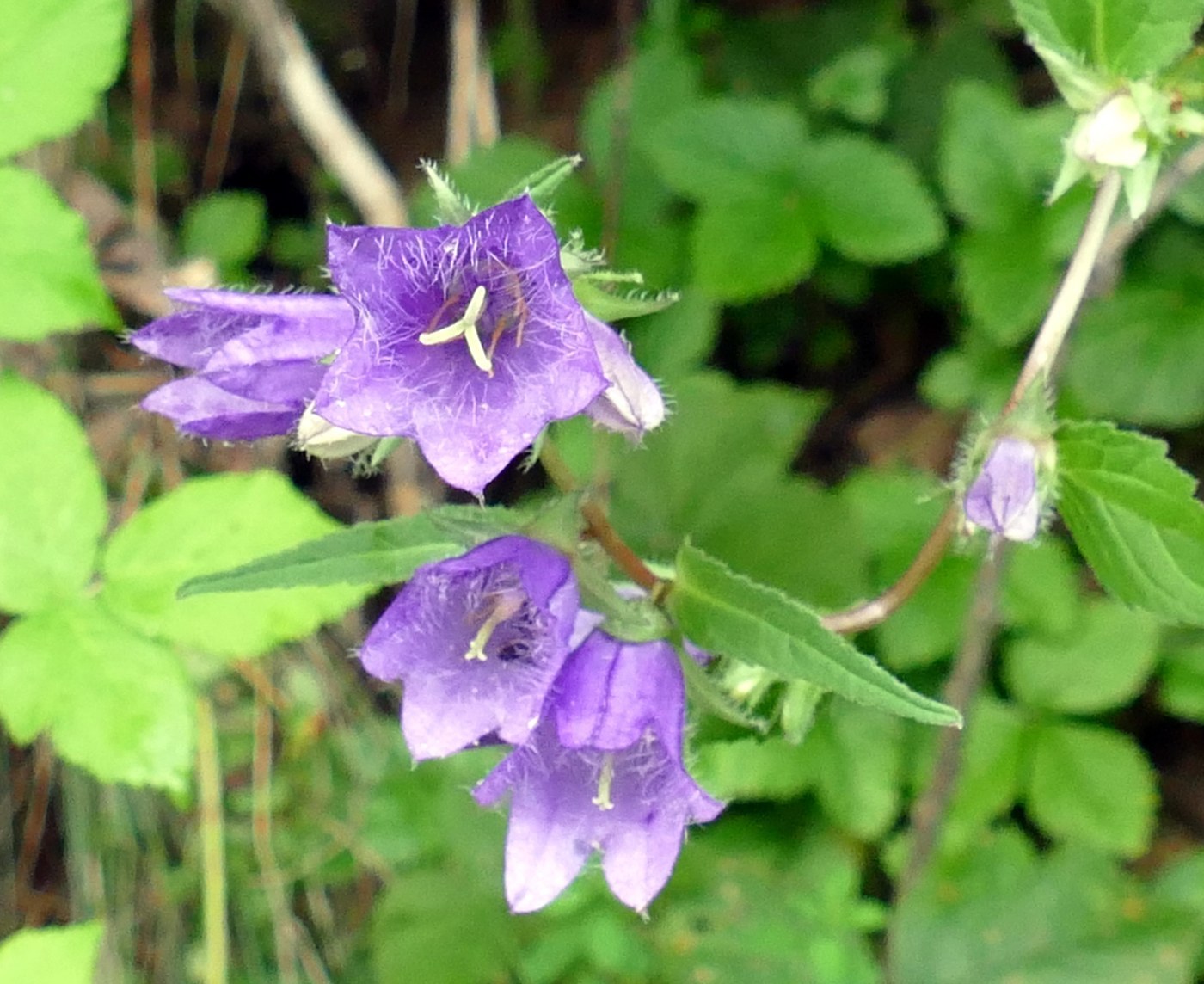
Key Identifying Features
Bellflower (Campanula) is named for its bell- or cup-shaped flowers with five flaring lobes, most often in shades of blue, violet, or purple (sometimes white or pink). The five-lobed, fused-petal bell is the genus's defining signature, and broken stems exude milky sap.
- Bell-, cup-, or star-shaped flowers with five lobes
- Usually blue-violet to purple (also white, pink)
- Milky sap when stems or leaves are broken
- A prominent three-part style in the flower center
Leaves & Stems
Leaves are alternate and vary by species — often heart-shaped or rounded at the base and narrower and lance-shaped up the stem, with toothed or scalloped margins. The basal leaves frequently differ markedly from the stem leaves. Stems may be upright (tall border species), trailing (rockery species), or clump-forming, and most exude milky latex when cut. Heights range from a few centimeters in alpine cushions to over 1 m in tall species like Campanula latifolia.
Flowers & Fruit
Flowers are borne singly, in spikes, or in loose clusters, often nodding. Each has five petals fused into a bell that flares into five pointed lobes; some species are more open and star-shaped. The center shows a slender style splitting into a three-lobed stigma. Bloom is mostly early to late summer. Fruit is a distinctive nodding dry capsule that opens by small pores or flaps near the base or top, shaking out fine seeds. The dominant blue-violet coloring is a strong cue.
How to Tell It Apart from Look-Alikes
- Gentian: Also blue and tubular, but gentian flowers are usually more trumpet-shaped, leaves opposite, and there's no milky sap.
- Lobelia: Blue and tubular too, but lobelia flowers are strongly two-lipped (2 up, 3 down), not symmetric five-lobed bells.
- Penstemon / foxglove: Tubular but two-lipped or spotted, and lack milky sap.
The symmetric five-lobed bell + blue-violet color + milky sap confirm bellflower.
Where You'll Find It
Bellflowers grow in meadows, woodland edges, rocky slopes, walls, and gardens across the Northern Hemisphere. Alpine and trailing species cling to rockeries and stone walls; tall species fill borders and wild grassland. Some, like creeping bellflower (Campanula rapunculoides), are tenacious garden weeds. Most prefer sun to part shade and well-drained soil.
Quick ID Checklist
- Bell- or star-shaped flowers with five lobes
- Mostly blue, violet, or purple (or white/pink)
- Milky sap in broken stems/leaves
- Often nodding flowers
- Three-lobed stigma in flower center
- Capsule opens by pores/flaps to release fine seed
Frequently asked questions
What gives bellflower its name?
The flowers are shaped like little bells or cups with five flaring lobes formed from fused petals. This symmetric five-lobed bell, usually blue-violet, is the defining feature of the genus Campanula.
How do I tell bellflower from lobelia, since both are blue and tubular?
Bellflower has a symmetric five-lobed bell, while lobelia has a strongly two-lipped flower with two lobes up and three down. Bellflower also exudes milky sap, which helps confirm it.
Does bellflower really have milky sap?
Yes. Most Campanula species release a milky latex when stems or leaves are broken, a useful confirming trait that separates them from gentians and penstemons.
Why is bellflower sometimes considered a weed?
Creeping bellflower (Campanula rapunculoides) spreads aggressively by rhizomes and seed and is hard to eradicate, so despite its pretty blue bells it's regarded as an invasive garden weed in many regions.