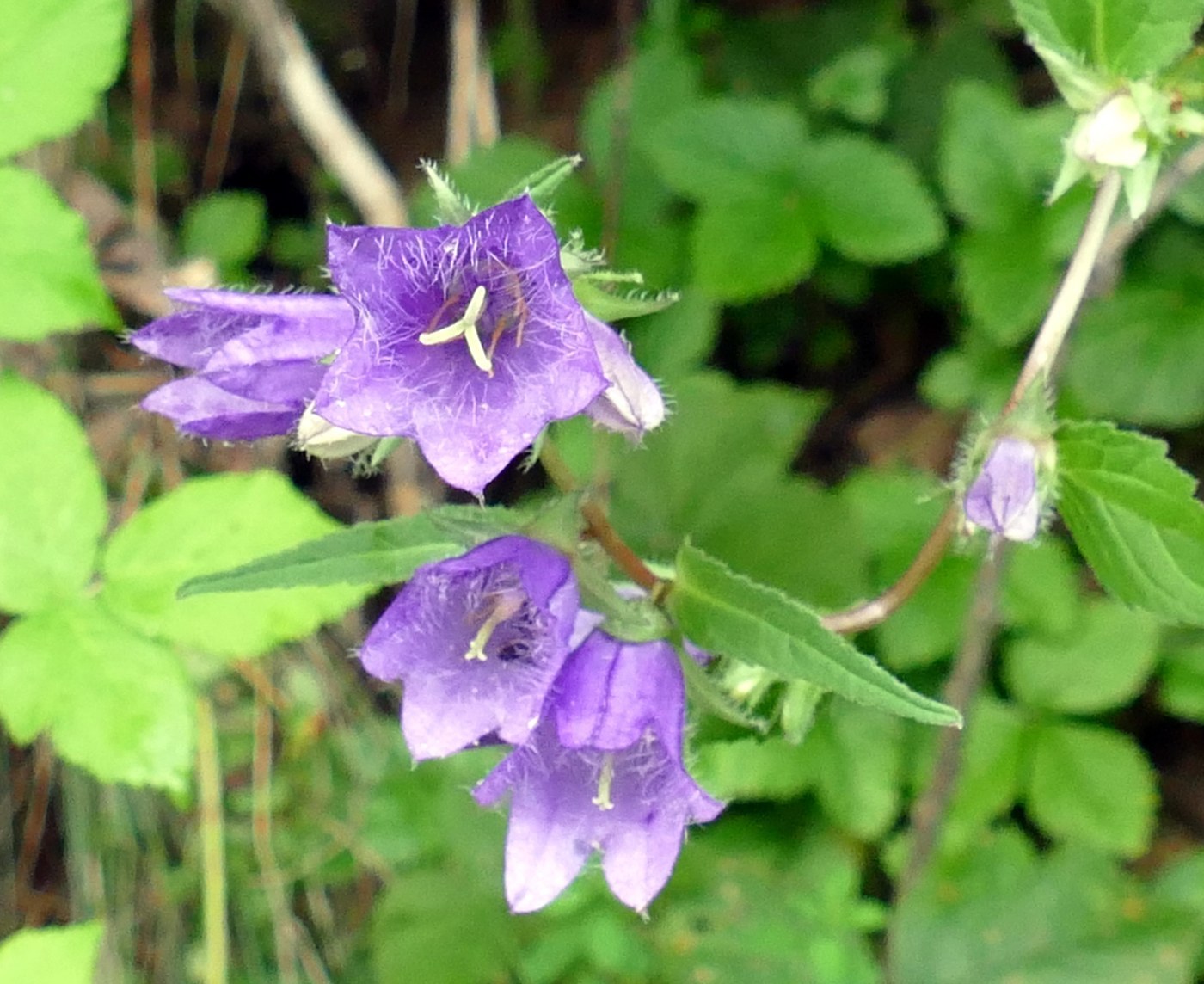
Bellflower
Campanula
Bellflowers are a large group of perennials and biennials bearing bell- or star-shaped flowers, usually in blue, purple or white. They range from low rock-garden creepers to tall border plants.
- Light
- Full sun to part shade
- Water
- Moderate; keep evenly moist
- Difficulty
- Easy
Got a plant like this?
Identify any plant from a photo, free.
Overview
Bellflower is the common name for Campanula, a large and varied genus named for the bell shape of many of its flowers (campanula means 'little bell'). The group spans tiny alpine creepers, spreading ground covers, and stately border perennials and biennials like Canterbury bells (C. medium).
Most bloom in cool shades of blue, violet, lavender and white through early to midsummer. Their easygoing nature, long bloom and pollinator appeal make campanulas mainstays of cottage and rock gardens alike.
How to identify it
Bell- or star-shaped flowers, usually blue to violet, define the genus.
- Flowers: bell-, cup- or star-shaped, five-lobed; blue, purple, lavender, pink or white
- Leaves: variable by species, often toothed; basal rosettes plus stem leaves
- Habit: ranges from mat-forming creepers a few inches tall to upright clumps 3+ ft
- Form variation: some species clump, others spread by runners and can be vigorous
Care & growing
Most bellflowers are easygoing in sun or light shade.
- Light: full sun to part shade; afternoon shade helps in hot climates
- Water: moderate; keep soil evenly moist but well-drained
- Soil: average, well-drained, neutral to slightly alkaline soil
- Temperature: many are very hardy (zones 3-8), varying by species
- Feeding: light spring feeding
- Maintenance: deadhead to prolong bloom; some spreading types need containing
- Propagation: division, cuttings or seed depending on species
Habitat & origin
Campanula species are native across the temperate Northern Hemisphere, with many from Europe and the Mediterranean mountains, plus Asia and North America. They grow in meadows, woodlands, cliffs and alpine rocky sites.
The wide variety of forms suits everything from rock gardens and walls (for compact alpine types) to cottage borders (for taller species), and bellflowers are grown throughout temperate gardens worldwide.
Frequently asked questions
Are all bellflowers blue?
Blue and violet are most common, but campanulas also come in white, pink and lavender. The genus is large and varied in both color and form.
Which bellflower is best for a rock garden?
Choose low, mat-forming alpine species like Campanula portenschlagiana or C. carpatica. Tall border types like Canterbury bells suit cottage beds instead.
Are bellflowers invasive?
Most clump-forming campanulas are well behaved, but a few spreading types, such as creeping bellflower, can be aggressive. Pick clumping species if you're concerned.
Do bellflowers attract pollinators?
Yes, especially bees, which readily work the bell-shaped blooms. They're a good choice for pollinator gardens.
Bellflower guides
In-depth guides for identifying, growing, and caring for Bellflower.
How to Care for Bellflower
Grow Campanula bellflowers with even moisture, full sun to part shade, and simple deadheading for waves of blue and white bells.
Bellflower Identification Guide
Identify bellflower by its bell- or star-shaped five-lobed flowers, usually blue-violet, with milky sap and alternate leaves.