
Bells of Ireland Identification Guide
Recognize bells of Ireland (Moluccella laevis) by its tall green spikes ringed with shell-like calyx 'bells' and its minty square stems.
Read the full Bells of Ireland encyclopedia entry →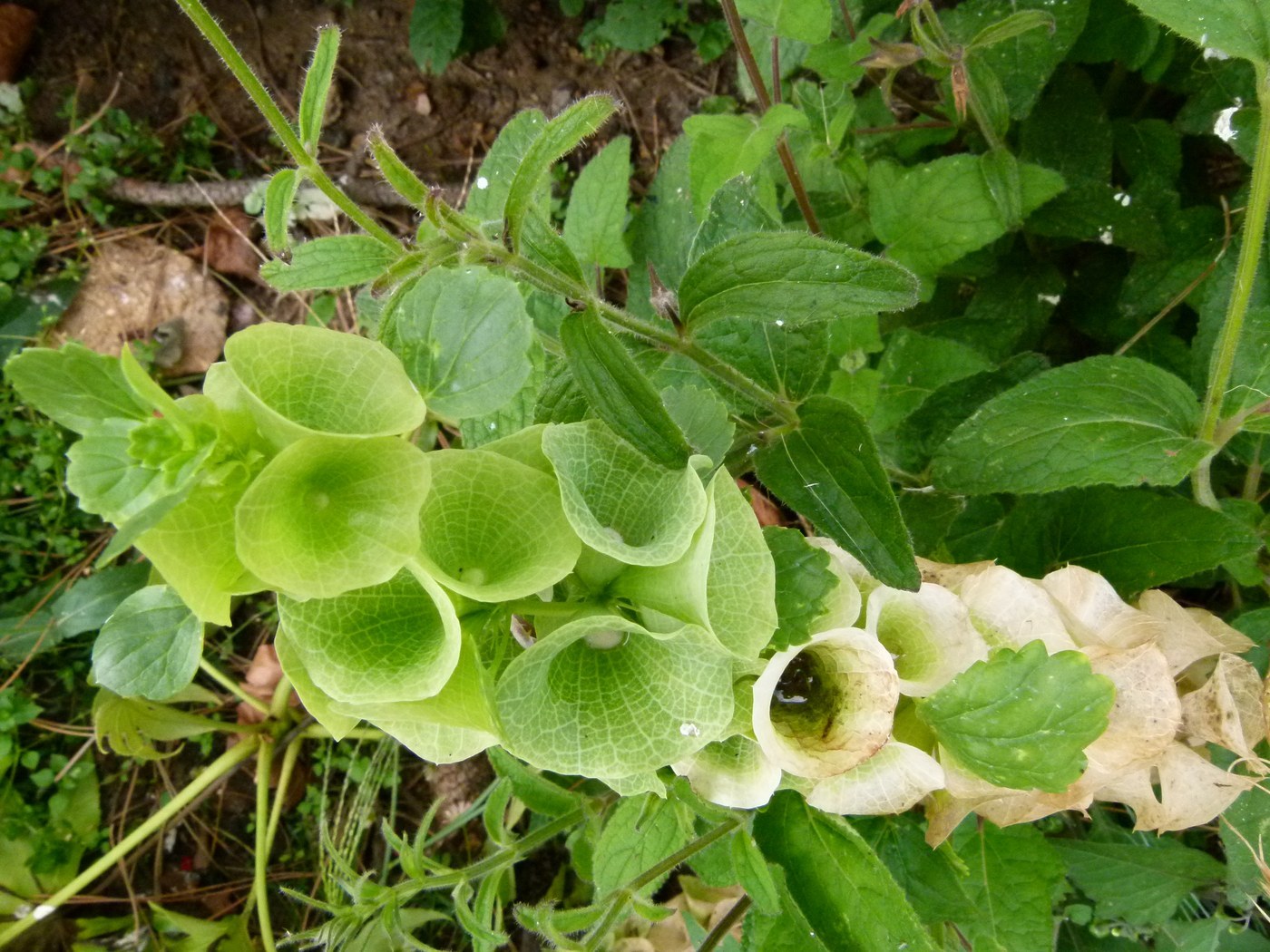
Key Identifying Features
Bells of Ireland (Moluccella laevis) is an unmistakable annual in the mint family (Lamiaceae), grown for its tall green spikes lined with large, shell-shaped 'bells.' Those bells are not petals but enlarged, cupped green calyces; the true flower is tiny and tucked inside each one. Despite the name, the plant is native to the eastern Mediterranean, not Ireland.
- Erect annual, 2–3 feet tall, often grown for cut flowers
- Whorled spikes of apple-green, funnel- to shell-shaped calyces
- Square stems typical of the mint family
- Light minty scent when foliage is bruised
Leaves & Stems
Stems are square in cross-section, upright, and pale green, often a bit brittle. Leaves are opposite, rounded to broadly oval, with scalloped (rounded-toothed) margins and a long stalk. Lower leaves are larger; upper leaves shrink and give way to the flowering whorls. Some bells carry tiny spines at their rim, so handle older stems carefully.
Flowers & Fruit
The showy part is the whorl of green bells arranged in tiers up the stem. Inside each bell sits a small white-to-pale-lavender, fragrant, two-lipped flower. After bloom, the bells persist and dry to a papery tan, which is why florists prize the stems both fresh and dried. Seeds form as small nutlets within the dried calyx.
How to Tell It Apart from Look-Alikes
- Nothing else looks quite like the tiered green bells, but novices sometimes confuse the spike with other mint-family plants. The combination of square stems, opposite scalloped leaves, and green calyx cups (not colored petals) is diagnostic.
- Lady's mantle has frothy yellow-green flowers but lacks the distinct cupped bells and spiky whorls.
- Green-flowered tobaccos or Nicotiana 'Lime Green' have tubular colored petals, not green shell-shaped calyces.
Where You'll Find It
Bells of Ireland is grown in cottage and cutting gardens in full sun to part shade with cool roots. It prefers cool summers and may bolt or struggle in extreme heat. It self-sows readily where happy, so volunteer seedlings appear the following spring. It is not typically found growing wild outside its Mediterranean range.
Quick ID Checklist
- Erect 2–3 ft annual with square stems
- Tiers of green, shell-shaped bells up the spike
- Tiny white-lavender fragrant flower inside each bell
- Opposite, rounded, scallop-edged leaves
- Faint mint scent; bells dry to papery tan
If you spot a green flower spike ringed with cupped 'bells' on a square stem, it is bells of Ireland.
Frequently asked questions
Are the green 'bells' actually flowers?
No. The bells are enlarged, cup-shaped calyces; the real flower is the small, fragrant white-to-lavender bloom tucked inside each green bell.
Why is it in the mint family?
It has the family hallmarks: square stems, opposite leaves, two-lipped flowers, and a mild minty scent when the foliage is crushed.
Does it really come from Ireland?
No, the name refers only to the bell shape and green color. The plant is native to the eastern Mediterranean and western Asia.
Can I dry the stems?
Yes. The green bells fade to a papery tan as they dry and hold their shape well, making bells of Ireland popular in both fresh and dried arrangements.