
Bilberry Identification Guide
Identify bilberry (Vaccinium myrtillus) by its low angular green stems, small finely toothed deciduous leaves, solitary pink globe flowers, and single dark-blue berries that stain the fingers purple.
Read the full Bilberry encyclopedia entry →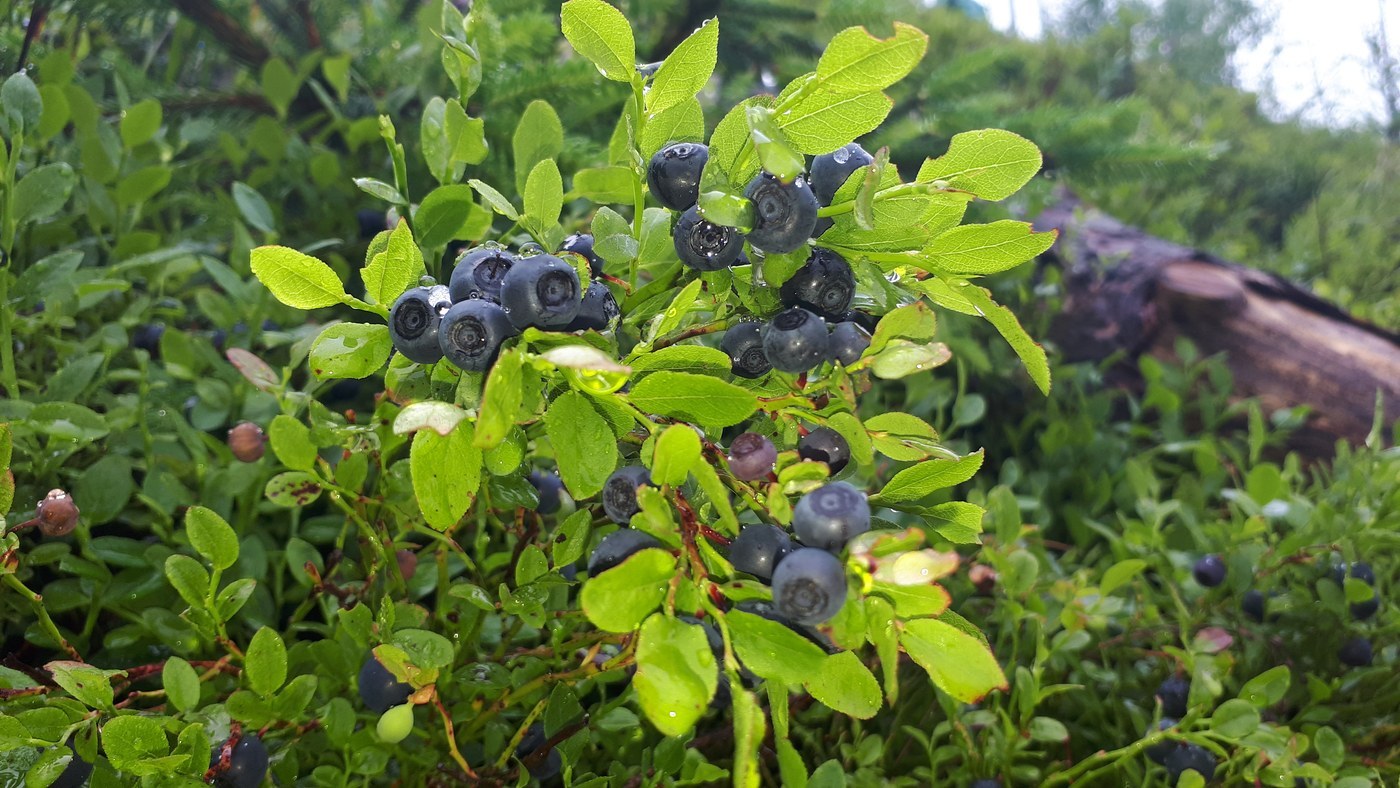
Key Identifying Features
Bilberry (Vaccinium myrtillus), also called whortleberry or European blueberry, is a low, deciduous dwarf shrub in the heath family, typically only 8–16 inches tall, forming dense ground-covering colonies. The most reliable field marks are its distinctly angled (ridged) green stems, berries borne singly rather than in clusters, and deep purple flesh that stains the fingers and tongue.
- Low, spreading shrub with bright green angular twigs
- Single dark-blue berries with dark purple flesh
- Small, finely toothed, oval deciduous leaves
Leaves & Stems
The stems are a key clue: they are green, ridged, and sharply angled (almost winged) rather than round and brown, staying green year-round. Leaves are alternate, simple, oval to egg-shaped, about 0.5–1.5 inches long, with finely serrated (toothed) margins, bright green, and thin-textured. They are deciduous, turning red before dropping in autumn. The whole plant is wiry and many-branched, spreading by underground rhizomes to form continuous mats.
Flowers & Fruit
Flowers appear singly (occasionally in pairs) in the leaf axils—an important distinction from cluster-flowering blueberries. Each is a small globular to urn-shaped bloom, about 1/4 inch, greenish-pink to rosy-red, hanging downward. The fruit is a round berry 5–9 mm across, blue-black with a faint waxy bloom but dark wine-purple inside. This dark internal flesh is the single best identification trait—cultivated blueberries have pale green flesh. Crushing a bilberry releases an intense purple-red juice that stains skin. There is a tiny crown (calyx remnant) at the berry's tip.
How to Tell It Apart from Look-Alikes
- Cultivated/American blueberries (Vaccinium corymbosum) are taller, fruit in clusters, and have pale, almost colorless flesh; bilberry fruits singly with dark purple flesh.
- Bog bilberry (Vaccinium uliginosum) has rounded brown (not angled green) twigs and untoothed, bluish leaves.
- Crowberry (Empetrum) has needle-like leaves and watery black fruit, quite different from bilberry's oval toothed leaves.
The green angular stems + solitary berries + purple-staining flesh combination is diagnostic.
Where You'll Find It
Bilberry is native across northern and central Europe and parts of northern Asia, growing in acidic, nutrient-poor soils of heathlands, moors, coniferous and birch woodlands, and mountain slopes. It favors cool, humid uplands and is often found as a dominant understory carpet under pines and birches. Look for it on acidic heaths and forest floors at higher latitudes or elevations.
Quick ID Checklist
- Low (under 16 in) deciduous heath shrub
- Green, sharply angled/ridged twigs
- Small, finely toothed oval leaves (red in autumn)
- Solitary pink-green urn-shaped flowers
- Single blue-black berries with dark purple flesh that stains
- Acidic heath, moor, or northern woodland habitat
Frequently asked questions
How do I tell bilberry apart from a blueberry?
Bilberries grow singly, are smaller, and have deep purple flesh that stains your fingers, while cultivated blueberries grow in clusters and have pale, nearly colorless flesh. Bilberry stems are also green and angular rather than rounded and woody.
What is the most reliable identification feature?
Cut or crush a ripe berry: bilberry flesh is dark wine-purple throughout and stains skin intensely, which immediately separates it from look-alike blueberries.
Are bilberry stems really green?
Yes. The young twigs are green, ridged, and sharply angled, staying green year-round, which is a quick way to distinguish bilberry from bog bilberry's rounded brown stems.
Where should I look for wild bilberry?
Search acidic, nutrient-poor heathlands, moors, and coniferous or birch woodland understory in cool northern or upland regions of Europe and northern Asia.