How to Care for Bindweed
A grower's guide to Convolvulus arvensis: a vigorous, drought-tolerant climbing vine with white to pink trumpet flowers that needs firm containment.
Read the full Bindweed encyclopedia entry →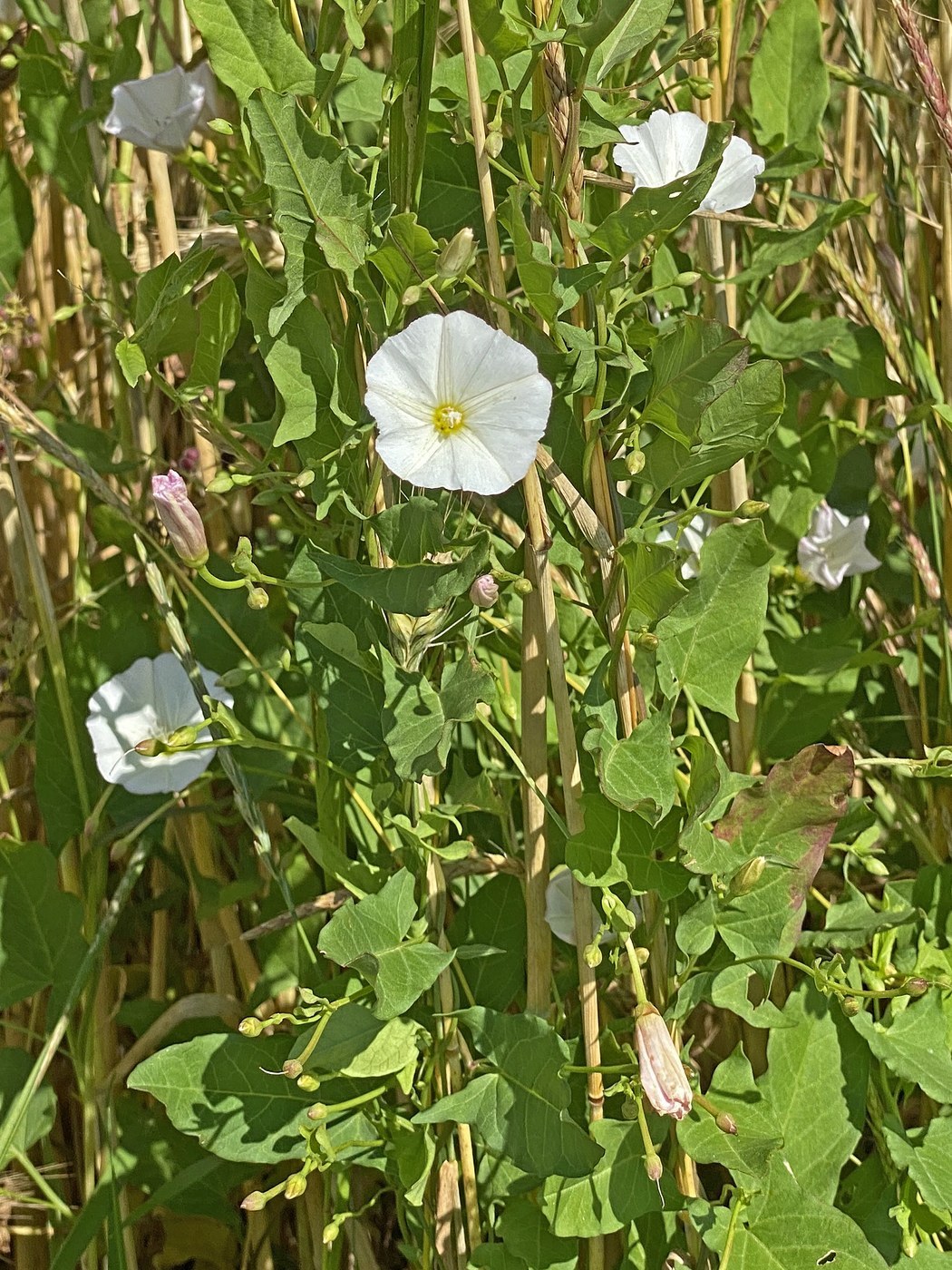
Bindweed (Convolvulus arvensis) is a fast-growing, twining perennial vine with arrow-shaped leaves and delicate white-to-pink trumpet flowers. It is famously vigorous and drought tolerant, so the real skill in growing it ornamentally is containment rather than coaxing.
Light
Bindweed performs best in full sun, where its flowers open most fully and stems climb most strongly. It tolerates part shade but grows leggier and blooms less. If grown deliberately for its flowers, give it the brightest position available.
Water
Once established, bindweed is highly drought tolerant thanks to a deep, extensive root system. Water young plants occasionally to settle them in, then let established plants rely largely on rainfall. Overwatering is unnecessary and only fuels its already aggressive spread.
Soil & Potting
Bindweed adapts to almost any soil, from poor and dry to average garden loam, provided it drains reasonably. If grown, a container is strongly recommended to restrain its running roots, since any root fragment left in open ground can regenerate. Use ordinary well-draining potting mix.
Humidity & Temperature
This is a tough, adaptable plant that shrugs off a wide range of temperatures and humidity levels. It grows through the warm season and dies back in cold winters, resprouting from its persistent roots. No special humidity is needed.
Feeding
Bindweed needs little to no feeding and grows enthusiastically in lean soil. Rich, fertile conditions simply accelerate its already rampant growth, so skip fertilizer entirely unless a plant is struggling in very poor sand.
Propagation
Bindweed spreads readily by seed and, even more aggressively, by creeping underground roots and rhizome fragments. Any small piece of root can sprout a new plant. Because of this, deliberate propagation is rarely needed and containment of stray fragments is far more important.
Repotting / Pruning
If container-grown, prune stems hard and often to keep the vine in bounds and prevent it seeding or escaping. Cut back runners the moment they reach beyond the pot. Repot rarely, and when you do, inspect for roots trying to grow through drainage holes into the ground below.
Common Problems & Pests
The main problem with bindweed is its own invasiveness; it can smother neighbouring plants and is extremely difficult to remove once rooted in open soil. Pests are seldom an issue. Occasionally aphids gather on soft new shoots, and rust or leaf spot may appear in crowded, damp conditions, but the plant usually outgrows minor damage.
Seasonal Care Tips
Expect vigorous growth and flowering through late spring and summer. Deadhead spent blooms promptly to prevent prolific self-seeding. Cut stems back before seeds set, and in autumn the top growth dies down while the roots overwinter. Stay vigilant year-round for stray runners escaping any container.
Frequently asked questions
How do I keep bindweed from taking over my garden?
Grow it only in a contained pot set on a hard surface, cut back runners immediately, and deadhead flowers before they set seed. Never let root fragments reach open soil, since each can sprout a new plant.
Does bindweed need much watering?
Very little. It is strongly drought tolerant once established thanks to deep roots. Water young plants to settle them, then let mature plants rely on rainfall.
Why is my bindweed all leaves and few flowers?
Too little sun or overly rich soil pushes leafy growth over blooms. Move it into full sun and withhold fertilizer to encourage more of its trumpet-shaped flowers.
Can I grow bindweed from a piece of root?
Yes, easily; even a small root fragment will sprout. This is exactly why it must be contained carefully, as stray pieces regenerate readily in open ground.
Bindweed identified by the community
Recent Bindweed specimens identified with Plant Identifier.