
Bitterroot Identification Guide
Recognize Bitterroot by its large rose-pink flowers sitting almost stemless on bare gravelly ground, its fleshy early leaves that wither before bloom, and its dry western habitat.
Read the full Bitterroot encyclopedia entry →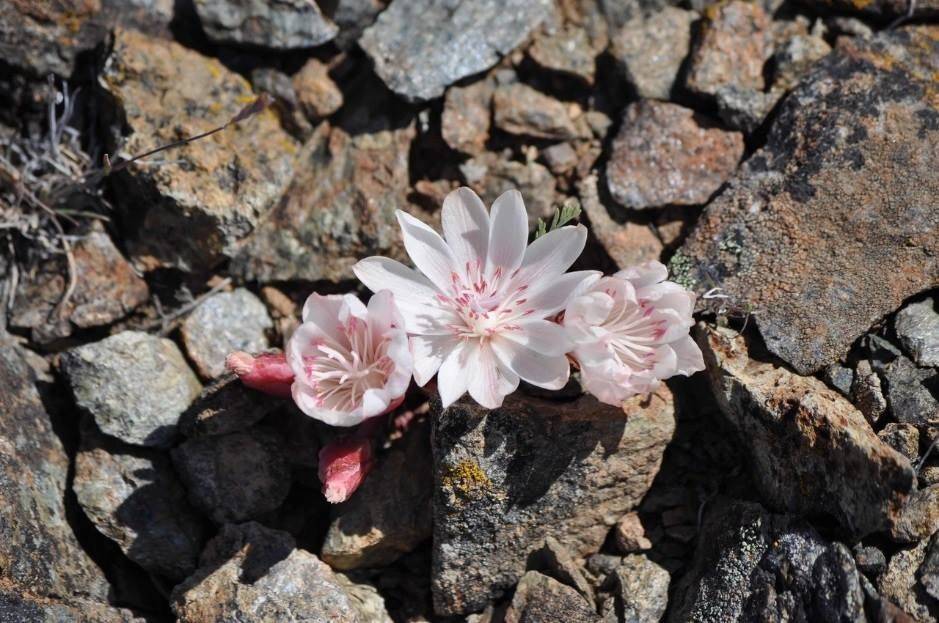
Key Identifying Features
Bitterroot (Lewisia rediviva) is a low, succulent perennial of the dry interior West, the state flower of Montana and namesake of the Bitterroot Mountains. It is unmistakable when blooming:
- Large, showy rose-pink to white flowers with many narrow petals, looking oversized for the plant
- Flowers sit nearly flat on the ground, almost stemless
- Blooms appear on bare, gravelly soil with little or no green foliage around them
- Plants only a 1-3 inches tall but flowers up to 2-3 inches wide
Leaves & Stems
Bitterroot has an unusual life cycle that is itself an ID clue. Fleshy, cylindrical, finger-like leaves emerge in a small cluster in early spring, then wither and disappear by the time the flowers open. So at peak bloom you typically see flowers with no obvious leaves, rising directly from a thick, branched taproot. The short flower stalk bears a few small bracts but no true leafy stem. The thick, branched taproot is the source of the common name.
Flowers & Fruit
Each flower has 10-19 oblong petals in shades from deep pink to nearly white, surrounding a central tuft of numerous yellow stamens. Below the petals sit several papery sepals. Flowers open in sunshine and close in dull weather or evening. Blooming is brief, generally late spring to early summer (May-July) depending on elevation. The fruit is a small dry capsule releasing rounded black seeds. The genus name Lewisia honors Meriwether Lewis, who collected it on the Lewis and Clark Expedition; rediviva ("brought back to life") refers to dried roots that resprouted.
How to Tell It Apart from Look-Alikes
- Other Lewisia species (e.g., L. pygmaea): smaller flowers and persistent leaves at bloom time; Bitterroot's huge near-stemless flower on bare ground is distinctive.
- Spring Beauty (Claytonia): much smaller flowers with only 5 petals and visible leaves.
- Pussypaws (Calyptridium): forms flat rosettes with clustered papery flower heads, not single large blooms.
The pairing of a big multi-petaled pink flower flat on gravel with no leaves is essentially diagnostic.
Where You'll Find It
Look on dry, open, rocky or gravelly slopes, sagebrush flats, and exposed ridgetops at low to mid elevations across the western U.S. and into British Columbia. It favors poor, well-drained mineral soil and full sun, often in spots too harsh for other plants.
Quick ID Checklist
- Big rose-pink (to white) flower with 10+ narrow petals
- Flower sits almost flat on bare gravel
- Few or no leaves visible at bloom time
- Fleshy cylindrical early leaves that wither before flowering
- Thick, branched taproot
- Dry, rocky western habitat; blooms late spring to early summer
Frequently asked questions
Why are there no leaves under the Bitterroot flower?
Bitterroot's fleshy leaves emerge in early spring and wither away before the flowers open. At peak bloom you usually see large flowers sitting on bare ground with no obvious foliage, which is a key identification trait.
Where does Bitterroot grow?
It grows on dry, gravelly, well-drained slopes, sagebrush flats, and rocky ridges across the interior western United States and into British Columbia, often in harsh sites where little else thrives.
What does the name Lewisia rediviva mean?
The genus honors explorer Meriwether Lewis, and rediviva means brought back to life, referring to dried roots from pressed specimens that revived and resprouted.