Bitterroot
Lewisia rediviva
A low, fleshy-leaved alpine succulent of western North America, bitterroot produces showy pink-to-white flowers on otherwise nearly leafless plants. It is the state flower of Montana.
- Light
- Full sun
- Water
- Low; dry summer dormancy
- Difficulty
- Hard
Got a plant like this?
Identify any plant from a photo, free.
Overview
Bitterroot is a remarkable native perennial of the dry, rocky uplands of western North America. It survives harsh conditions by storing water in a thick taproot and going dormant during the hot, dry summer.
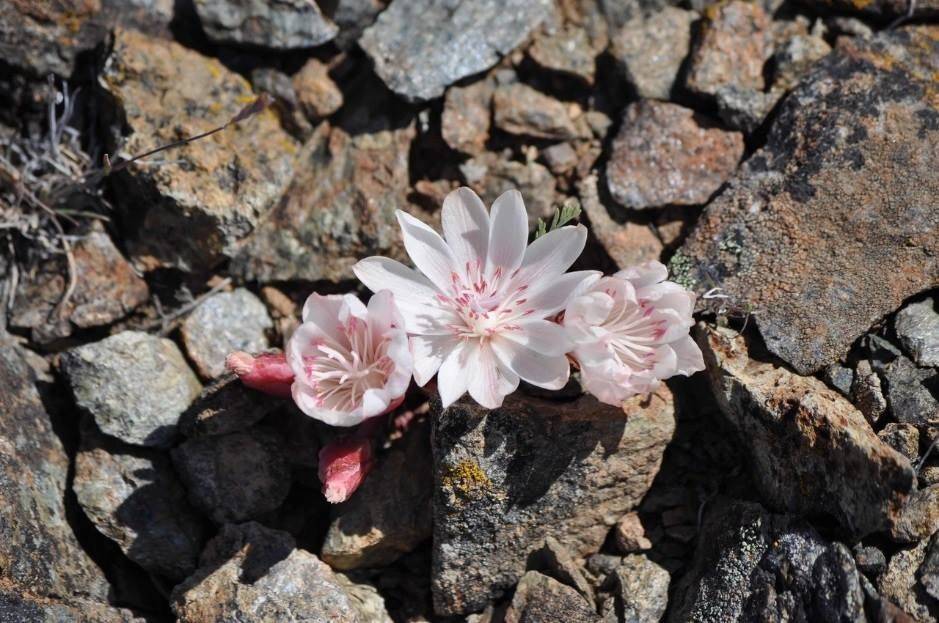
Its large, satiny flowers, ranging from deep pink to nearly white, appear almost to float on the bare ground as the leaves wither at flowering time. The species name rediviva ("brought back to life") refers to its astonishing ability to revive and grow even after roots have been dried for years.
How to identify it
- Flowers: Showy, 1-2 inches across, with 10-19 satiny petals in pink to white, opening in sun
- Leaves: Fleshy, narrow, club-shaped, forming a low rosette that withers as flowers open
- Root: Thick, fleshy taproot that stores water and nutrients
- Habit: Very low-growing, almost stemless; flowers sit near ground level
- Size: Typically only 1-3 inches tall
Care & growing
Bitterroot is challenging outside its native conditions and demands sharp drainage and a dry summer rest.
- Light: Full sun
- Water: Moisture in spring during growth, then kept dry during summer dormancy; rot easily if wet
- Soil: Extremely well-drained gritty or rocky soil; ideal for rock gardens and troughs
- Temperature: Very cold hardy (USDA zones 4-8) but intolerant of summer humidity
- Feeding: Minimal; lean soil preferred
- Propagation: From seed needing cold stratification; transplanting the deep taproot is difficult
Habitat & origin
Bitterroot is native to western North America, from British Columbia south to California and east to Montana and Colorado.
It grows on dry, gravelly slopes, sagebrush flats, and rocky ridges, often in poor mineral soils where little else thrives. It is the state flower of Montana, and the Bitterroot Valley, Bitterroot River, and Bitterroot Mountains are all named for it.
Frequently asked questions
Why does the species name mean 'brought back to life'?
Bitterroot roots are extraordinarily tough; pressed botanical specimens were able to resprout after being dried for over a year, inspiring the name rediviva.
Can I grow bitterroot in a regular garden?
It is difficult outside arid western climates because it needs sharp drainage and a dry summer dormancy. It does best in rock gardens, troughs, or alpine houses.
When does bitterroot bloom?
It blooms in late spring to early summer, often after its leaves have already withered, leaving the flowers sitting close to bare ground.
How do I recognize bitterroot?
Look for a very low, almost stemless plant with large satiny pink-to-white flowers of 10-19 petals sitting near ground level, rising from a low rosette of fleshy, club-shaped leaves.
Bitterroot guides
In-depth guides for identifying, growing, and caring for Bitterroot.
How to Care for Bitterroot
A challenging alpine succulent bearing showy pink blooms, demanding gritty drainage and a dry summer rest.
Bitterroot Identification Guide
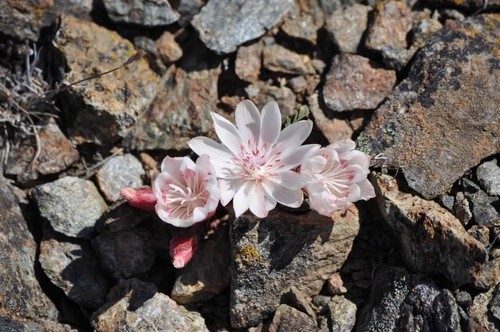
Recognize Bitterroot by its large rose-pink flowers sitting almost stemless on bare gravelly ground, its fleshy early leaves that wither before bloom, and its dry western habitat.