
Black Cherry Identification Guide
Identify black cherry by its glossy finely toothed leaves with rusty midrib hairs, scaly burnt-cornflake bark, and drooping clusters of small dark fruit.
Read the full Black Cherry encyclopedia entry →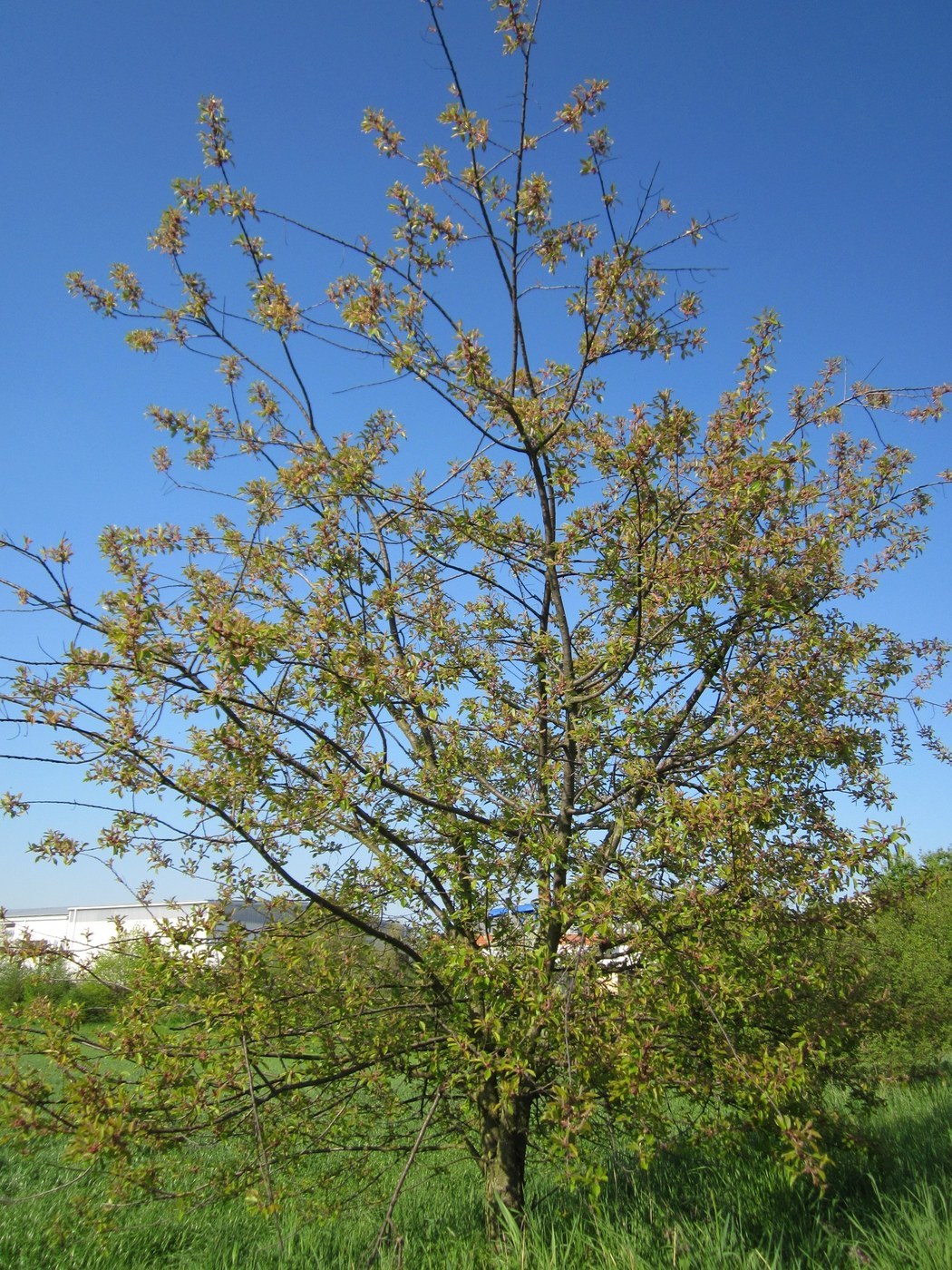
Key Identifying Features
Black cherry (Prunus serotina) is the largest native North American cherry, valued for its fine timber and recognized by its distinctive bark and almond-scented twigs.
- Glossy, finely toothed (with incurved teeth) lance-shaped leaves
- A row of rust-colored hairs along the midrib underside
- Mature bark resembling burnt cornflakes or scaly dark plates
- Drooping elongated clusters of small black fruit
Leaves & Stems
Leaves are alternate, 5-13 cm long, narrowly oval to lance-shaped, with a pointed tip and finely serrated margins whose teeth curve inward and are blunt (not sharp-pointed). The upper surface is glossy dark green; a key diagnostic is the dense band of orange-brown (rusty) hairs along the lower midrib, visible with a hand lens or the naked eye. Two small glands often sit at the top of the leaf stalk near the blade base. Crushed leaves and twigs have a distinctive bitter-almond scent.
Young bark is smooth, reddish-brown to gray, marked with horizontal lenticels like other cherries. Mature bark breaks into dark, irregular, upturned scaly plates often likened to burnt cornflakes or potato chips.
Flowers & Fruit
In late spring black cherry produces drooping, cylindrical clusters (racemes) 8-15 cm long of small white five-petaled flowers. These develop into pea-sized fruits ripening from green to red to deep purple-black in late summer, hanging in the same elongated clusters. The fruit is favored by birds; the flesh surrounds a single hard stone.
How to Tell It Apart from Look-Alikes
- Chokecherry (Prunus virginiana): Leaves broader with sharp (not incurved) teeth and no rusty midrib hairs; smaller shrub; bark stays smooth and gray.
- Pin cherry / fire cherry: Flowers and fruits in flat-topped or small clusters, not long racemes; smooth red bark.
- Birch or other smooth-barked trees: Lack the almond scent and racemes of fruit.
The rusty midrib hairs plus burnt-cornflake bark plus drooping fruit racemes confirm black cherry.
Where You'll Find It
Native across eastern North America and into Mexico and Central America, in woods, old fields, fencerows, and forest edges. It is a common pioneer and is widely distributed by birds; it grows on a range of soils in full sun to part shade.
Quick ID Checklist
- Glossy lance-shaped leaves with incurved fine teeth
- Rust-colored hairs along the lower midrib
- Bitter-almond scent in crushed twigs/leaves
- Dark scaly burnt-cornflake bark on mature trunks
- Drooping racemes of small black fruit
Frequently asked questions
What is the single best ID clue for black cherry?
The band of rust-colored hairs running along the underside of the leaf midrib, combined with finely incurved teeth, separates it from look-alike cherries.
How do I tell black cherry from chokecherry?
Black cherry leaves have blunt incurved teeth and rusty midrib hairs and the tree develops scaly dark bark, while chokecherry has sharp teeth, no midrib hairs, and stays a smaller smooth-barked shrub.
What does mature black cherry bark look like?
On young trunks it is smooth, reddish-brown to gray, marked with horizontal lenticels. With age it breaks into dark, irregular, upturned scaly plates often compared to burnt cornflakes or potato chips.
Where does black cherry grow?
It is native across eastern North America into Mexico and Central America, growing in woods, old fields, fencerows, and forest edges on a range of soils in full sun to part shade.