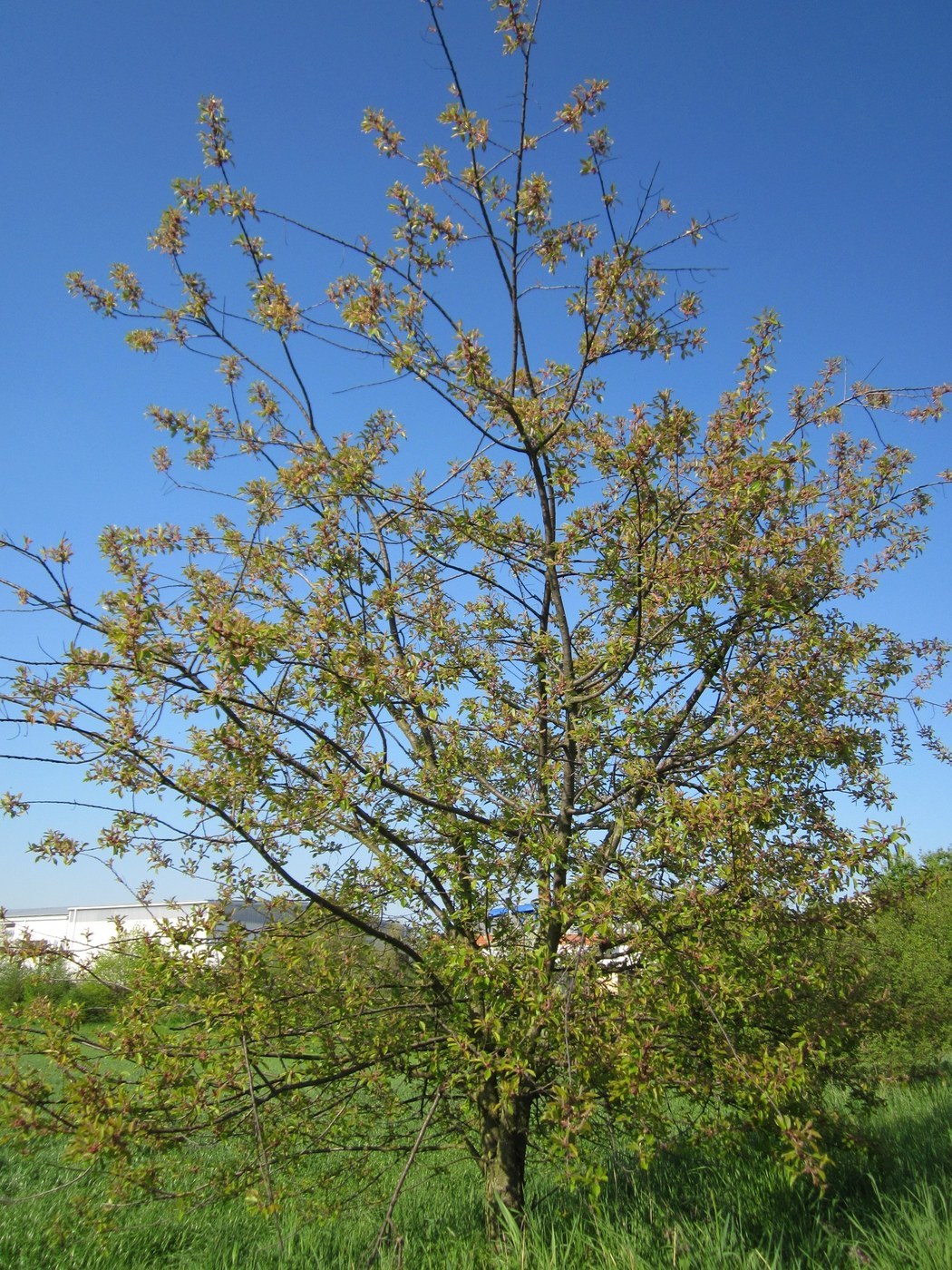
Black Cherry
Prunus serotina
Black cherry is a native North American hardwood valued for its fine reddish furniture timber, drooping clusters of white spring flowers, and small dark fruits borne in late summer.
- Light
- Full sun to part shade
- Water
- Moderate; well-drained soil
- Difficulty
- Easy
Got a plant like this?
Identify any plant from a photo, free.
Overview
Black cherry (Prunus serotina) is the largest of the native North American cherries and an important timber and wildlife tree. It produces hanging clusters of small white flowers in spring, followed by dark purple-black fruits in late summer.
Its wood is one of the most prized cabinet woods in North America, with a warm reddish-brown color that deepens with age.
It is a fast-growing pioneer tree that readily colonizes woodland edges, old fields, and fencerows.
How to identify it
A medium-large deciduous tree, often recognized by its bark and flower clusters.
- Leaves: alternate, simple, oblong, 6-14 cm, finely toothed, glossy dark green; midrib underside often bears rusty-brown hairs — a key ID trait
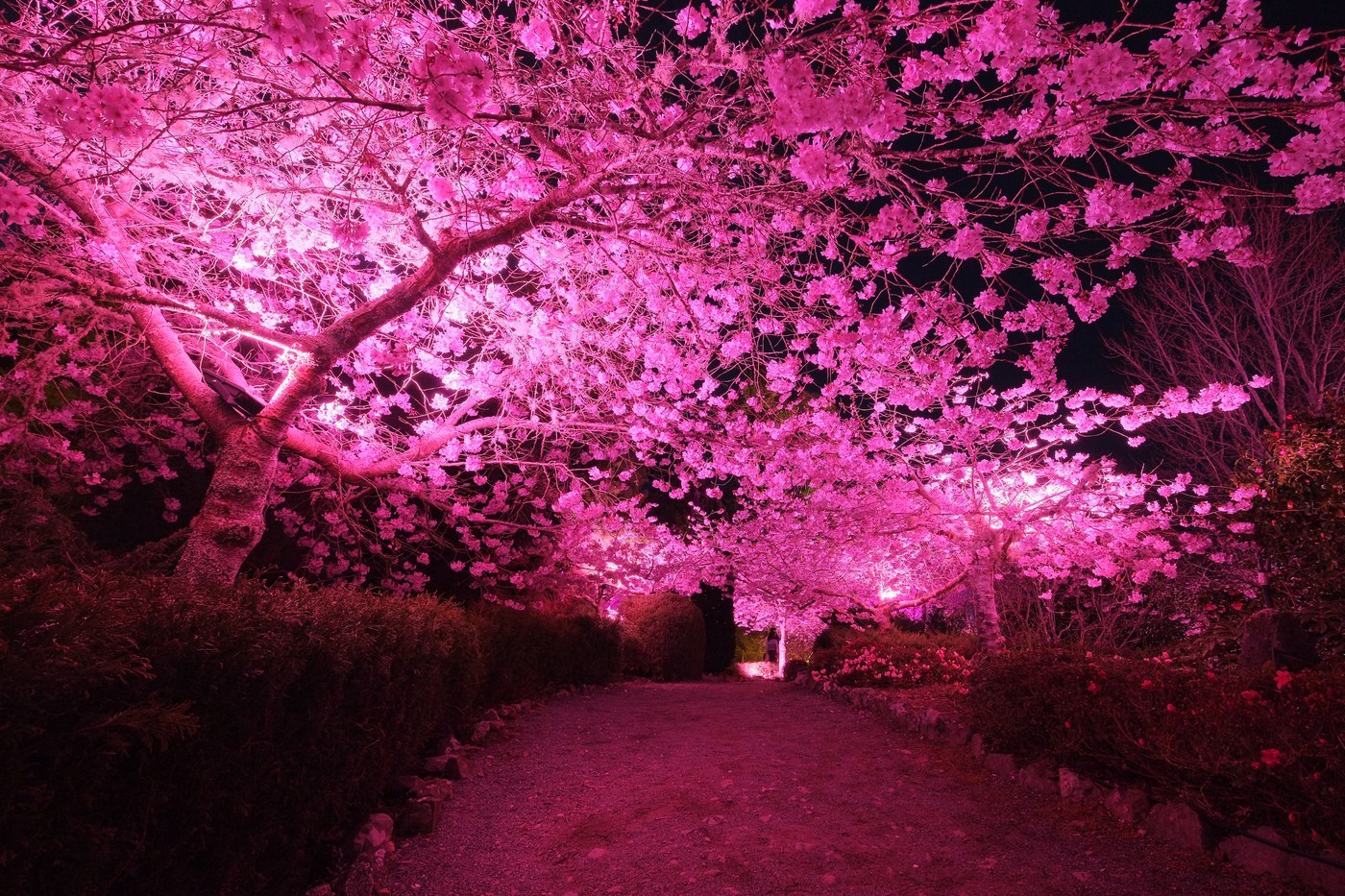
- Flowers: small white flowers in drooping, elongated clusters (racemes) in late spring
- Fruit: pea-sized fruits ripening from red to dark purple-black, in hanging clusters
- Bark: young bark smooth, reddish-brown with horizontal lenticels (like a cherry); mature bark dark, scaly, and broken into burnt-cornflake-like plates
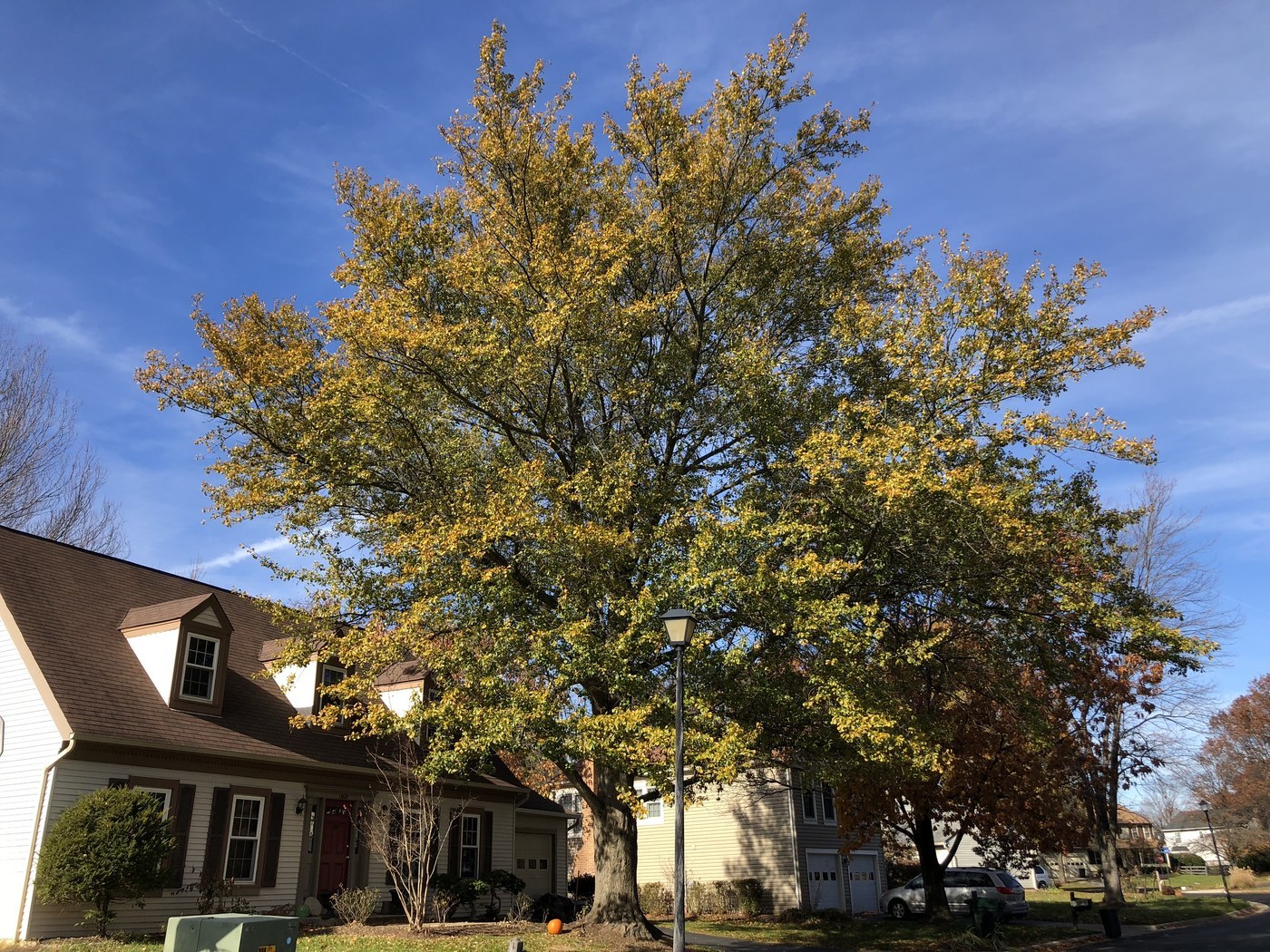
- Size: typically 15-25 m tall
Care & growing
An easy, fast-growing native tree.
- Light: full sun to partial shade
- Water: moderate; prefers moist, well-drained soil
- Soil: adaptable; grows on a wide range of soils
- Temperature: hardy in USDA zones 3-9
- Feeding: rarely needed
- Propagation: from seed after cold stratification; spreads readily by bird-dispersed seed
- Pests: prone to tent caterpillars, which can defoliate branches
Habitat & origin
Native to eastern North America and extending into Mexico and Central America, growing in forests, woodland edges, old fields, and fencerows. It is a pioneer species that colonizes disturbed ground readily.
It is common throughout the eastern U.S. and is also grown for timber. In parts of Europe it has become an invasive species after introduction.
Frequently asked questions
How do I identify black cherry bark?
Young bark is smooth and reddish with horizontal lines; mature bark is dark and broken into scaly plates often compared to burnt cornflakes.
Is black cherry valuable as timber?
Very much so. Its warm reddish-brown wood is one of the most prized native hardwoods for fine furniture, cabinetry, and veneer.
How can I recognize black cherry leaves?
Look for alternate, glossy, finely toothed oblong leaves; a key trait is the rusty-brown hairs along the midrib on the underside of the leaf.
Where does black cherry grow?
It ranges across eastern North America into Mexico and Central America, colonizing forests, woodland edges, old fields, and fencerows, and is a quick pioneer of disturbed ground.
Black Cherry guides
In-depth guides for identifying, growing, and caring for Black Cherry.
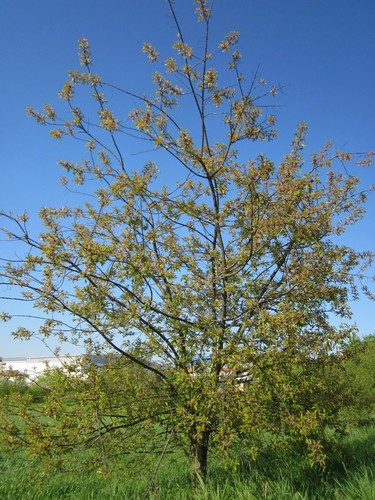
How to Care for Black Cherry
Grow Black Cherry (Prunus serotina), a fast, adaptable native shade tree with fragrant spring flowers and rich fall color.
Black Cherry Identification Guide
Identify black cherry by its glossy finely toothed leaves with rusty midrib hairs, scaly burnt-cornflake bark, and drooping clusters of small dark fruit.