
How to Care for Black-Eyed Susan Vine
Grow the cheerful Black-Eyed Susan Vine (Thunbergia alata) with plenty of sun, steady moisture, and a sturdy trellis to climb.
Read the full Black-Eyed Susan Vine encyclopedia entry →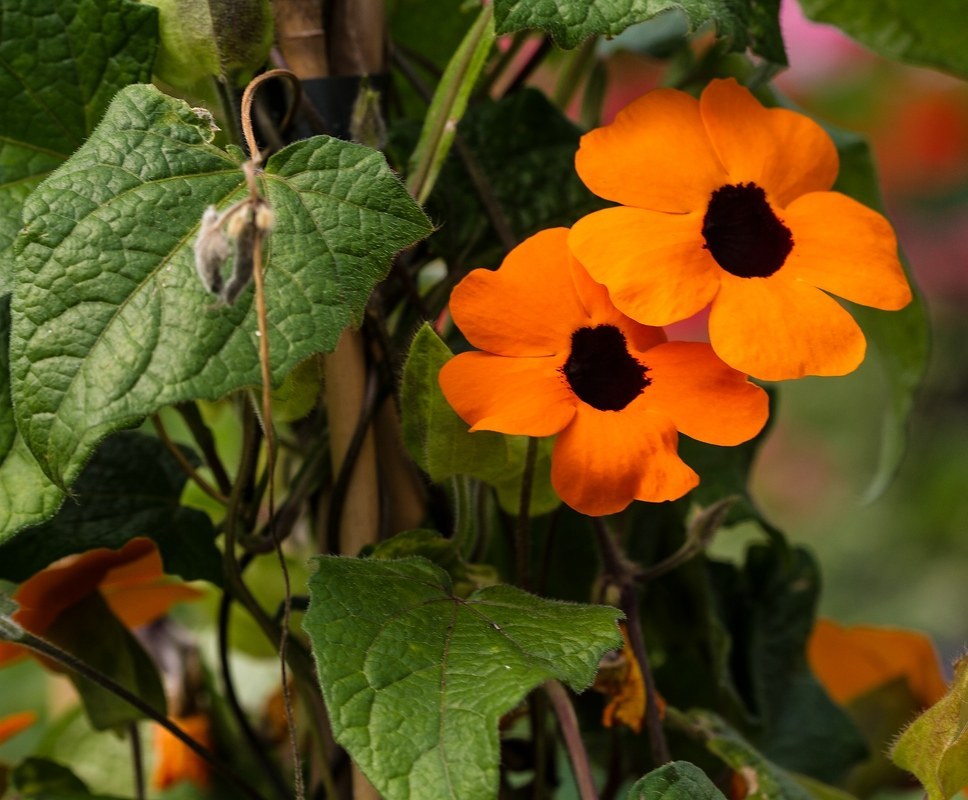
The Black-Eyed Susan Vine (Thunbergia alata) is a fast, free-flowering twining climber prized for its round, five-petaled blooms in orange, yellow, and cream, each set off by a dark central eye. It is easy and rewarding, quickly covering a trellis, arch, or hanging basket edge with color from summer well into fall.
Light
Give this vine full sun to part shade. The most abundant flowering comes from at least six hours of direct sun, though in very hot climates a little afternoon shade keeps the foliage fresh and prevents scorching. In too much shade the plant grows leafy and vining but produces far fewer blooms, so err toward brightness.
Water
Keep the soil evenly moist. This vine is a thirsty, actively growing plant that does not tolerate drying out, and wilting or bud drop quickly follows drought stress. Water whenever the top inch of soil begins to feel dry, more often for plants in containers and hanging baskets, which dry out fast in summer heat and wind. Aim for consistent moisture without leaving the roots waterlogged.
Soil & Potting
Plant in rich, well-drained soil with plenty of organic matter to hold moisture while still draining freely. A quality all-purpose potting mix suits container plantings, and mixing in compost improves both fertility and water retention. Ensure any pot has drainage holes, since standing water invites root rot even in a moisture-loving plant.
Humidity & Temperature
This is a warm-season plant that thrives in the heat and humidity of summer. It grows best in temperatures between about 60F and 85F and is sensitive to cold, stalling in chilly weather and dying back at frost. In cool climates it is treated as an annual or brought indoors to a bright, warm room before the first frost.
Feeding
Because it flowers so heavily, this vine responds well to regular feeding. Apply a balanced or bloom-oriented liquid fertilizer every two to four weeks through the growing season, or work a slow-release granular feed into the soil at planting. Avoid overloading it with high-nitrogen feed, which encourages lush leaves at the expense of flowers.
Propagation
The most common method is from seed, sown indoors several weeks before the last frost or directly outdoors once the soil has warmed; seedlings grow quickly and begin blooming within a couple of months. You can also root stem cuttings taken in summer by placing them in moist soil or water until roots form, which is a handy way to carry favorite plants through winter indoors.
Repotting / Pruning
Provide support early, as this twining vine needs a trellis, netting, strings, or a hoop to climb. Pinch the growing tips of young plants to encourage bushier, branching growth and more flowering stems. Trim back leggy or overgrown vines during the season to keep the plant tidy and to spur fresh growth, and deadhead spent blooms to prolong flowering. Move container plants up a pot size when roots fill the current one.
Common Problems & Pests
Spider mites and whiteflies are the most likely pests, especially on stressed or indoor plants in dry conditions; a strong spray of water and insecticidal soap usually keeps them in check. Aphids may cluster on soft new growth. Poor flowering typically traces to too little light or excess nitrogen, while yellowing leaves often signal either overwatering or nutrient shortage in a heavily blooming plant. Good airflow helps prevent fungal leaf spots in humid weather.
Seasonal Care Tips
Start seeds in early spring and set plants out only after all danger of frost has passed and the soil is warm. Through summer, water consistently, feed regularly, and keep guiding new growth onto its support for peak bloom. In fall, enjoy the late flush of flowers and take cuttings if you want to overwinter the plant indoors. In frost-prone areas, treat outdoor vines as annuals and start fresh each year.
Frequently asked questions
Why isn't my Black-Eyed Susan Vine flowering much?
The usual causes are too little sun or too much nitrogen fertilizer. Move it to a brighter spot with at least six hours of sun and switch to a bloom-oriented feed.
Does the Black-Eyed Susan Vine need support to climb?
Yes. It is a twining climber that needs a trellis, netting, strings, or a hoop. Provide support early so the vine can wind up as it grows.
How often should I water this vine?
Keep the soil evenly moist, watering whenever the top inch begins to dry. Containers and hanging baskets dry quickly and may need daily watering in summer heat.
Is the Black-Eyed Susan Vine a perennial?
It is a tender perennial grown as an annual in cool climates. It thrives in summer heat but dies back at frost, so gardeners in cold regions replant or overwinter cuttings indoors.