
Black Oak Identification Guide
How to identify Black Oak (Quercus velutina) by its dark blocky bark, orange-yellow inner bark, large fuzzy angled buds, and bristle-tipped glossy lobed leaves.
Read the full Black Oak encyclopedia entry →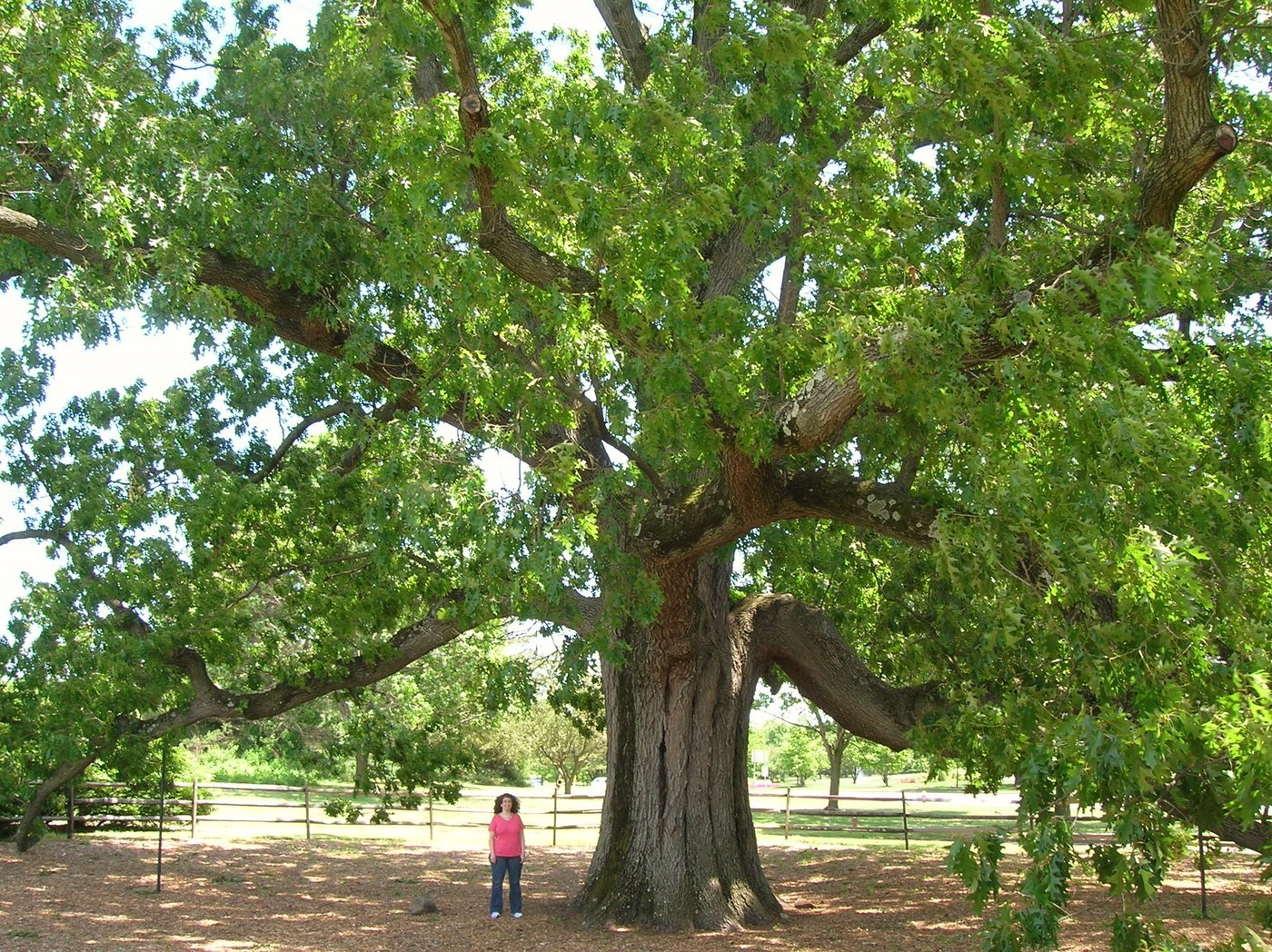
Key Identifying Features
Black Oak (Quercus velutina) is a red-oak-group tree, 50-80 feet tall, of dry upland forests. Its standout diagnostic is hidden under the bark: the inner bark is bright orange-yellow (historically a source of the dye quercitron). Scrape a small patch of outer bark and the yellow flash confirms the ID. Above ground, look for very dark, almost black, blocky bark, large fuzzy buds, and glossy, bristle-tipped lobed leaves.
- Orange-yellow inner bark (scrape test)
- Large, gray-fuzzy, strongly 5-angled terminal buds
- Dark, blocky to deeply furrowed near-black bark
- Bristle-tipped lobes (red oak group)
Leaves & Stems
Leaves are 4-9 inches long with usually 5-7 lobes separated by deep to moderate U-shaped sinuses, each lobe ending in several bristle tips. The upper surface is dark, glossy, and leathery; the underside is paler with rusty tufts of hair in the vein axils and often a downy feel when young (velutina = velvety). Fall color is dull red to brown.
Twigs are stout, reddish-brown. The terminal buds are the best winter clue: large (1/4-1/2 inch), distinctly 5-angled, gray-woolly, and pointed — quite different from the smooth, pointed buds of red oak.
Flowers & Fruit
Drooping yellow-green catkins emerge in spring. The acorn is 1/2-3/4 inch, oval, light brown, half-enclosed by a bowl-shaped cap with loose, fringed scales at the rim. Acorns mature in two seasons (red oak group). The cap scales are slightly hairy and the kernel is often yellow-tinged.
How to Tell It Apart from Look-Alikes
- Northern red oak (Quercus rubra): smooth gray-brown bark with flat-topped "ski-trail" ridges, smooth pointed buds, shallower sinuses, and whitish (not yellow) inner bark.
- Scarlet oak (Quercus coccinea): deeper C-shaped sinuses, glossy leaves, smaller buds hairy only on the upper half, and concentric rings on the acorn tip.
- Pin oak: smaller leaves, slender drooping branches, tiny acorns.
The yellow inner bark plus big fuzzy angled buds is the decisive combination.
Where You'll Find It
Black Oak favors dry, sandy or rocky upland slopes and ridges in oak-hickory forests across the eastern and central United States, from southern Maine and Minnesota south to Florida and eastern Texas. It often grows alongside white, scarlet, and hickory species on poor, well-drained sites.
Quick ID Checklist
- Orange-yellow inner bark when scraped
- Large, gray-fuzzy, 5-angled terminal buds
- Dark, blocky to deeply furrowed bark
- Glossy leaves, 5-7 bristle-tipped lobes, rusty vein tufts beneath
- Acorn cap with a loose fringed rim, matures in 2 years
- Dry upland sites in eastern oak-hickory forest
Frequently asked questions
What is the surest way to identify black oak?
Scrape the outer bark to reveal the inner bark: black oak's is bright orange-yellow. Combined with its large, fuzzy, 5-angled buds, that confirms the species.
How do I tell black oak from northern red oak?
Black oak has dark blocky bark, yellow inner bark, and big woolly angled buds; red oak has smoother bark with flat 'ski-trail' ridges, whitish inner bark, and smooth pointed buds.
What does the species name velutina mean?
It means velvety, referring to the soft, downy hairs on the young leaves and the fuzzy gray buds.