
Black Spruce Identification Guide
How to identify Black Spruce (Picea mariana) by its short blunt blue-green needles, tiny rounded cones clustered near the top, and narrow club-shaped crown of northern bogs.
Read the full Black Spruce encyclopedia entry →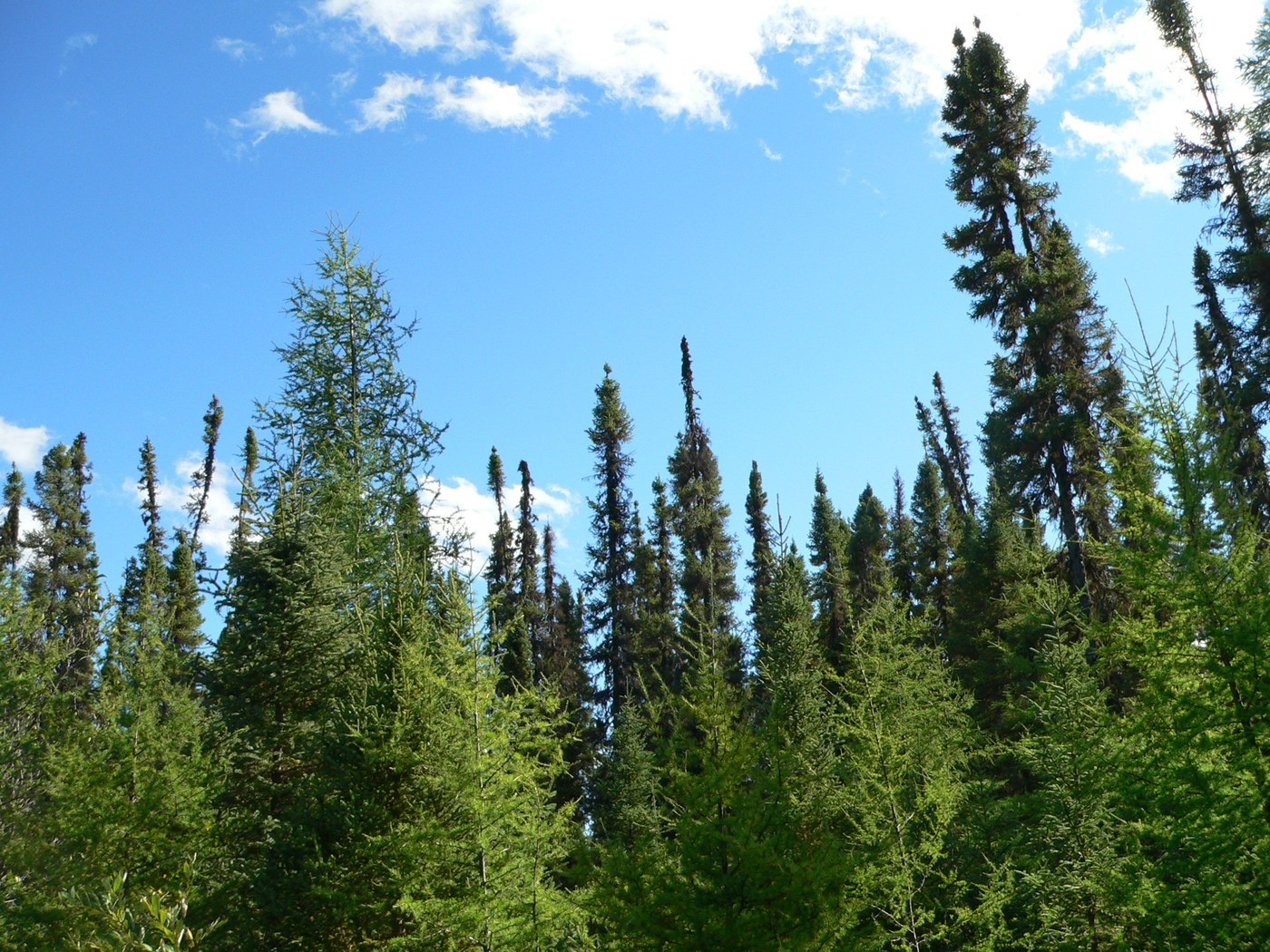
Key Identifying Features
Black Spruce (Picea mariana) is the scraggly spruce of cold northern bogs and muskeg. Look for short, blunt, blue-green needles, the smallest cones of any spruce (often under an inch), clustered toward the top of a narrow, club-shaped crown, and rusty-hairy twigs. It is typically slender and sparse, frequently growing in waterlogged peat.
Leaves & Stems
- Needles short, 0.25 to 0.6 inch, four-sided, stiff, blunt-tipped, dull blue-green, with a faint whitish bloom.
- Needles attach to small woody pegs (sterigmata) and roll between the fingers, like all spruces.
- Twigs densely covered in short rusty/reddish-brown hairs — a key separator from white spruce, whose twigs are hairless.
- Crown narrow and often irregular, frequently with a tufted, club-like cluster of branches at the very top.
Flowers & Fruit
- Cones very small, 0.5 to 1.25 inches, egg-shaped to nearly round, dull grayish-brown, with finely toothed (ragged) scale edges.
- Cones clustered near the top of the tree and tend to persist for many years, often holding seed (semi-serotinous), opening gradually or after fire.
- Old gray cones hanging on the upper trunk are a strong clue.
How to Tell It Apart from Look-Alikes
- White spruce has longer needles (to 0.75 in), hairless twigs, larger cones (1.5 to 2.5 in) with smooth scale margins, and a fuller crown.
- Red spruce has yellow-green needles, hairy twigs but larger reddish cones, and grows in eastern uplands, not bogs.
- Tamarack/larch, a common bog companion, drops its needles in fall and has them in tufts — not evergreen.
- The tiny cones, rusty-hairy twigs, club-top crown, and bog habitat together confirm Black Spruce.
Where You'll Find It
The vast boreal forest across Canada, Alaska, the upper Great Lakes, and New England — especially in cold, wet, acidic bogs, muskeg, and peatlands, where it may be stunted. Often forms low branches that root where they touch the moss (layering), producing rings of small trees.
Quick ID Checklist
- Short, blunt, blue-green four-sided needles that roll
- Rusty-hairy twigs
- Tiny rounded cones (under ~1.25 in) clustered near the top
- Old cones persisting for years on the upper trunk
- Narrow, often club-topped crown in bogs/muskeg
Frequently asked questions
How do I tell Black Spruce from White Spruce?
Black Spruce has rusty-hairy twigs, tiny cones under about 1.25 inches that cluster at the top and persist, and grows in bogs. White Spruce has hairless twigs, larger cones, and prefers better-drained sites.
Why are Black Spruce cones clustered at the top?
Black Spruce concentrates its small, long-persisting cones near the crown, often holding seed for years and releasing it gradually or after fire.
Is it a spruce or a fir?
A spruce. Its needles are four-sided, attached to woody pegs, and roll between the fingers, and its cones hang down, unlike the flat needles and upright cones of true firs.
Where does Black Spruce grow best?
In cold, wet, acidic northern bogs, muskeg, and peatlands across the boreal forest, where it is often slender and stunted.