How to Care for Blackberry
Grow Blackberry (Rubus fruticosus), a vigorous, easy caneberry shrub with white spring blooms and arching, ornamental canes.
Read the full Blackberry encyclopedia entry →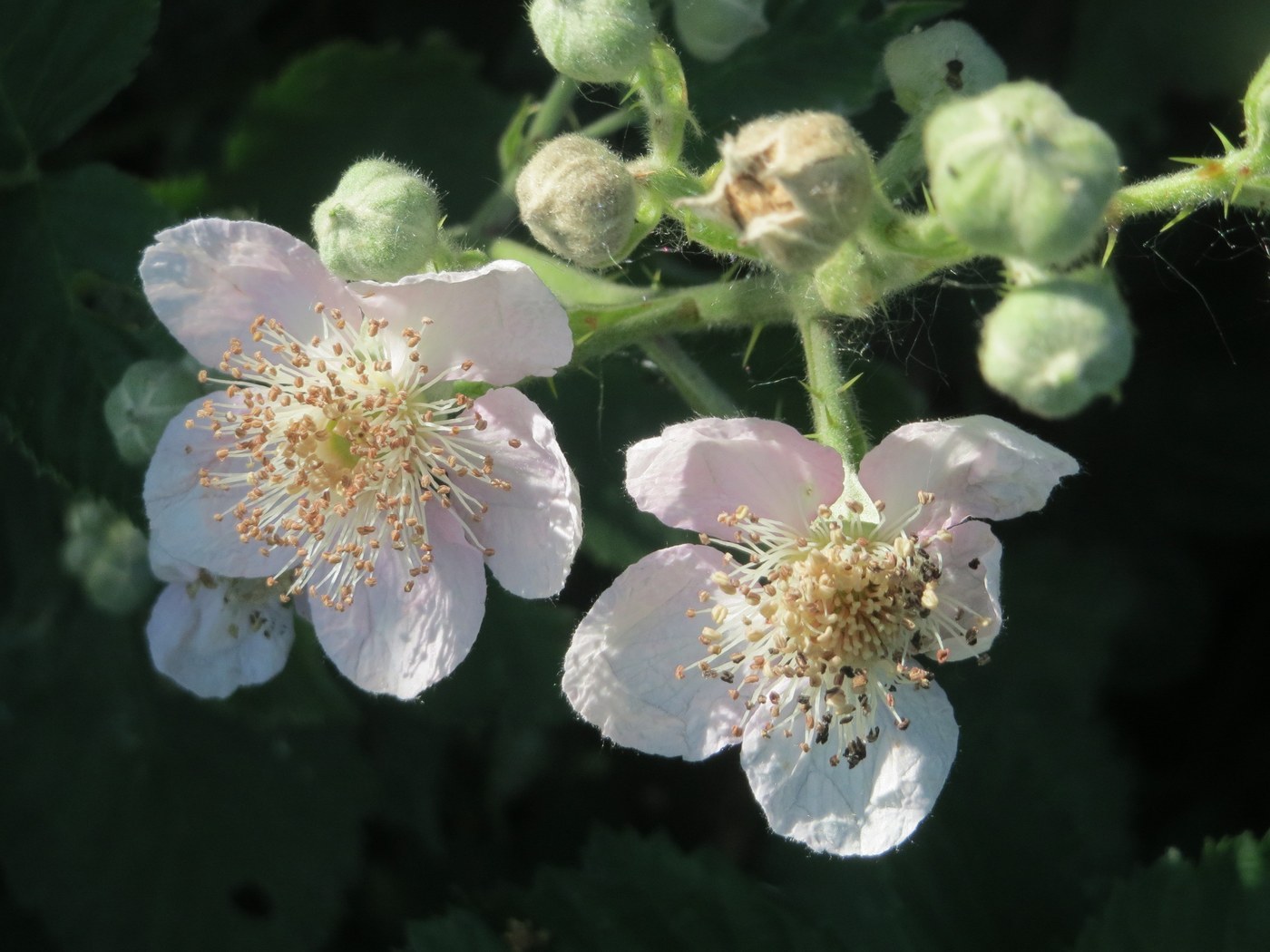
Blackberry (Rubus fruticosus) is a vigorous, easy-to-grow deciduous shrub with arching or trailing canes, clusters of white to pale-pink spring flowers, and handsome divided foliage. It grows quickly and rewards a sunny, well-tended spot with lush, structural greenery in the garden.
Light
Blackberry demands full sun. Give it at least six to eight hours of direct light daily for the strongest cane growth and most abundant flowering. In shade the canes grow thin and lanky and bloom sparsely, so reserve your sunniest border or fence line for it.
Water
Water regularly to keep the soil evenly moist, especially during active growth and flowering. Blackberries have shallow, spreading roots that dry out quickly, so aim for about an inch of water per week and more during heat. Avoid waterlogging, which invites root rot; a thick organic mulch conserves moisture and keeps roots cool and evenly damp.
Soil & Potting
Plant in fertile, well-drained soil rich in organic matter, ideally slightly acidic (pH around 5.5 to 6.5). Work in plenty of compost before planting. Blackberries tolerate a range of soils but resent heavy, poorly drained clay; raised beds or mounded rows improve drainage on wet sites. Space plants generously to allow air movement around the canes.
Humidity & Temperature
Hardy across a wide temperate range (roughly USDA zones 5 through 9 depending on type), Blackberry handles cold winters and warm summers well. It appreciates moderate humidity but needs good airflow to prevent fungal issues. Trailing types are somewhat less cold-hardy than erect types and may need winter protection in colder zones.
Feeding
Feed in early spring as growth resumes with a balanced fertilizer or a generous topdressing of compost and aged manure. A second light feeding in late spring supports flowering. Avoid excessive nitrogen late in the season, which drives soft growth that does not harden before winter. Mulching annually with compost keeps the soil fertile.
Propagation
Blackberries propagate easily. Trailing types root readily by tip layering, where the arching cane tip is buried in soil in late summer and forms roots by the following spring. Erect types spread by root suckers that can be dug and transplanted while dormant. Root cuttings taken in late winter also work well. Division of established clumps is straightforward.
Repotting / Pruning
Blackberries bear on a two-year cane cycle: canes grow one year and flower the next before dying. After flowering, cut spent canes to the ground and tie in the new canes, which will perform the following season. Thin crowded canes to the strongest four to six per plant and top erect canes to encourage side branching. Train canes onto a trellis or wire support for tidy, productive growth and easier care. Wear gloves against the thorns.
Common Problems & Pests
Watch for anthracnose and cane blight, fungal diseases that cause spotting and dieback on canes; prune out and destroy affected wood and improve airflow. Rust diseases can spot the leaves. Aphids, spider mites, and cane borers may appear; borers cause wilting cane tips that should be cut out below the damage. Gray mold (botrytis) shows up in wet weather. Good sanitation, removal of old canes, and adequate spacing prevent most problems.
Seasonal Care Tips
In spring feed and mulch, tie in new canes, and watch for early pests. Summer calls for consistent watering and training of vigorous new growth. After the flowering canes finish, prune them out promptly. In autumn clean up fallen leaves and debris to reduce overwintering disease, and in cold regions mound mulch or cover trailing canes for winter protection. Late-winter dormant pruning tidies the plant before the new season.
Frequently asked questions
Why isn't my Blackberry flowering much?
The most common causes are too little sun or pruning off the wrong canes. Blackberries flower on second-year canes, so give full sun and be careful to remove only the old spent canes.
Which canes do I cut and which do I keep?
Remove canes that have already flowered by cutting them to the ground after they finish, and keep the fresh new canes, which will flower the following year.
Do Blackberries need a trellis?
Trailing types benefit greatly from a trellis or wire support to keep canes off the ground and improve airflow. Erect types are more self-supporting but stay tidier when trained.
How often should I water Blackberry?
Keep the soil evenly moist, roughly an inch of water weekly and more in heat. Their shallow roots dry quickly, and mulch helps hold moisture and keep roots cool.
Blackberry identified by the community
Recent Blackberry specimens identified with Plant Identifier.