Blackberry
Rubus fruticosus
Blackberries are vigorous, often thorny cane plants in the rose family, bearing glossy black aggregate berries in late summer. Famously tough, they grow wild as brambles and in many improved garden varieties.
- Light
- Full sun
- Water
- Regular; keep evenly moist
- Difficulty
- Easy
Got a plant like this?
Identify any plant from a photo, free.
Overview
The blackberry refers to numerous species and hybrids in the Rubus fruticosus aggregate and related groups. Like raspberries they grow on biennial canes from a perennial root system.
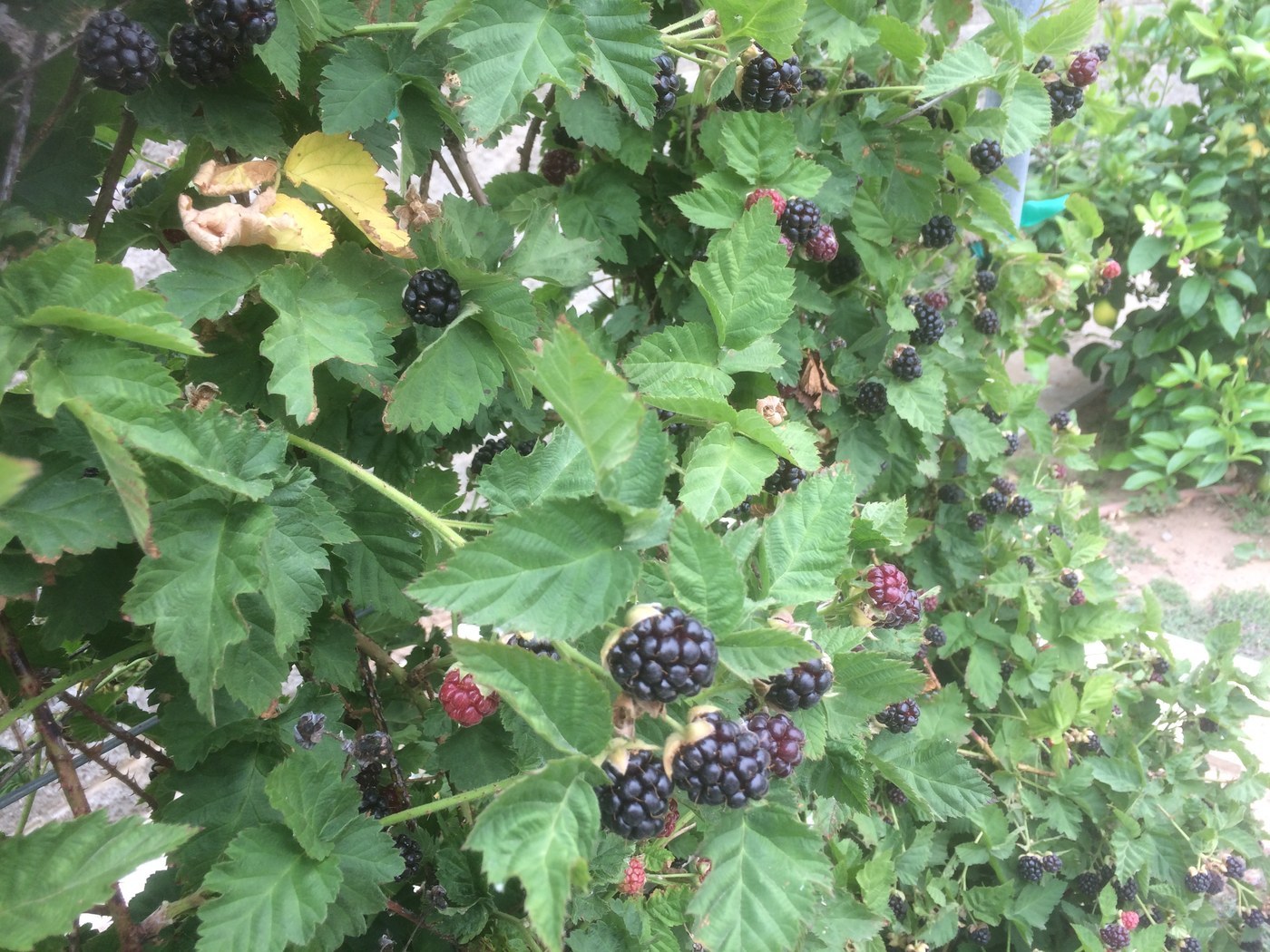
Unlike a raspberry, a ripe blackberry keeps its core (receptacle) inside the fruit, so the picked berry is solid rather than hollow. The berries start green, turn red, then ripen to deep, glossy black.
Blackberries are notoriously vigorous and adaptable. Wild brambles can be invasive thickets, while thornless garden cultivars offer the same fruit with far easier handling.
How to identify it
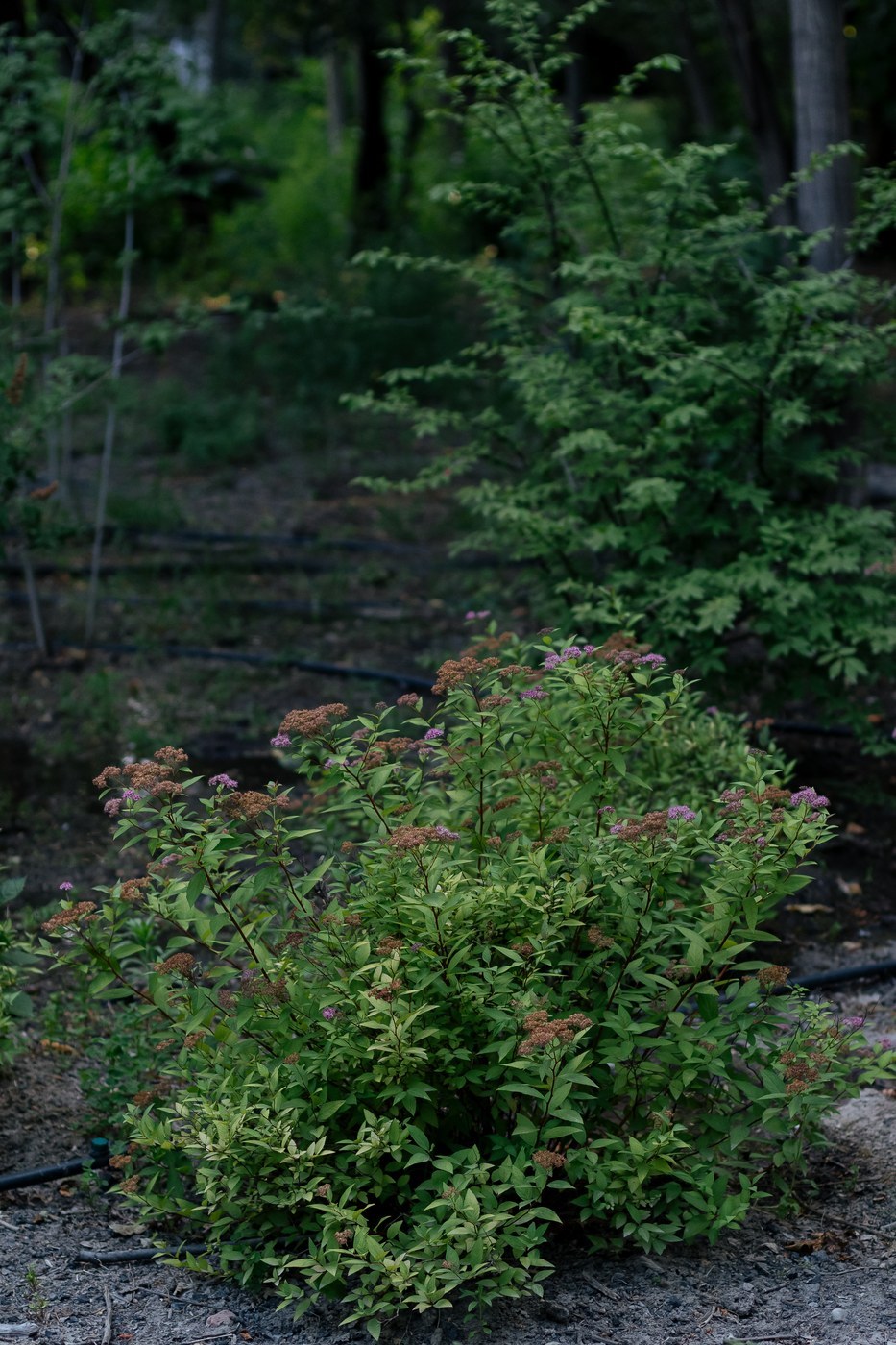
- Habit: Arching or scrambling canes forming dense thickets, often spreading by tip-rooting
- Canes: Biennial, ridged, usually armed with strong thorns (thornless cultivars exist)
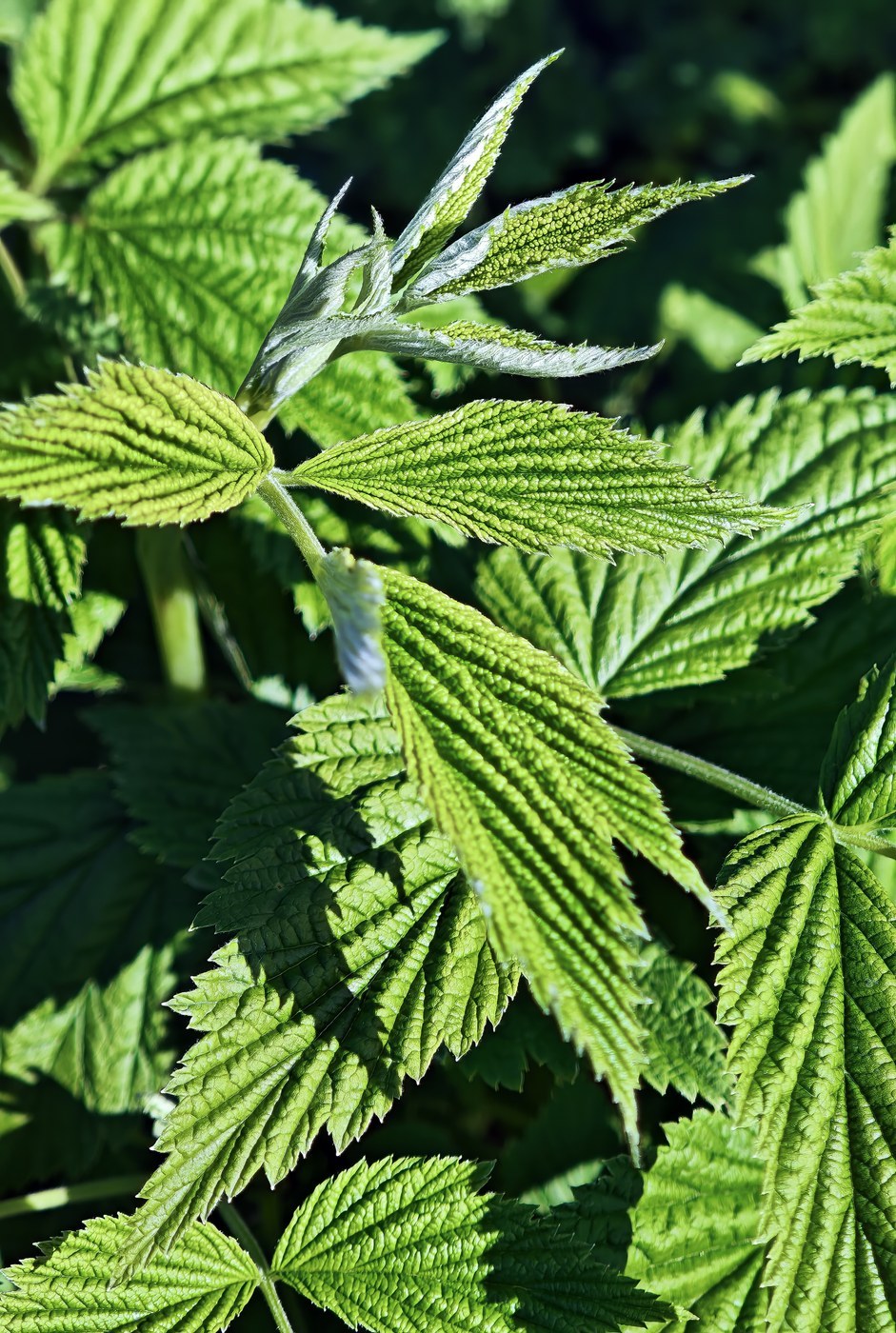
- Leaves: Compound with 3-5 toothed leaflets, green above and paler beneath
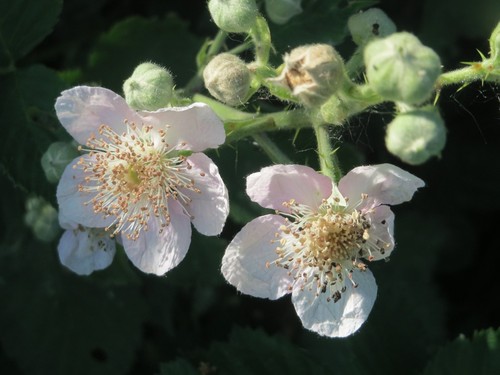
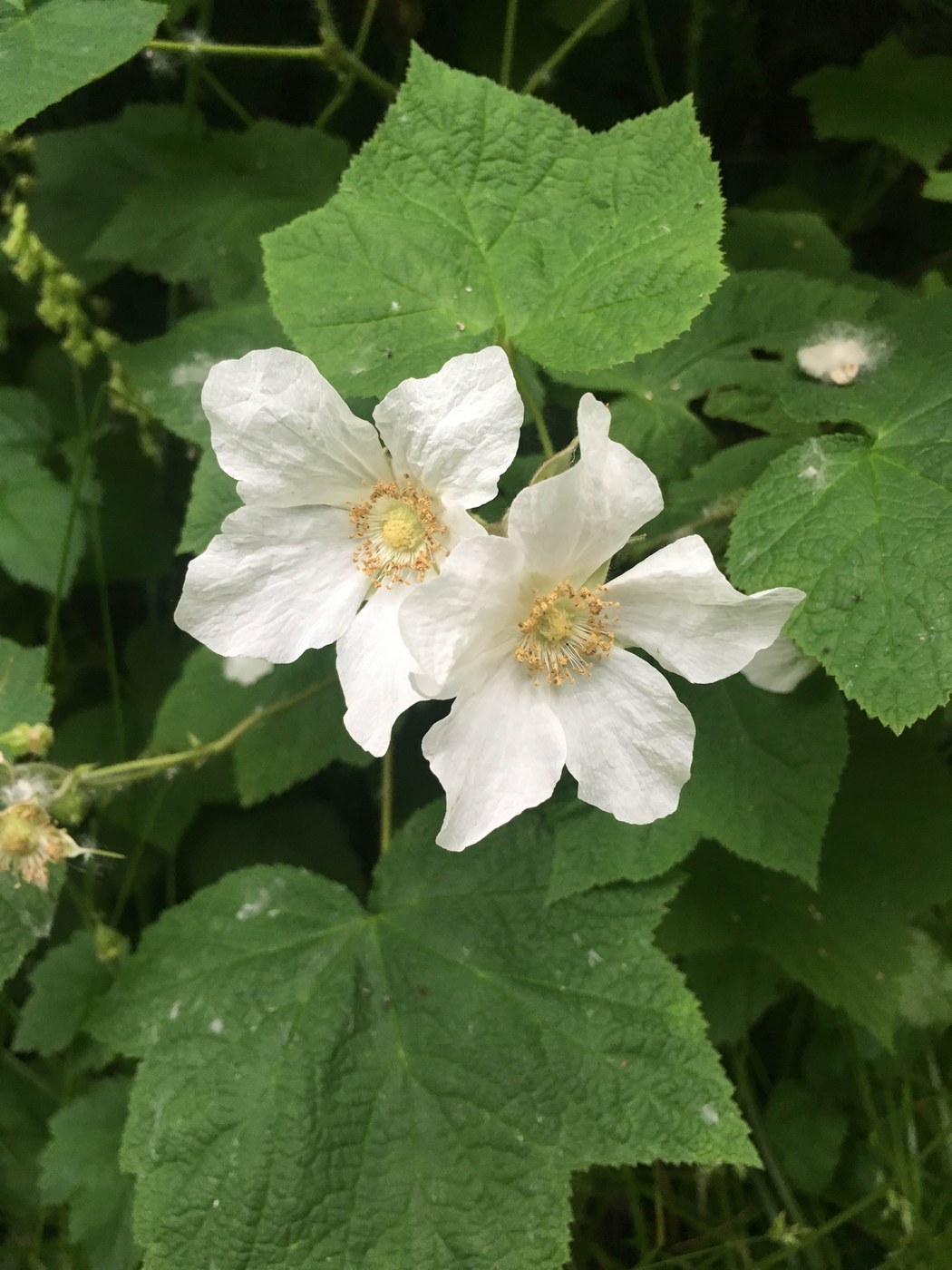
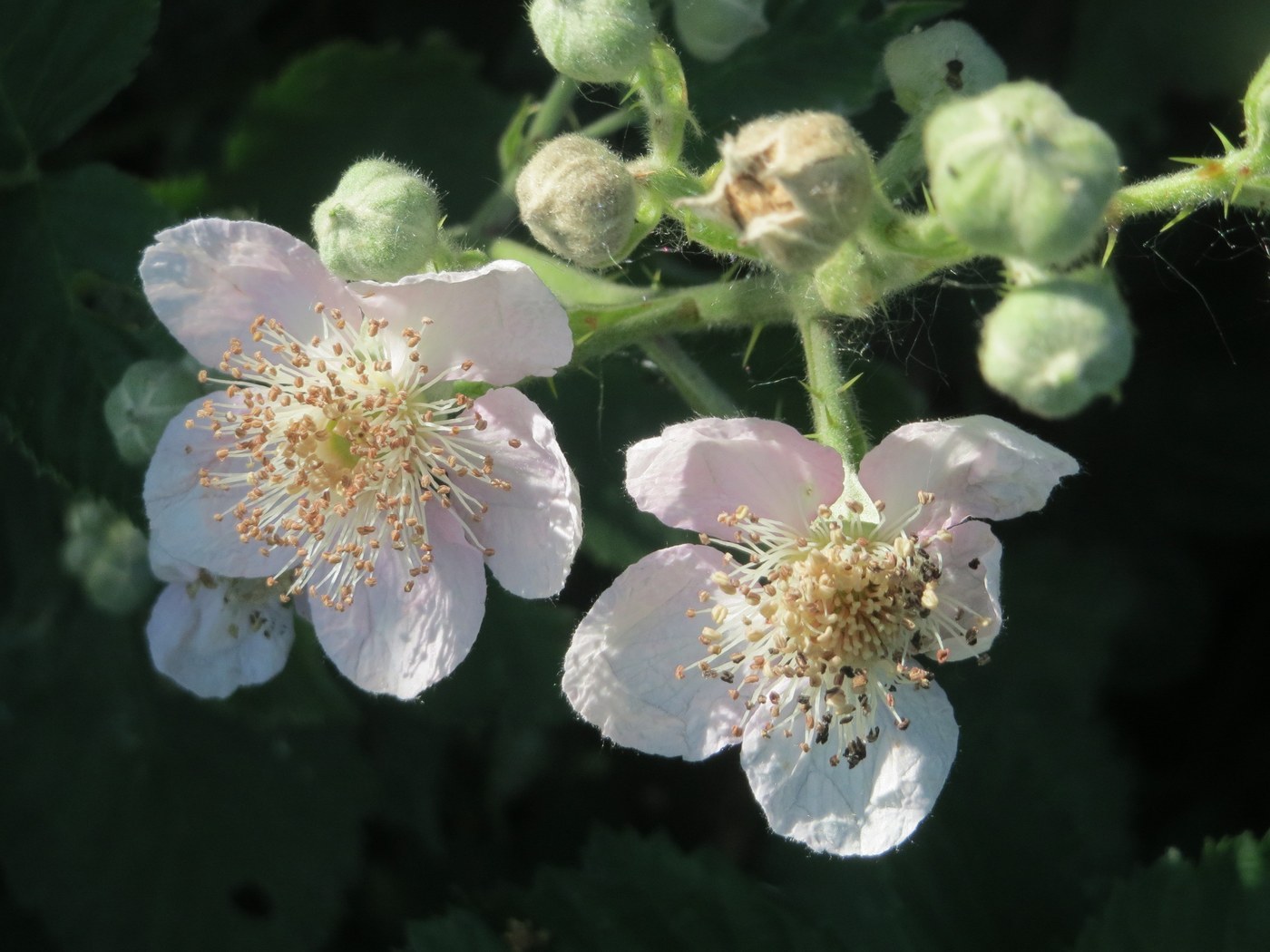
- Flowers: White to pale pink, five-petalled, in clusters
- Fruit: Glossy black aggregate berry that retains its central core when picked, staying solid (not hollow)
Care & growing
Light: Full sun for the heaviest crops; tolerates partial shade.
Water: Keep evenly moist while flowering and fruiting; established plants are fairly drought-tolerant.
Soil: Adaptable, but does best in fertile, well-drained soil; tolerates poorer ground than many fruits.
Temperature: Hardy and adaptable across temperate climates.
Feeding: A spring mulch of compost is usually sufficient.
Propagation: Easily propagated by tip layering (cane tips root where they touch soil) or by suckers. Prune out the old fruited canes after harvest and tie in new ones.
Habitat & origin
Blackberries are native to Europe, Asia and the Americas, growing wild in hedgerows, woodland edges, clearings and waste ground, where they form dense bramble thickets.
They are cultivated worldwide and, in some regions such as the Pacific Northwest and Australia, certain introduced species have become aggressive invasive weeds. Improved thornless cultivars are popular in home and commercial gardens.
Frequently asked questions
What's the difference between a blackberry and a raspberry?
A blackberry keeps its central core when picked and stays solid, while a raspberry pulls free of its core, leaving a hollow center.
Are blackberries invasive?
Some wild species spread aggressively by suckers and tip-rooting canes. Thornless cultivars are better behaved for gardens.
Why are my blackberries small or lumpy?
Drought during fruiting and poor pollination cause small, lumpy berries. Water consistently and encourage pollinators for plump, even fruit.
How can I recognize a blackberry plant?
Look for arching, often thorny biennial canes, compound leaves with 3-5 toothed leaflets, clusters of white to pale-pink flowers, and glossy black aggregate berries.
Blackberry guides
In-depth guides for identifying, growing, and caring for Blackberry.