
Blanket Flower Identification Guide
Recognize blanket flower (Gaillardia) by its warm red-and-yellow banded daisy blooms, fringe-tipped petals, and hairy gray-green foliage.
Read the full Blanket Flower encyclopedia entry →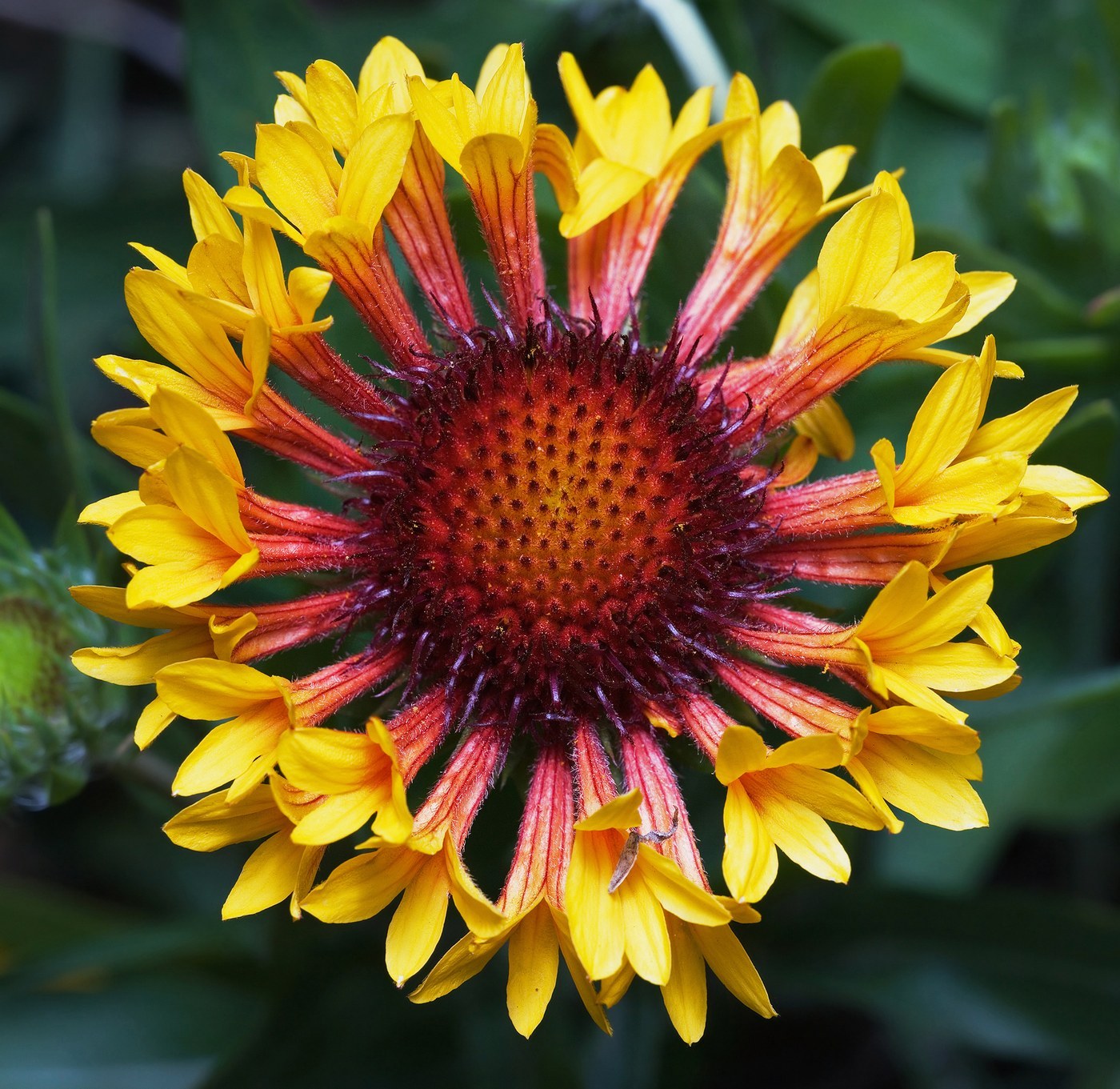
Key Identifying Features
Blanket flower (Gaillardia) is a sun-loving daisy named for its warm bands of red, orange, and yellow that recall a woven blanket. The blooms are bright and long-lasting, on a low, hairy, somewhat sprawling plant.
- Flowers: daisy heads with red/maroon centers banded by yellow petal tips
- Petals: broad, three-lobed (fringed) at the tips
- Center: domed, often reddish-purple
- Foliage: hairy, gray-green, lance-shaped
Leaves & Stems
Leaves are alternate, gray-green, and hairy (rough to the touch), lance-shaped to spoon-shaped, with margins that range from smooth to coarsely toothed or lobed, mostly clustered toward the base. Stems are slender, branching, and hairy, often flopping or sprawling, each tipped with a single flower. The fuzzy, grayish foliage suits its dry-prairie origins.
Flowers & Fruit
Each head has ray florets that are typically red or maroon at the base and yellow at the tips, and the petals are distinctively broad with a notched, three-toothed (fringed) outer edge. The central disk is a raised dome, often purplish-red and slightly fuzzy. After bloom the center forms a rounded, ball-like seed head of bristly seeds — a good late-season ID clue. Many cultivars are solid red, solid yellow, or fully double, but wild types show the classic banding.
How to Tell It Apart from Look-Alikes
- Black-eyed Susan / Rudbeckia: solid yellow petals and a dark domed center, no red banding and petals not fringe-tipped.
- Coreopsis (tickseed): often banded red-and-yellow too, but petals are broadly toothed across the whole tip and foliage is greener and finer; flowers are usually smaller.
- Sunflowers: much larger, with broad rough leaves and large seed heads.
- Gazania: similar daisy banding but a tender, ground-hugging plant with white-backed leaves.
The defining combo is red-to-yellow banded daisy + three-lobed fringed petal tips + hairy gray-green leaves.
Where You'll Find It
Blanket flowers are native to North American prairies, plains, and sandy roadsides, and widely grown in hot, sunny, well-drained gardens and xeriscapes. They thrive in poor soil and drought and bloom from early summer to frost. Look for the warm-toned daisies in dry, sunny, open ground.
Quick ID Checklist
- Daisy heads banded red/maroon to yellow
- Petals broad with three-lobed fringed tips
- Domed, often reddish central disk
- Hairy, gray-green lance-shaped leaves
- Sprawling, branching hairy stems
- Round ball-like seed heads after bloom; full-sun dry sites
Frequently asked questions
How do I tell blanket flower from coreopsis?
Both can be red-and-yellow daisies, but blanket flower has broad petals with three-lobed fringed tips and hairy gray-green leaves, while coreopsis has thinner, greener foliage and petals toothed across the whole tip.
Why are the petal tips notched or fringed?
The three-lobed, fringed petal tip is a natural feature of Gaillardia ray florets and one of its most reliable identifiers, separating it from smooth-petaled daisies like Rudbeckia.
Are all blanket flowers red and yellow?
Wild types show the classic red-to-yellow banding, but cultivars come in solid red, solid yellow, peach, or double forms. The fringed petal tips and hairy gray foliage still mark them as Gaillardia.
What are the round ball-like heads after the petals drop?
Those are the seed heads. The domed center matures into a bristly, globe-shaped cluster of seeds, which is a helpful way to identify blanket flower late in the season.