
How to Care for Bleeding Heart
Bleeding Heart (Lamprocapnos spectabilis) is a shade-loving perennial with arching stems of dangling heart-shaped blooms in spring.
Read the full Bleeding Heart encyclopedia entry →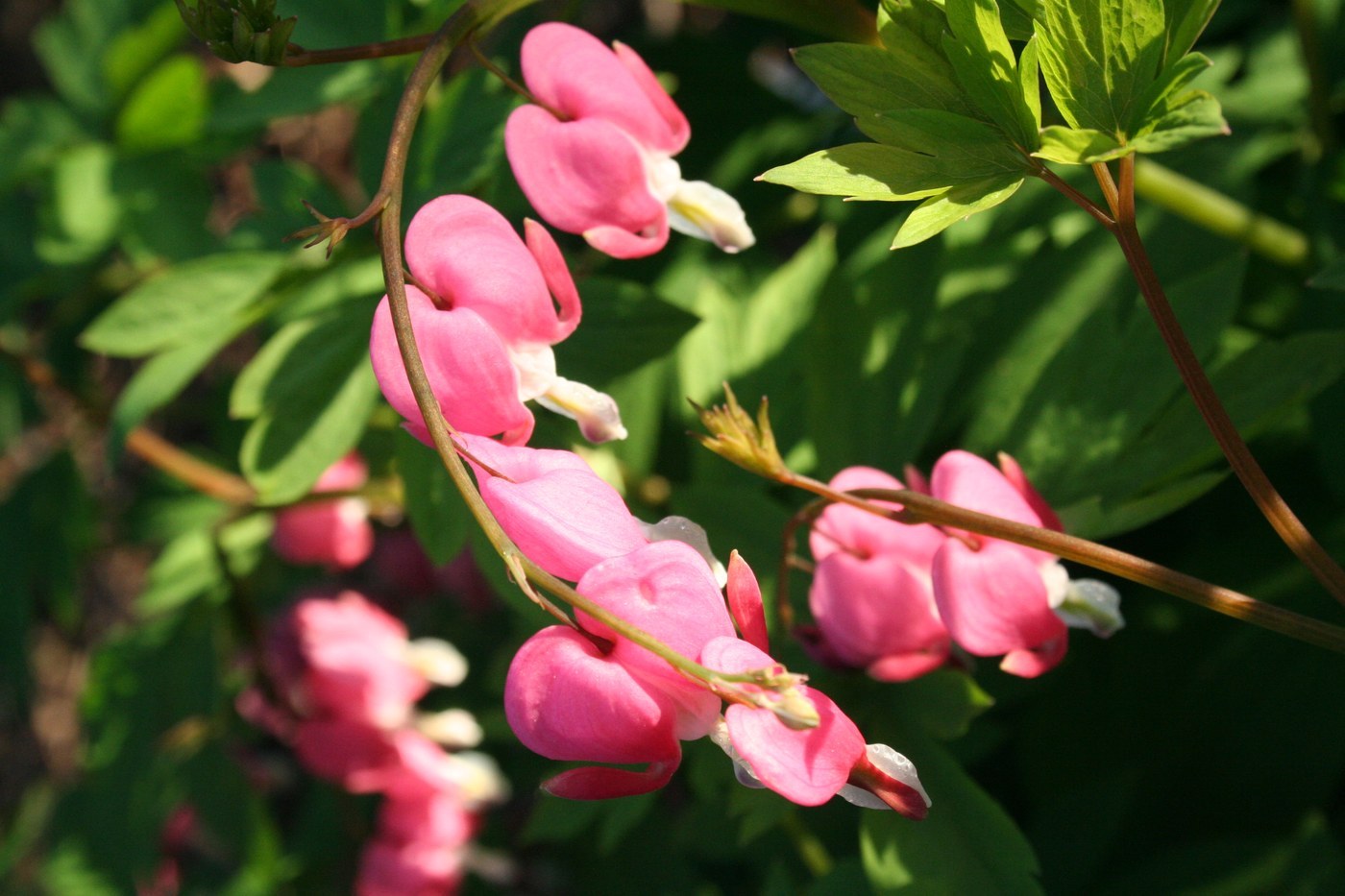
Bleeding Heart is a classic woodland perennial beloved for its arching stems hung with rows of dangling, heart-shaped pink or white flowers in spring. It thrives in cool shade and rich, moist soil, then naturally goes dormant as summer heat arrives.
Light
Bleeding Heart performs best in partial to full shade. Dappled light under deciduous trees or an east-facing spot with gentle morning sun is ideal. In cool climates it tolerates more sun if the soil stays moist, but hot afternoon sun scorches the foliage and hastens summer dormancy.
Water
Keep the soil evenly moist, especially through the active spring growth and bloom period. It does not like to dry out while in leaf, yet it also dislikes standing water. Mulch helps retain even moisture. As the plant goes dormant in summer, reduce watering since the roots rest.
Soil & Potting
Plant in humus-rich, loamy soil with excellent drainage and a slightly acidic to neutral pH. Amend with plenty of compost or leaf mold to mimic its native woodland floor. Good drainage in winter is important because soggy dormant crowns are prone to rot.
Humidity & Temperature
Bleeding Heart is a cool-climate perennial that appreciates moderate temperatures and average to high humidity. It is very cold hardy and actually needs winter chill to bloom well. High summer heat triggers the yellowing and dieback that is a normal part of its cycle, not a sign of trouble.
Feeding
Feed lightly. A topdressing of compost in early spring, or a balanced slow-release fertilizer as growth emerges, supports strong bloom. Rich organic soil often supplies most of what it needs, so avoid heavy feeding.
Propagation
Divide established clumps in early spring or in fall while dormant, handling the brittle roots carefully. It can also be propagated from root cuttings taken during dormancy, or grown from seed, though seed-grown plants are slow to reach flowering size.
Repotting / Pruning
Little pruning is needed. Remove yellowing foliage as the plant enters summer dormancy to tidy the bed. Divide clumps every few years to maintain vigor. In containers, repot dormant crowns into fresh rich mix and keep them cool.
Common Problems & Pests
Bleeding Heart is largely trouble-free. The most common concern is crown or root rot in poorly drained, soggy soil. Aphids may cluster on new growth, and slugs or snails can chew tender foliage in damp shade. Leaf yellowing in midsummer is normal dormancy, not disease.
Seasonal Care Tips
In spring, enjoy the flush of blooms and keep soil evenly moist. As heat builds in summer and foliage yellows, let the plant go dormant and mark its spot to avoid disturbing the roots. Mulch in fall for winter protection, and expect fresh growth to return the following spring.
Frequently asked questions
Why did my Bleeding Heart die back in summer?
Summer dieback is completely normal. Bleeding Heart naturally goes dormant as heat arrives, with foliage yellowing and disappearing; it returns from the roots the following spring.
How much shade does Bleeding Heart need?
It thrives in partial to full shade. Dappled woodland light or morning sun with afternoon shade is ideal, as hot direct sun scorches leaves and shortens the season.
How do I propagate Bleeding Heart?
Divide established clumps in early spring or during fall dormancy, handling the brittle roots gently. Root cuttings taken while dormant also work well.
Does Bleeding Heart come back every year?
Yes. It is a hardy perennial that returns each spring, though it disappears entirely during summer dormancy, so mark its location to avoid digging into the crown.