Bleeding Heart
Lamprocapnos spectabilis
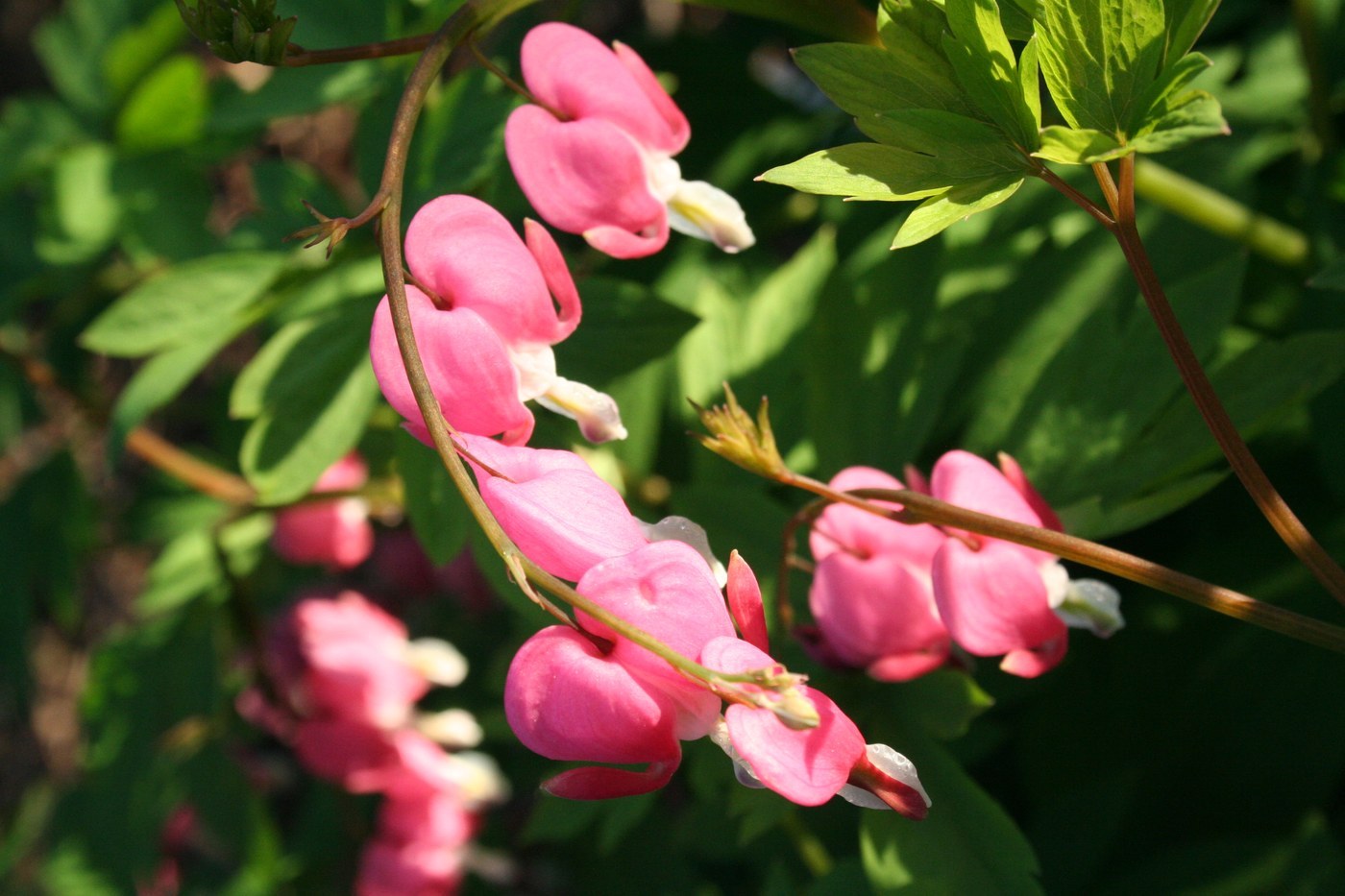
Bleeding heart is a shade-loving perennial famous for arching stems hung with dangling, heart-shaped pink-and-white flowers. It blooms in spring and often goes dormant by midsummer.
- Light
- Partial to full shade
- Water
- Keep evenly moist
- Difficulty
- Easy
Got a plant like this?
Identify any plant from a photo, free.
Overview
Bleeding heart is a graceful woodland perennial named for its distinctive heart-shaped flowers, each with a protruding white "droplet" at the tip. Formerly classified as Dicentra spectabilis, it is now placed in the genus Lamprocapnos.
It emerges in spring with ferny foliage and arching flowering stems, putting on a charming display before often dying back and going dormant in the heat of summer—a normal part of its cycle.
How to identify it
Identified by rows of pendant, heart-shaped flowers on arching stems.
- Flowers: Heart-shaped, pink (or white) with a protruding white inner petal, dangling in a row along arching stems
- Leaves: Soft, divided, fern-like, mid-green
- Habit: Clumping perennial, 1-3 ft tall, with gracefully arching flower stalks
- Dormancy: Foliage commonly yellows and dies back in summer heat
Care & growing
Bleeding heart thrives in cool, shady, moist conditions.
- Light: Partial to full shade; avoid hot direct sun
- Water: Keep soil consistently moist, especially in spring
- Soil: Rich, humus-laden, well-draining woodland soil
- Temperature: Cold-hardy perennial; prefers cool conditions
- Feeding: Light feeding or top-dressing with compost
- Maintenance: Allow foliage to die back naturally; the plant returns the next spring
- Propagation: By division in early spring or fall, or from root cuttings
Habitat & origin
Bleeding heart is native to East Asia—Siberia, northern China, Korea, and Japan—where it grows in cool, moist woodlands.
It is a beloved shade-garden perennial in temperate regions worldwide, planted in woodland gardens, shady borders, and cottage gardens alongside ferns and hostas.
Frequently asked questions
Why did my bleeding heart die back in summer?
Summer dormancy is normal; the foliage yellows and dies back in heat, and the plant returns the following spring.
Does bleeding heart need shade?
Yes, it prefers partial to full shade and cool, moist soil; hot sun causes it to scorch and go dormant early.
How do I propagate bleeding heart?
Divide established clumps in early spring or fall, or take root cuttings.
How tall does bleeding heart grow?
It forms a clump about 1-3 ft tall and wide, with arching flower stalks rising above the ferny foliage.
Bleeding Heart guides
In-depth guides for identifying, growing, and caring for Bleeding Heart.
How to Care for Bleeding Heart
Bleeding Heart (Lamprocapnos spectabilis) is a shade-loving perennial with arching stems of dangling heart-shaped blooms in spring.
Bleeding Heart Identification Guide
Recognize bleeding heart by its arching stems of dangling heart-shaped pink-and-white flowers, deeply divided fern-like foliage, and shade woodland habit.