
How to Care for Blue Chalksticks
Grow Blue Chalksticks (Senecio serpens), a powder-blue trailing succulent: sun, sparse watering, gritty soil and easy propagation.
Read the full Blue Chalksticks encyclopedia entry →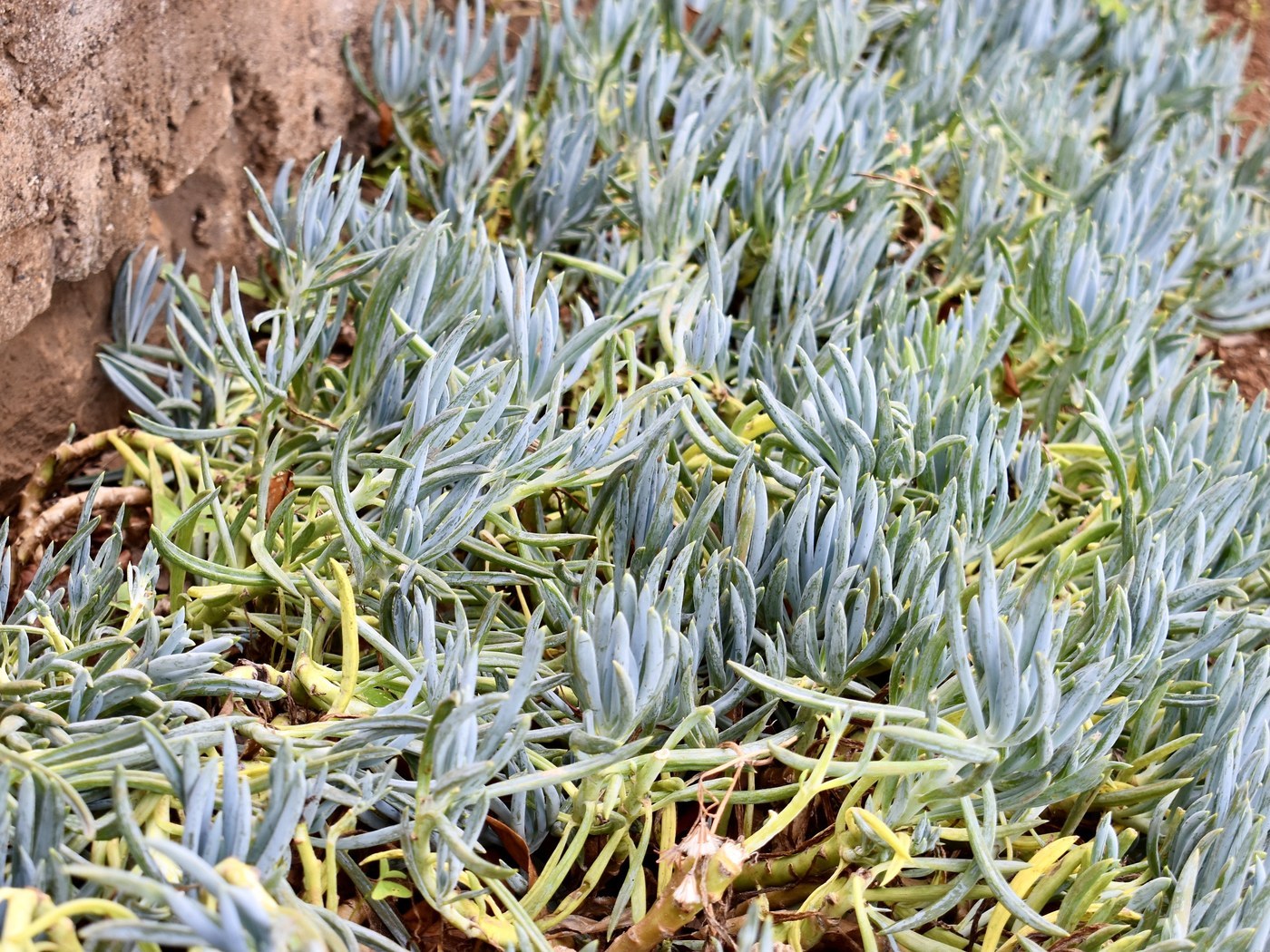
Blue Chalksticks (Senecio serpens, syn. Curio repens) is a low, spreading succulent with slender, finger-like leaves coated in a chalky, powder-blue bloom. Tough and drought-tolerant, it makes an easy, striking groundcover, rock-garden filler or container accent.
Light
Give Blue Chalksticks full sun to very bright light for the most intense blue color and compact, upright growth. In too little light the stems stretch, flop and lose their vivid tone. Outdoors, a south- or west-facing position is ideal; indoors, place it at your brightest window.
Water
This is a drought-tolerant succulent that stores water in its leaves, so water infrequently and only once the soil has dried out completely. Soak thoroughly, then let it dry fully before the next watering. Err on the side of neglect — far more plants are lost to overwatering than to drought.
Soil & Potting
Plant in a fast-draining, gritty succulent or cactus mix. Amend regular potting soil with coarse sand, pumice or perlite to keep water moving freely past the roots. Always use containers with drainage holes; standing moisture quickly rots the shallow root system.
Humidity & Temperature
Blue Chalksticks prefers warm, dry air and typical room or garden humidity — high humidity encourages rot. It thrives in the 50–80°F (10–27°C) range and tolerates mild frost only briefly; protect it from hard freezes by moving pots indoors or covering plants in cold snaps.
Feeding
Feeding needs are minimal. A single diluted dose of balanced or low-nitrogen succulent fertilizer in spring is plenty. Overfeeding produces soft, leggy growth that loses the tight, chalky-blue look that makes this plant appealing.
Propagation
Propagation is exceptionally easy. Snip a stem section, let the cut end callus for a day or two, then lay or insert it into dry, gritty mix; roots form quickly where nodes touch the soil. Even trailing stems will root on their own where they contact the ground, spreading naturally.
Repotting / Pruning
Repot only every couple of years or when it outgrows its pot, ideally in spring. Trim back overly long or leggy stems to keep the mat dense, and use the trimmings as cuttings. Pinching stem tips encourages branching for a fuller appearance.
Common Problems & Pests
Overwatering and poor drainage are the leading threats, causing mushy, rotting stems — always let the soil dry out. Insufficient light causes stretching and loss of blue color. Watch for mealybugs tucked into leaf joints and the occasional aphid; treat with a cotton swab of alcohol or insecticidal soap.
Seasonal Care Tips
Growth is strongest in spring and fall. In summer heat some plants slow down, so ease off watering. In winter, keep it cool, bright and nearly dry, watering just enough to prevent shriveling. Move container plants under cover before the first frost in cold regions.
Frequently asked questions
Why is my Blue Chalksticks losing its blue color?
The powdery blue coating fades in low light and can rub off with handling. Move the plant to full, bright sun and avoid touching the leaves to keep the chalky bloom intact.
How often should I water Blue Chalksticks?
Only when the soil has dried out completely — often every couple of weeks in summer and much less in winter. Deep, infrequent soakings suit this drought-tolerant succulent best.
Why are the stems of my Blue Chalksticks stretching and flopping?
This is classic light starvation. Relocate the plant to a brighter spot, and pinch or trim the leggy stems to encourage tighter, more compact growth.
Can Blue Chalksticks be grown as a groundcover?
Yes. In frost-free climates it spreads into a low, silvery-blue mat, rooting as stems touch the soil. In cold regions grow it in containers you can move indoors for winter.