
Blue Chalksticks Identification Guide
How to identify Blue Chalksticks by its slender, powdery blue, finger-like upright leaves forming a spreading mat.
Read the full Blue Chalksticks encyclopedia entry →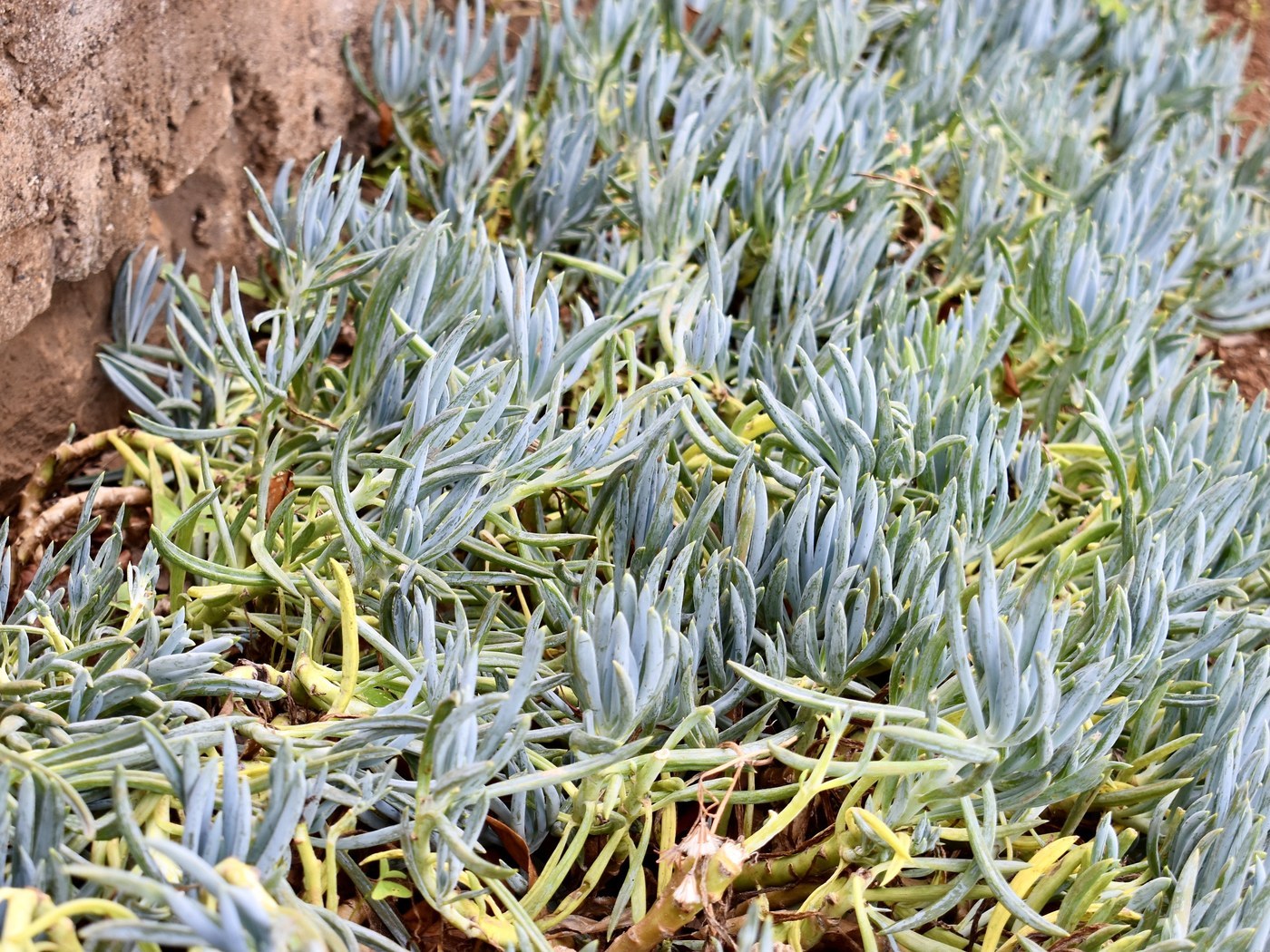
Key Identifying Features
Blue Chalksticks (Senecio serpens, also classified as Curio repens) is a spreading groundcover succulent prized for its chalky blue color.
- Slender, cylindrical finger-like leaves
- A distinctive powdery blue to silvery-gray coating
- Low, spreading mat-forming habit, about 6–12 in (15–30 cm) tall
- Leaves point upward like little chalk sticks
Leaves & Stems
The leaves are narrow, fleshy cylinders (sometimes slightly flattened or grooved on top), typically 1–2 in (3–5 cm) long, tapering to a soft point. Their surface is coated in a natural waxy bloom (farina) that gives the signature frosty blue-gray color and rubs off if handled. Leaves grow densely along short, creeping stems that root as they spread, forming a tidy carpet. New stems trail along the ground and turn upward at the tips.
Flowers & Fruit
In summer, mature plants send up short stalks bearing small, dull white to off-white daisy-like flowers with a faint, sometimes unpleasant scent. The blooms are modest and not the main attraction — the foliage color is what identifies and sells the plant. Tiny dandelion-like seeds may follow.
How to Tell It Apart from Look-Alikes
- String of Pearls / Beads (Curio rowleyanus): same broad group but with round bead-like leaves on trailing strings.
- Blue Chalk Fingers (Senecio mandraliscae): very similar and often confused; mandraliscae is taller with longer, more upward fingers, while serpens is shorter and more compact. They're frequently sold interchangeably.
- Blue Echeveria: forms rosettes, not finger-like leaves.
Look for the low blue mat of upright cylindrical "chalk" fingers with a rub-off powdery coating.
Where You'll Find It
Native to South Africa, it's widely used as a drought-tolerant groundcover in rockeries, borders, and xeriscapes, and in containers. It thrives in full sun to light shade with fast-draining soil and minimal water. It's mildly frost-tolerant but generally treated as tender.
Quick ID Checklist
- Slender cylindrical finger-shaped leaves
- Powdery blue-gray color that rubs off
- Leaves point upward
- Low, creeping, mat-forming spread
- Small dull-white daisy flowers in summer
- Drought-tolerant groundcover habit
Frequently asked questions
Why are the leaves blue, and why does the color rub off?
A natural waxy coating called farina gives the chalky blue color and protects against sun. It rubs off when handled, revealing greener tissue underneath.
What's the difference between Senecio serpens and Senecio mandraliscae?
They're very similar and often sold interchangeably. S. serpens (true blue chalksticks) is shorter and more compact, while S. mandraliscae is taller with longer fingers.
Are the flowers worth keeping?
The small off-white daisy flowers are modest and can have an unpleasant smell, so many growers trim them to focus on the blue foliage.
Is blue chalksticks good as a groundcover?
Yes. It spreads into a low blue mat, roots as it goes, and tolerates drought and full sun, making it a popular xeriscape groundcover.