
How to Care for Blue-eyed Grass
Grow Blue-eyed Grass (Sisyrinchium angustifolium): a dainty, grass-like native perennial with starry blue flowers that thrives in moist, sunny spots.
Read the full Blue-eyed Grass encyclopedia entry →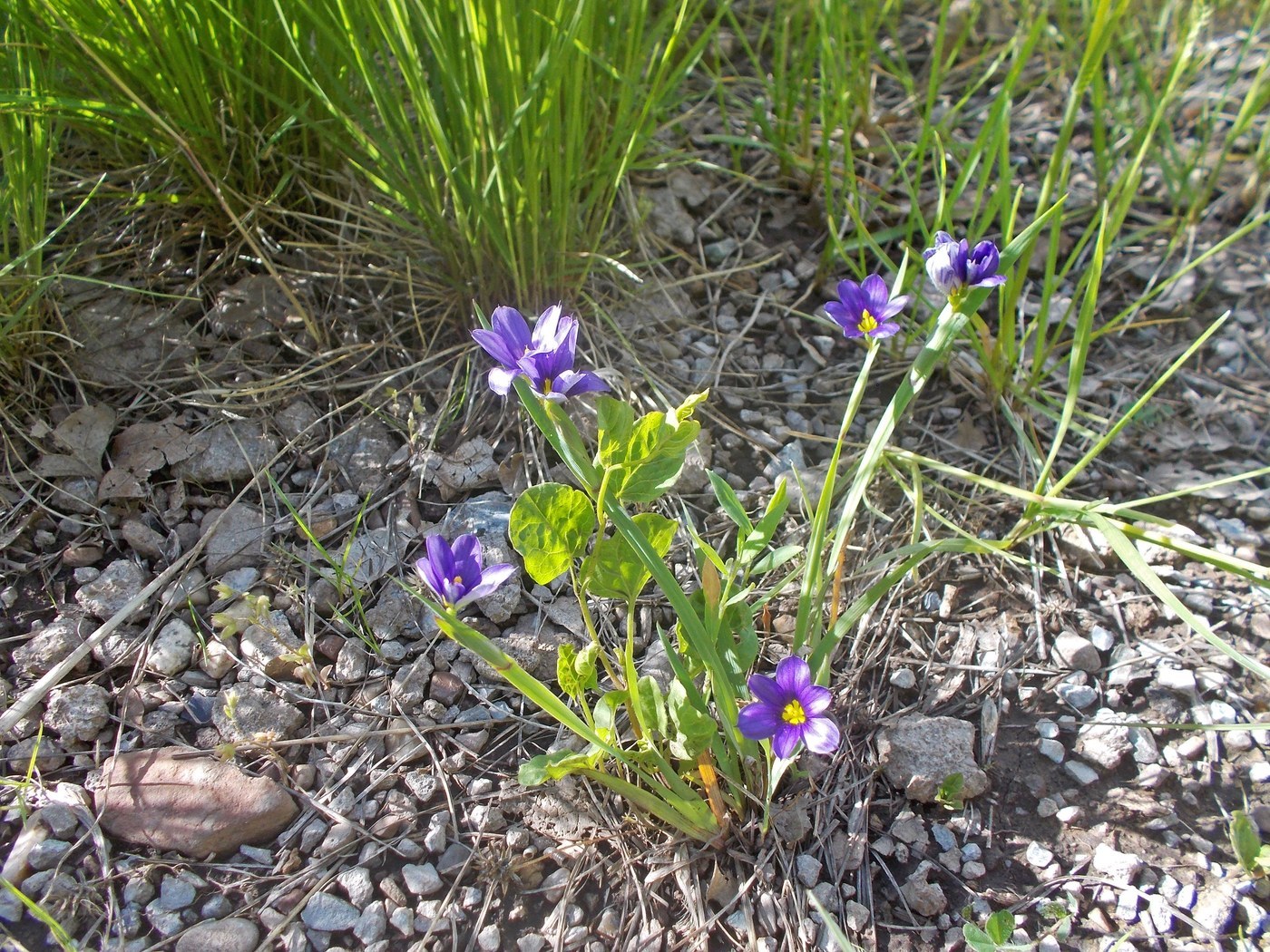
Blue-eyed Grass (Sisyrinchium angustifolium) is a charming little clump-forming perennial that, despite its name, is not a grass at all but a member of the iris family. Its slender, flattened blades and cheerful star-shaped blue flowers with yellow centers make it a delightful, easy addition to meadows, borders, and rain gardens.
Light
Blue-eyed Grass performs best in full sun to part shade. Full sun yields the most abundant flowering and the tidiest, most compact clumps, while a bit of afternoon shade is welcome in hotter climates. Too much shade causes floppy growth and fewer blooms.
Water
Matching its "moderate, evenly moist" rating, this plant likes consistent moisture and naturally occurs in damp meadows, streamsides, and open low ground. Keep the soil evenly moist, especially during flowering and dry spells. It tolerates brief dryness once established but declines in prolonged drought, so it is a fine choice for rain gardens and moist borders.
Soil & Potting
Grow it in average to moist, well-drained soil rich in organic matter. It adapts to a range of soils, from sandy to loamy, as long as moisture is steady and drainage prevents standing water in winter. In containers, use a moisture-retentive potting mix and keep the pot from drying out completely.
Humidity & Temperature
A hardy temperate native across roughly USDA zones 4 through 9, Blue-eyed Grass shrugs off cold winters and handles typical summer heat with adequate moisture. It has no special humidity requirements and is well suited to open, breezy sites where its clumps stay healthy.
Feeding
This is a low-nutrient-needs plant. A light topdressing of compost in spring is usually plenty. Avoid heavy fertilizing, which encourages lush, floppy foliage at the expense of flowers and the plant's naturally neat form.
Propagation
The easiest method is division: lift and split established clumps in early spring or after flowering, replanting the divisions promptly and watering them in. It also self-sows readily where happy, and seed can be sown—fresh or cold-stratified over winter—to raise new plants. Volunteers can be moved while young.
Repotting / Pruning
Divide clumps every two to three years to keep them vigorous and prevent the centers from thinning out. Shear back spent flower stalks to tidy the plant and, in warm regions, to limit unwanted self-seeding. Container specimens can be repotted or divided in spring.
Common Problems & Pests
Blue-eyed Grass is largely trouble-free. The main issues are rot in soggy, poorly drained winter soil and thinning, floppy clumps when overfed or overly shaded. Rust and leaf spot appear occasionally in humid, crowded plantings—improve airflow and spacing to prevent them. Slugs may nibble young growth in damp gardens.
Seasonal Care Tips
In spring, divide and topdress with compost as new growth emerges. Enjoy the peak flush of blue flowers in late spring to early summer, then shear spent stems to encourage tidiness and possible rebloom. Keep soil moist through summer, and simply let the foliage die back naturally in fall—clumps return reliably the following spring.
Frequently asked questions
Is Blue-eyed Grass actually a grass?
No. Despite its grass-like blades and name, it is a member of the iris family (Iridaceae). The flattened foliage simply resembles grass when the plant is not in bloom.
Why did my Blue-eyed Grass stop flowering well?
Declining bloom is usually from too much shade, overcrowded clumps, or excess fertilizer. Move it to more sun, divide congested clumps every couple of years, and ease off feeding.
Does Blue-eyed Grass spread aggressively?
It spreads gently by self-seeding and slow clump expansion rather than aggressive runners. Deadheading spent stalks keeps volunteers in check if you prefer a tidier planting.
How do I keep the clumps looking healthy?
Give it consistent moisture, full sun, and divide the clumps every two to three years. This prevents the centers from dying out and keeps the plant vigorous and free-flowering.