
Blue Jacaranda Identification Guide
How to identify the Blue Jacaranda by its lavender-blue trumpet flowers, fern-like bipinnate foliage, and flat round woody seed pods.
Read the full Blue Jacaranda encyclopedia entry →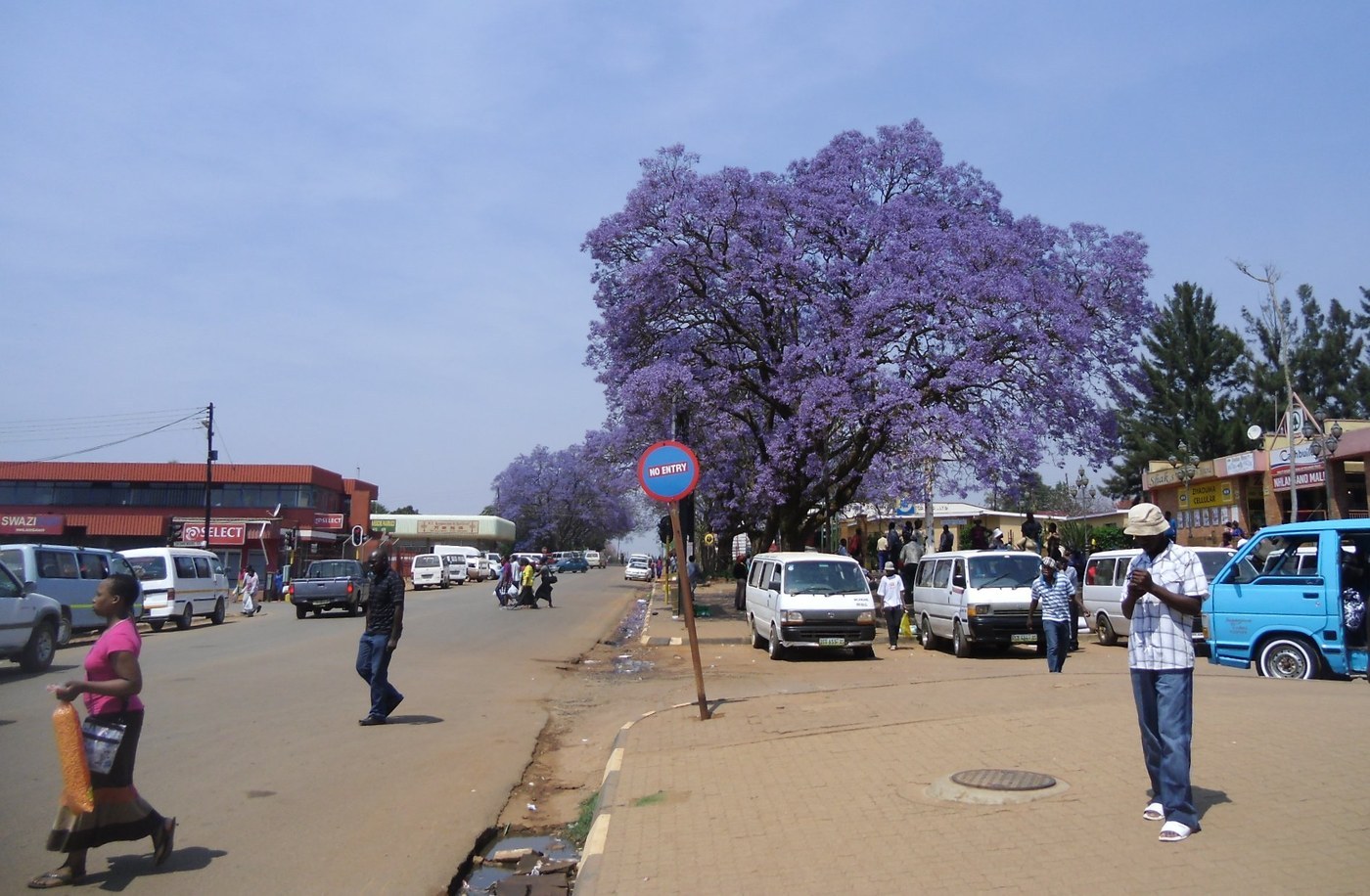
Key Identifying Features
The Blue Jacaranda (Jacaranda mimosifolia) is famous for the clouds of lavender-blue flowers that blanket entire trees in spring and early summer. Even out of bloom it is recognizable by its delicate, fern-like foliage and spreading, open crown.
- Lavender to violet-blue trumpet flowers in large clusters
- Twice-divided (bipinnate), fern-like leaves
- Flat, round, woody seed pods resembling castanets
- Medium-sized tree, 8-15 m tall, with a broad umbrella-shaped canopy
Leaves & Stems
The foliage is one of the surest year-round clues. Leaves are opposite, large (up to 45 cm), and bipinnate — each leaf divides into many small leaflets, which themselves divide into dozens of tiny oblong leaflets about 1 cm long. The overall effect is soft, feathery, and fern-like, similar to a mimosa (hence mimosifolia). The foliage is bright green and casts light, dappled shade.
The tree is briefly deciduous to semi-evergreen, often dropping its leaves just before flowering. Bark is thin, gray-brown, and finely scaly; branches are slender and spread widely.
Flowers & Fruit
- Flowers appear in dense panicles 20-30 cm long, each bloom a tubular, 5-cm trumpet in violet-blue to lavender. In warm climates trees often flower on bare branches before the new leaves, creating a solid purple canopy. Fallen flowers carpet the ground in blue-purple.
- Fruit is a distinctive flattened, rounded, woody capsule 5-7 cm across, green ripening to dark brown, with a wavy edge. The pods split into two halves and are sometimes used in dried arrangements. Inside are numerous small winged seeds.
How to Tell It Apart from Look-Alikes
- Royal Poinciana / Flamboyant (Delonix regia) has similar fern-like bipinnate leaves but bears bright red-orange flowers and long flat machete-like pods, never blue trumpets.
- Mimosa / Silk Tree (Albizia julibrissin) has feathery leaves too but produces pink powder-puff flowers, not trumpets.
- Lignum vitae and other blue-flowered trees lack the fern-like foliage. The combination of fern leaves + blue trumpets + round woody pods is unique to Jacaranda.
Where You'll Find It
Native to south-central South America (Argentina and Bolivia), the Blue Jacaranda is now planted worldwide in warm subtropical and Mediterranean climates. It is an iconic street and park tree in Pretoria, Los Angeles, Sydney, Lisbon, and southern Spain, prized for its spring color. It needs frost-free conditions and full sun.
Quick ID Checklist
- Lavender-blue trumpet flowers in large clusters (spring/early summer)
- Fern-like bipinnate leaves, opposite, with tiny leaflets
- Flat, round, woody seed pods like castanets
- Broad, open, umbrella-shaped canopy
- Often flowers on bare or nearly bare branches
- Carpet of fallen blue flowers beneath the tree
Frequently asked questions
When does the Blue Jacaranda bloom?
It flowers in spring to early summer, typically October-November in the Southern Hemisphere and May-June in the Northern Hemisphere. In warm climates the tree often blooms on bare branches before leafing out.
How do I tell a Jacaranda from a Royal Poinciana when both lack flowers?
Their fern-like leaves look alike, but the seed pods differ sharply: Jacaranda has flat round woody capsules like castanets, while the Royal Poinciana has long, flat, machete-shaped pods up to 60 cm.
Is the Jacaranda's flower truly blue?
The flowers are lavender to violet-blue. They are one of relatively few trees with bluish blooms, which is why a flowering Jacaranda is so striking and easy to identify from a distance.
Will a Jacaranda survive frost?
Only marginally. It is a subtropical tree that needs largely frost-free conditions; hard freezes kill young trees and damage mature ones, which is why it thrives mainly in mild Mediterranean and subtropical regions.