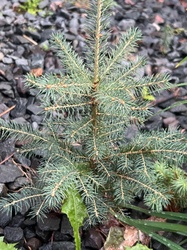
Blue Spruce Identification Guide
Identify the Colorado Blue Spruce (Picea pungens) by its stiff, sharp, silvery-blue needles and classic conical Christmas-tree shape.
Read the full Blue Spruce encyclopedia entry →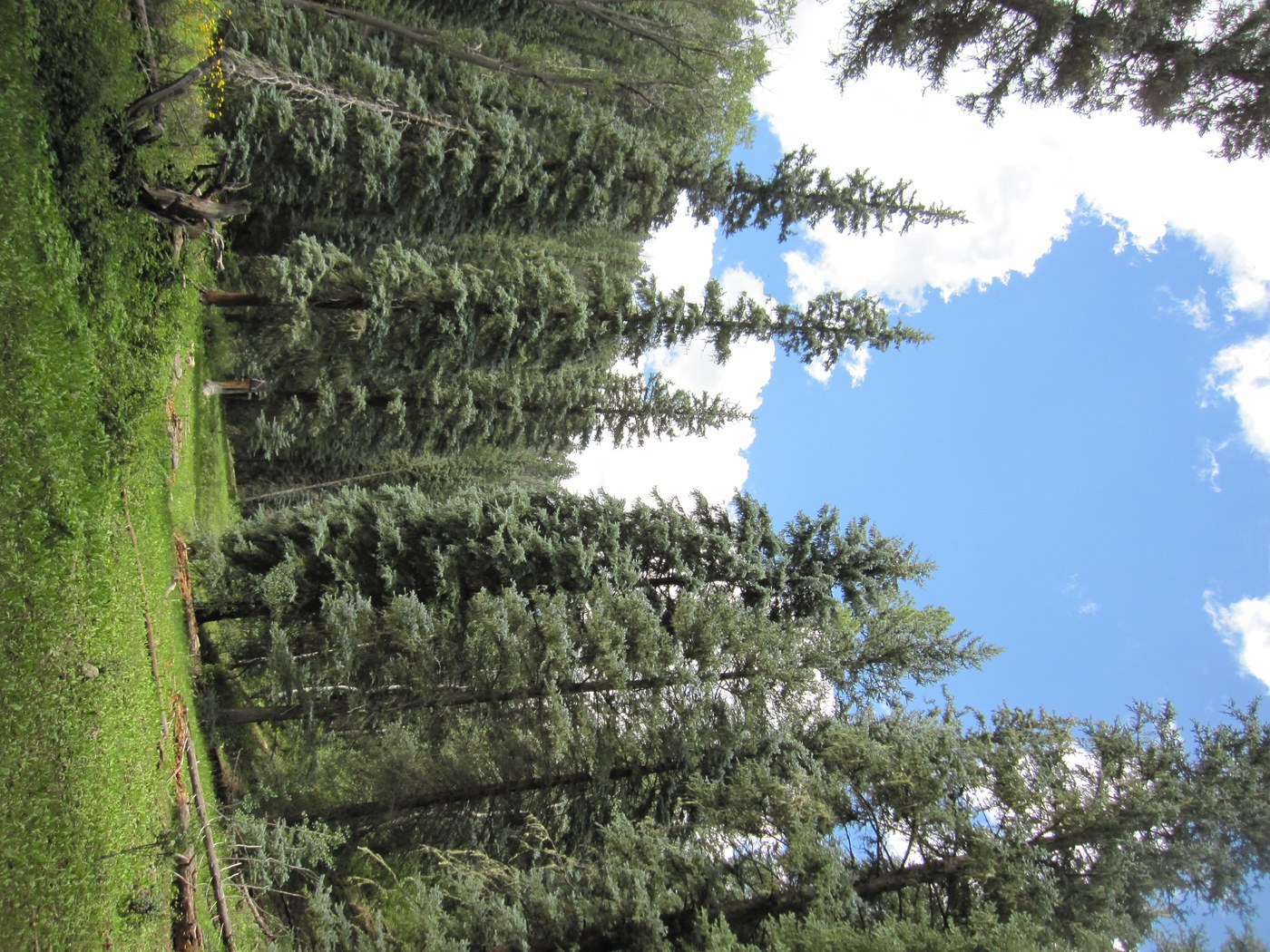
Key Identifying Features
The Blue Spruce (Picea pungens), also called Colorado blue spruce, is a large evergreen conifer famous for its silvery blue-green to powder-blue foliage. It grows 30-60 ft in landscapes (taller in the wild) with a stiff, symmetrical pyramidal (cone-shaped) form and horizontal branches in regular whorls. The species name pungens means "sharp-pointed" - a direct reference to its prickly needles.
- Color: blue-gray to striking silver-blue (waxy bloom on needles)
- Form: dense, narrow pyramid with a strong central leader
- Texture: stiff and prickly to the touch
Leaves & Stems
The needles are the best ID feature. They are stiff, sharply pointed, and 4-sided (square in cross-section) - roll a single needle between your fingers and it rolls easily, confirming a spruce (fir needles are flat and won't roll). Needles are 3/4 to 1 1/4 inch long, arranged all around the twig (radial), and painfully sharp. The blue color comes from a waxy coating; rubbing it off reveals greener tissue beneath. Twigs are stout, orange-brown, and hairless. When a needle drops it leaves a small peg-like woody projection (sterigma) on the twig - rough pegs are a classic spruce trait.
Flowers & Fruit
Like all conifers it bears cones, not flowers. Seed cones are pale brown, cylindrical, 2 1/2 to 4 inches long, and hang downward from the upper branches. The cone scales are thin, papery and have wavy, slightly toothed edges. Cones mature in one season and fall whole. Pollen cones are small and reddish in spring.
How to Tell It Apart from Look-Alikes
- Other spruces (Norway, white): also have 4-sided rolling needles and pegs, but lack the intense silver-blue color and the needles are usually less rigid and less viciously sharp.
- Firs (Abies): needles are flat, soft, and won't roll; cones stand upright and disintegrate on the tree. Blue spruce needles roll and are sharp; cones hang down.
- Concolor/white fir: can look bluish but has flat, soft, blunt needles - feel the difference immediately.
The combo of square rolling needles + sharp tips + silver-blue color + pendant cones + peg-covered twigs confirms blue spruce.
Where You'll Find It
Native to the Rocky Mountains (Colorado, Utah, Wyoming), it is planted across temperate North America as a specimen, screen, and Christmas tree. Cultivars like 'Hoopsii' and 'Baby Blue' intensify the color. It prefers full sun and cool climates.
Quick ID Checklist
- Stiff, sharply pointed needles that roll between fingers (4-sided)
- Silvery blue to powder-blue color from waxy coating
- Needles attached all around twig on woody pegs
- Pendant, papery brown cones 2.5-4 in long
- Dense pyramidal form with strong central leader
Frequently asked questions
How do I know it's a spruce and not a fir?
Pick one needle and roll it between your fingers. Spruce needles are 4-sided and roll easily; they also leave peg-like bumps on the twig. Fir needles are flat, soft, and won't roll.
Why is it blue?
A waxy, powdery coating (bloom) on the needles scatters light to create the silver-blue color. Rub a needle and the wax comes off, revealing greener tissue underneath.
Do all blue spruces have the same intensity of blue?
No. Seedlings vary from green to gray-blue, while grafted cultivars such as 'Hoopsii' or 'Baby Blue' are selected for the most vivid, consistent silver-blue.
Which way do the cones point?
Blue spruce cones hang downward and fall off whole. Upright cones that fall apart on the branch indicate a true fir instead.
Blue Spruce identified by the community
Recent Blue Spruce specimens identified with Plant Identifier.