
How to Care for Bluebeard
Bluebeard is a compact late-summer shrub smothered in blue flowers. Sun-loving and drought-tolerant, it thrives on lean soil and a hard spring prune.
Read the full Bluebeard encyclopedia entry →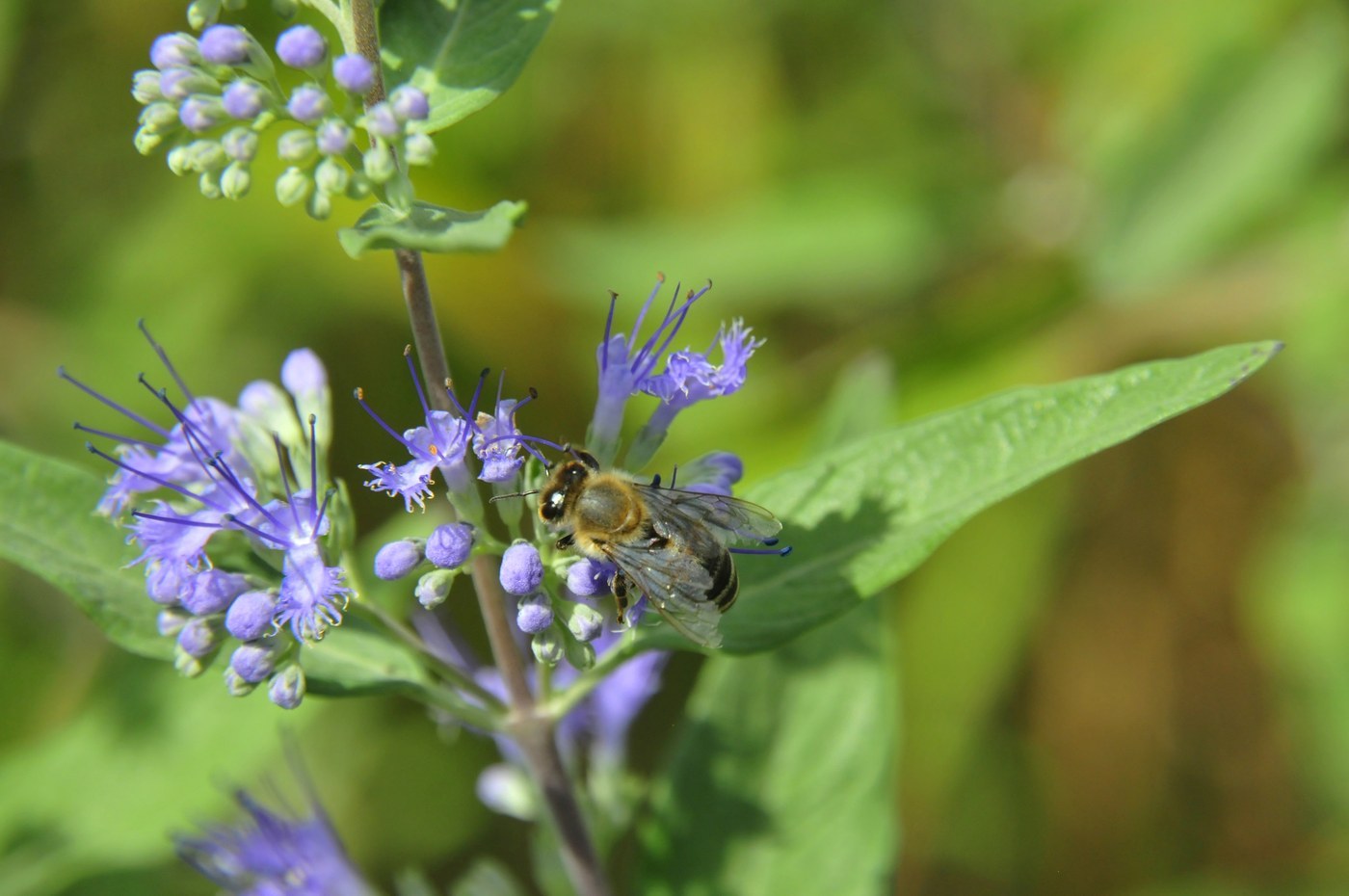
Bluebeard (Caryopteris x clandonensis) is a compact, mounding deciduous shrub cloaked in clusters of blue to violet flowers in late summer and early autumn, above aromatic gray-green foliage. It is an easy, sun-loving, drought-tolerant shrub whose one essential ritual is a hard prune each spring.
Light
Bluebeard needs full sun. It flowers most heavily and keeps a dense, tidy habit in an open, sunny position. In shade it grows sparse and floppy and produces far fewer of its signature blue blooms. Choose the brightest spot in the garden.
Water
Water young plants through their first growing season to establish them, then bluebeard becomes distinctly drought-tolerant and needs little supplemental water. It strongly prefers dry to moderate conditions and dislikes wet feet; soggy soil, especially in winter, is its main enemy. Water established plants only during prolonged drought.
Soil & Potting
Provide light, well-drained soil; sharp drainage is more important than fertility. Bluebeard thrives in lean, even gravelly or sandy soils and tolerates a range of pH, favoring neutral to slightly alkaline ground. Avoid heavy clay that stays wet in winter. If growing in a container, use a free-draining mix and ensure the pot never becomes waterlogged.
Humidity & Temperature
This shrub enjoys warm summers and is fairly cold-hardy, dying back in winter and resprouting from the base in spring in colder zones. It is untroubled by low humidity and actually prefers dry air and good air circulation. In its coldest range it behaves almost like a herbaceous perennial, sending up fresh stems each year.
Feeding
Bluebeard is a light feeder and performs best in lean soil. Overfeeding, especially with nitrogen, encourages soft, floppy growth and fewer flowers. A light application of balanced fertilizer or a topdressing of compost in early spring is all it needs, if anything.
Propagation
Propagate from softwood cuttings taken in early summer, which root readily in a free-draining medium. Semi-ripe cuttings later in the season also work. Because it is a hybrid, seed does not come true, so cuttings are the reliable way to reproduce a given selection.
Repotting / Pruning
Pruning is the key to bluebeard's success. Because it flowers on new wood, cut the whole plant back hard in early spring, to a low framework of buds, before growth resumes. This hard prune keeps the shrub compact, prevents a woody, sprawling base, and maximizes the late-summer flower display. Never leave it unpruned or it becomes leggy and shy-flowering. Container plants can be refreshed or potted up in spring at the same time.
Common Problems & Pests
Bluebeard is largely trouble-free and pest-resistant. Its worst enemy is wet, poorly drained soil, which causes root rot and winter death, so drainage is critical. Capsid bugs may distort young shoots occasionally, and in humid, crowded conditions leaf spot can appear, but serious problems are rare. Its aromatic foliage tends to be left alone by browsing animals.
Seasonal Care Tips
In early spring, prune hard to a low framework and topdress lightly with compost. Through summer, water only in drought and enjoy the buildup to the late-season bloom, which is a magnet for pollinators. In autumn leave the framework in place, and in cold climates a winter mulch over the crown helps it resprout reliably the following spring.
Frequently asked questions
When and how should I prune bluebeard?
Prune hard in early spring before new growth begins, cutting the whole plant back to a low framework of buds. Bluebeard flowers on new wood, so this hard cut keeps it compact and boosts the late-summer bloom.
Why isn't my bluebeard flowering well?
The usual causes are too much shade, overly rich soil or feeding, or skipping the annual hard prune. Give it full sun, lean well-drained soil, and cut it back hard each spring.
Is bluebeard drought-tolerant?
Yes, once established. Water it through the first season, then it needs little supplemental water. It far prefers dry, well-drained soil and resents wet feet, especially over winter.
How do I propagate bluebeard?
Take softwood cuttings in early summer or semi-ripe cuttings later; they root easily in a free-draining medium. As a hybrid it won't come true from seed, so cuttings are the way to go.