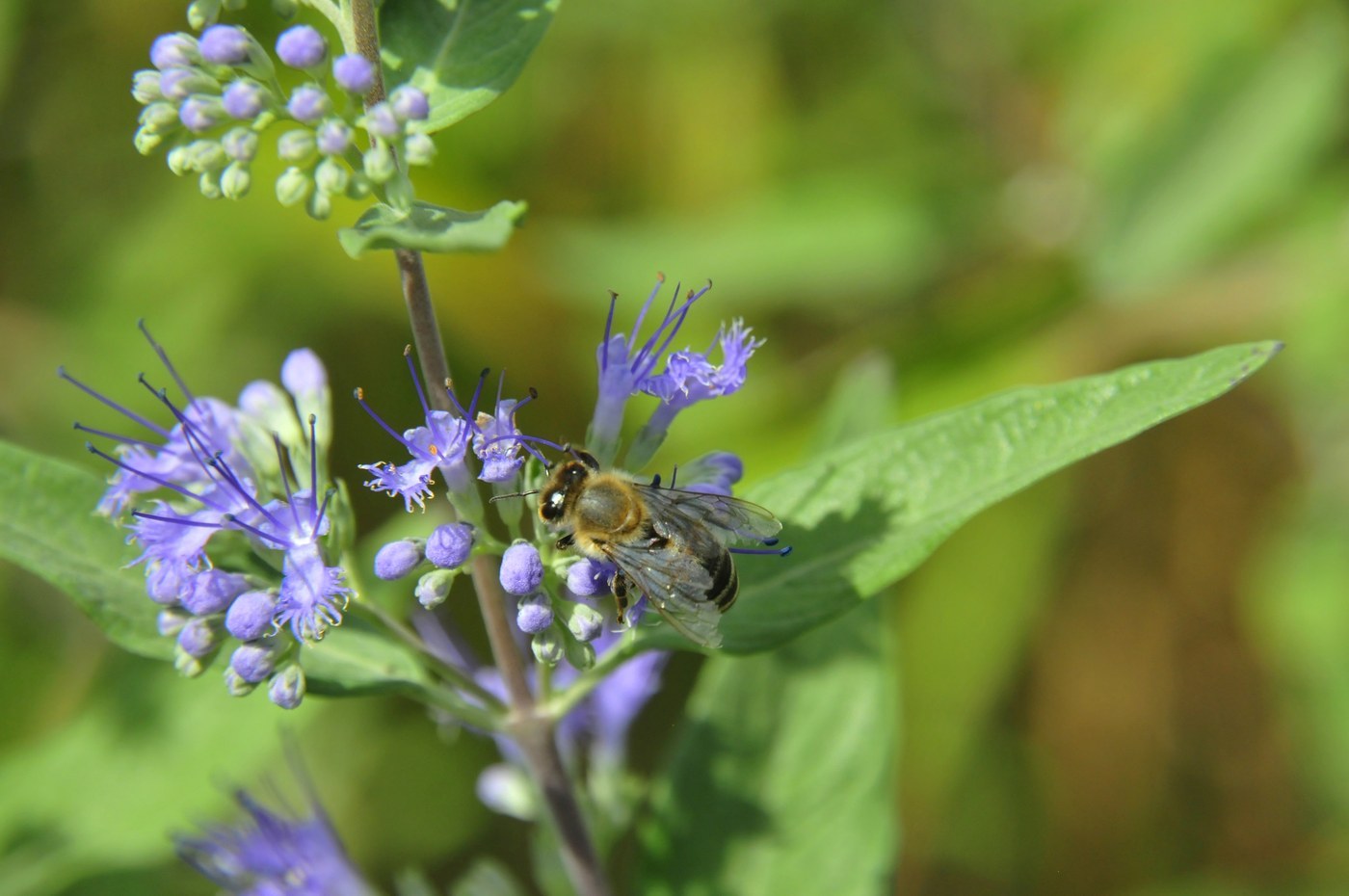
Bluebeard
Caryopteris x clandonensis
Bluebeard is a compact late-summer shrub smothered in clusters of blue flowers that pollinators adore. It is heat- and drought-tolerant and blooms when most shrubs have finished.
- Light
- Full sun
- Water
- Low; drought-tolerant once established
- Difficulty
- Easy
Got a plant like this?
Identify any plant from a photo, free.
Overview
Bluebeard (Caryopteris x clandonensis), also sold as blue mist shrub or blue spirea, is a small deciduous subshrub grown for its haze of true-blue flowers in late summer and early fall. It belongs to the mint family and has aromatic, gray-green foliage.
Few shrubs offer genuine blue blooms, and bluebeard delivers them right when the garden needs a lift—drawing crowds of bees and butterflies. Cultivars like 'Dark Knight', 'Longwood Blue', and golden-leaved 'Worcester Gold' vary in flower and foliage color.
It is fast, tough, and best treated almost like a perennial—cut back hard each spring for a fresh, dense flush of growth.
How to identify it
A low, rounded, soft-stemmed shrub.
- Flowers: dense fringed clusters of small blue (to violet) flowers along the upper stems, late summer into fall
- Leaves: narrow, lance-shaped, gray-green to silvery, aromatic when crushed; some cultivars golden
- Habit: compact and mounded, usually 2–3 ft tall and wide
- Stems: somewhat woody at the base, herbaceous toward the tips
- Scent: foliage has a pleasant, sage-like fragrance
Care & growing
Thrives on heat, sun, and lean soil.
- Light: full sun is essential for best bloom and form
- Water: drought-tolerant once established; dislikes soggy soil
- Soil: needs well-drained soil—wet winter feet are the main killer
- Temperature: hardy in USDA zones 5–9; may die back to the ground in cold winters
- Feeding: little needed; avoid rich soil and heavy feeding, which cause floppy growth
- Pruning: cut back hard to 6–12 in. in early spring—it blooms on new wood
- Propagation: softwood cuttings in summer
Habitat & origin
Caryopteris x clandonensis is a garden hybrid of two East Asian species (C. incana and C. mongholica) native to dry, sunny slopes and grasslands in China and Mongolia.
That heritage explains its love of full sun and sharp drainage. It is planted in perennial borders, pollinator gardens, and dry, sunny landscapes throughout temperate regions.
Frequently asked questions
When does bluebeard bloom?
It flowers in late summer into early fall, filling a gap when many other shrubs have finished blooming.
Should I cut bluebeard back?
Yes. Because it blooms on new wood, cut it back hard to 6–12 inches in early spring for dense, floriferous growth.
Why is my bluebeard floppy?
Too much shade, rich soil, or overfeeding cause weak, sprawling stems. Give it full sun and lean, well-drained soil.
Does bluebeard attract bees?
Very much so—its late-season blue flowers are a magnet for bees and butterflies when other nectar is scarce.
Bluebeard guides
In-depth guides for identifying, growing, and caring for Bluebeard.
How to Care for Bluebeard
Bluebeard is a compact late-summer shrub smothered in blue flowers. Sun-loving and drought-tolerant, it thrives on lean soil and a hard spring prune.
Bluebeard Identification Guide
Identify Bluebeard (Caryopteris) by its late-summer clusters of fringed blue flowers, aromatic gray-green leaves, and compact mounded form.