
Bluebell Identification Guide
Identify bluebells by their nodding one-sided spikes of bell-shaped blue-violet flowers, strap-like basal leaves, and spring woodland carpets. Covers native versus Spanish bluebell differences.
Read the full Bluebell encyclopedia entry →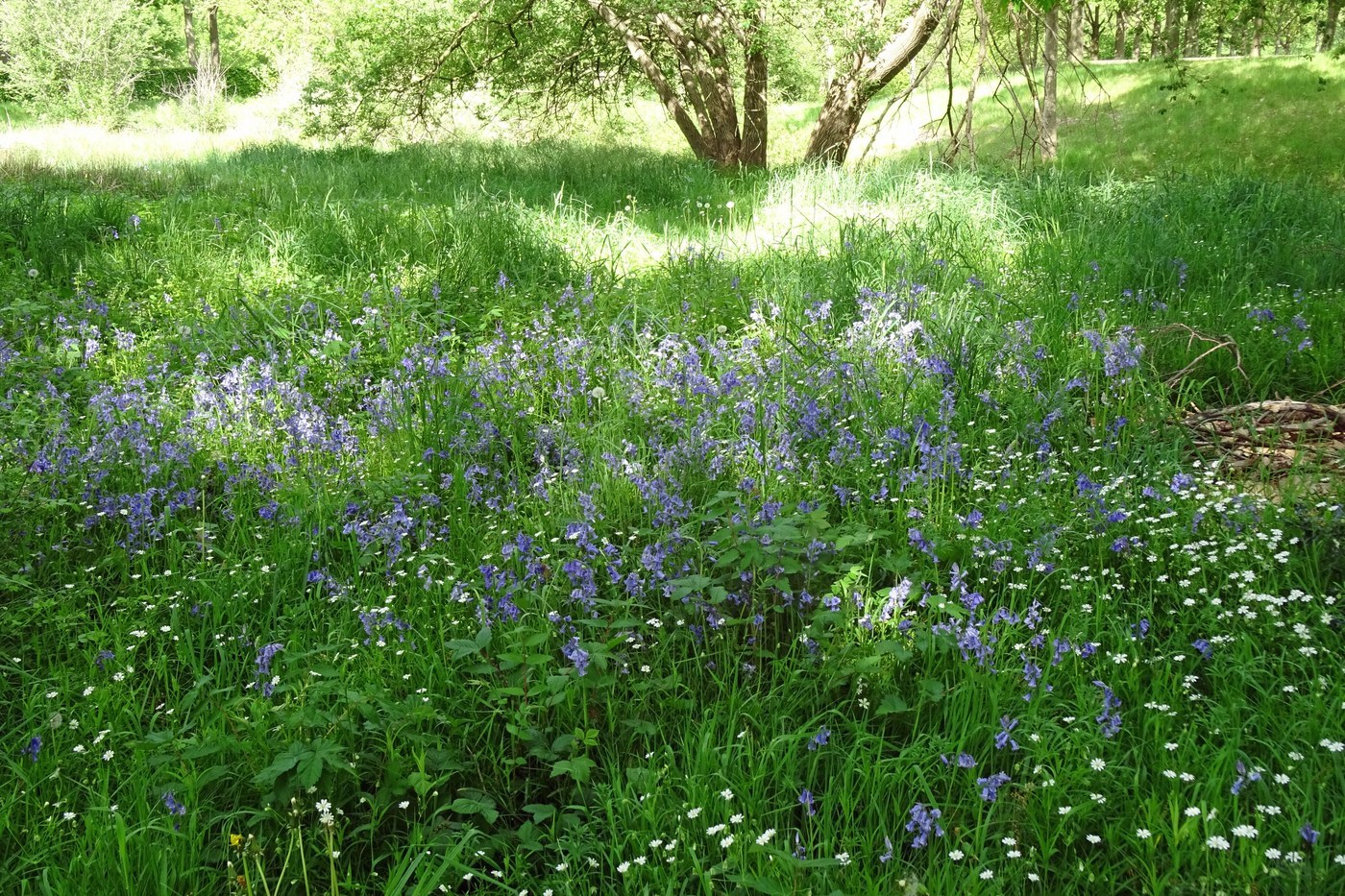
Key Identifying Features
Bluebells (Hyacinthoides) are spring bulb perennials famous for carpeting woodland floors in a haze of violet-blue. The classic native English bluebell has nodding, tubular bell flowers hanging to one side of an arching stem.
- Bell-shaped flowers with 6 tepals, the tips rolled/curled back
- Flowers in a one-sided spike that droops/arches at the top
- Deep violet-blue (occasionally white or pink)
- Sweet fragrance in the native species
Leaves & Stems
Leaves are strap-shaped, narrow, and glossy, rising in a clump directly from the underground bulb. The flowering stem (scape) is leafless and, in the native English bluebell, arches over at the tip under the weight of the flowers. Cut stems and bulbs contain a sticky sap. Plants are typically 8-16 in tall.
Flowers & Fruit
Native English bluebell (Hyacinthoides non-scripta) flowers are narrow tubes with strongly recurved tips, hang along one side of the nodding stem, have cream-colored pollen (anthers), and are sweetly scented. After bloom, three-chambered capsules form and release black seeds.
How to Tell It Apart from Look-Alikes
- Spanish bluebell (Hyacinthoides hispanica): more upright, flowers all around the stem (not one-sided), broader bells with less curled tips, paler blue, blue pollen, and little or no scent. Hybrids are common and intermediate.
- Grape hyacinth (Muscari): tightly packed round beadlike flowers, not open bells.
- Virginia bluebell (Mertensia): an unrelated North American plant with pink-to-blue trumpet flowers and broad oval leaves.
- Drooping one-sided spike + recurved tips + cream pollen + scent = native English bluebell.
Where You'll Find It
Native bluebells carpet ancient deciduous woodlands, hedgerows, and shady banks in Western Europe (especially the UK) each April-May. Spanish bluebells and hybrids are common in gardens and often escape. They prefer dappled shade and moist, humus-rich soil, blooming before the tree canopy fully leafs out.
Quick ID Checklist
- Nodding, one-sided flower spike that arches over
- Bell flowers with recurved (rolled-back) tips
- Deep violet-blue, sweetly scented (native)
- Cream/white pollen (native) vs blue (Spanish)
- Strap-like basal leaves from a bulb
- Spring woodland carpets
An arching one-sided spike of fragrant, recurved-tip blue bells over strappy leaves marks the native bluebell.
Frequently asked questions
How do I tell a native English bluebell from a Spanish bluebell?
Native bluebells have a nodding one-sided stem, narrow bells with strongly curled-back tips, cream pollen, and sweet scent, while Spanish bluebells stand upright with flowers all around, broader paler bells, blue pollen, and little fragrance.
Is Virginia bluebell the same as English bluebell?
No. Virginia bluebell (Mertensia virginica) is an unrelated North American woodland plant with pink-to-blue trumpet flowers and broad leaves, not a bulb with nodding bells.
When and where do bluebells bloom?
Native bluebells bloom in April and May, carpeting ancient deciduous woodlands and shady banks in Western Europe before the tree canopy fully leafs out.
Why do bluebell stems bend over at the top?
The flowering stem is leafless and arches over at the tip, so the one-sided cluster of bells nods toward the ground. This drooping, arching habit is one of the clearest field marks of the native bluebell.