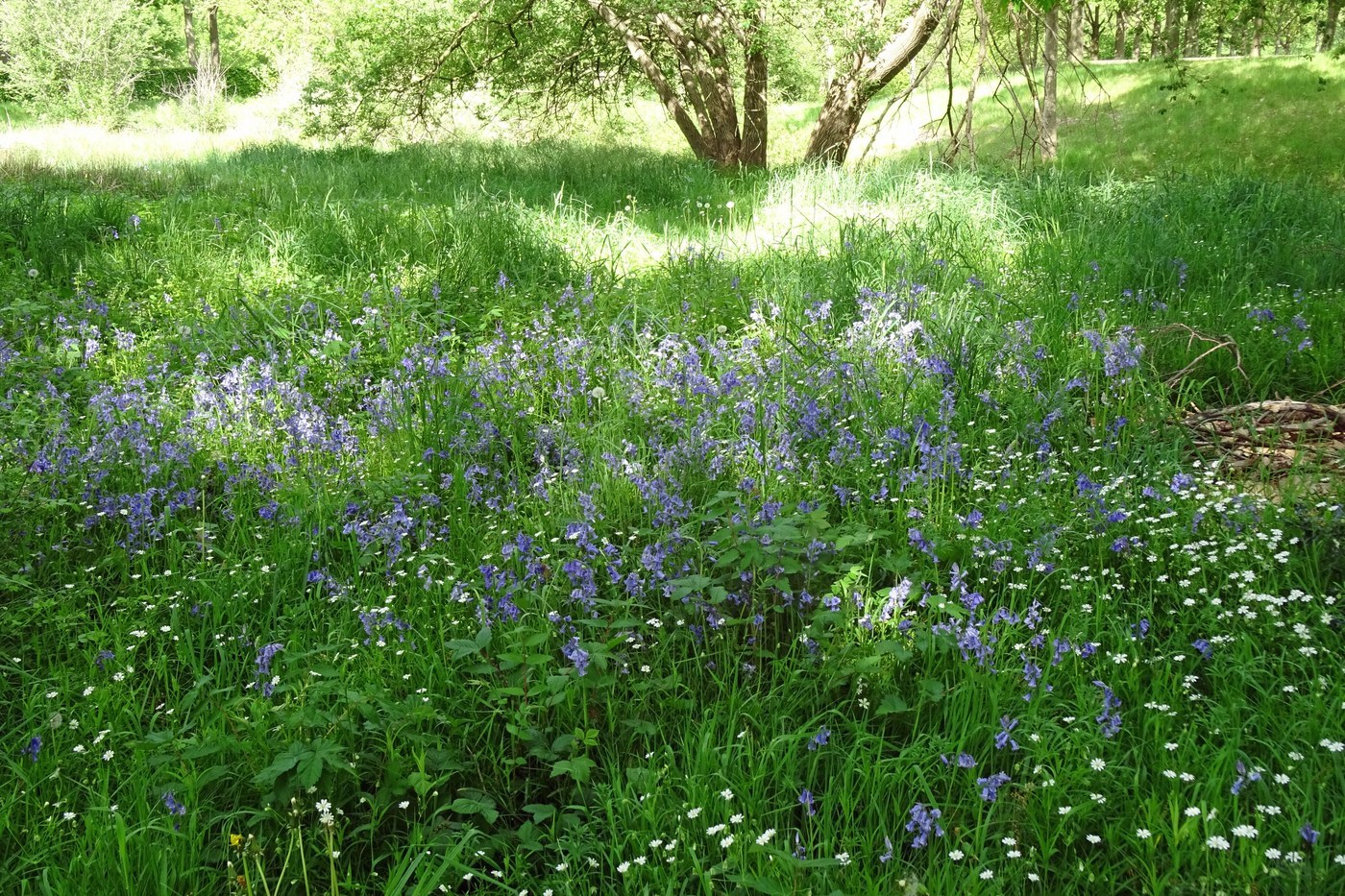
Bluebell
Hyacinthoides non-scripta
Bluebells are spring bulbs that carpet woodlands in hazy drifts of nodding, violet-blue bells. The native English bluebell is a protected woodland icon, distinct from the more vigorous Spanish bluebell.
- Light
- Part shade to dappled light
- Water
- Moist in growth; drier dormancy
- Difficulty
- Easy
Got a plant like this?
Identify any plant from a photo, free.
Overview
Bluebells are spring-flowering bulbous perennials in the asparagus family (Asparagaceae). The classic English bluebell (Hyacinthoides non-scripta) is famous for blanketing deciduous woodlands in sweeps of fragrant violet-blue flowers each spring.
The name describes the nodding, bell-shaped blooms borne on arching stems. English bluebells are a beloved symbol of ancient woodland and are legally protected in the UK, where digging up wild bulbs is prohibited.
They are often confused with the Spanish bluebell (Hyacinthoides hispanica) and the hybrid between the two, which are more upright, less scented, and can threaten native populations through cross-breeding.
How to identify it
English bluebells have a distinctive one-sided, drooping flower spike.
- Flowers: Narrow, tubular bells with strongly recurved tips, deep violet-blue, sweetly scented, hanging down one side of the stem
- Stem: Arching or nodding at the tip (a key trait distinguishing the native English type)
- Pollen: Creamy white (Spanish bluebell pollen is blue)
- Leaves: Narrow, strap-like, glossy, arising from the base
- Height: Around 8-16 in; Habit: clump-forming from bulbs, naturalizing into drifts
Care & growing
Bluebells thrive in cool, shaded, woodland-like conditions.
- Light: Partial shade or dappled light, ideally under deciduous trees that leaf out after flowering
- Water: Keep moist during spring growth; tolerate drier soil during summer dormancy
- Soil: Humus-rich, moist but well-drained woodland soil
- Temperature: Hardy in USDA zones 4-9
- Feeding: Generally unnecessary in good woodland soil; leaf mulch helps
- Propagation: By division of bulb offsets after flowering, or by seed (slow to flower)
Plant bulbs in autumn and allow foliage to die back naturally. Buy from reputable sources and choose true English bluebells to avoid spreading the hybridizing Spanish type.
Habitat & origin
The English bluebell is native to western Europe, with the largest share of the world's population in the British Isles, where it carpets ancient deciduous woodlands. It grows in moist, shaded, humus-rich soils beneath the tree canopy.
Bluebells are emblematic of old woodland and are grown in shade gardens for naturalizing. The Spanish bluebell, native to the Iberian Peninsula, is more tolerant of open conditions and is widely planted, sometimes invasively, in gardens.
Frequently asked questions
How do I tell an English bluebell from a Spanish one?
English bluebells have narrow, deep-blue flowers drooping to one side of an arching stem with creamy pollen and a strong scent, while Spanish bluebells are upright, paler, less scented, with blue pollen.
Are bluebells protected?
In the UK the native English bluebell is legally protected, and it is illegal to dig up wild bulbs; always buy cultivated bulbs from reputable suppliers.
Why won't my bluebells spread?
They need cool, moist, partly shaded woodland-like conditions and time; allow foliage to die back naturally so bulbs can build up and naturalize.
Bluebell guides
In-depth guides for identifying, growing, and caring for Bluebell.
How to Care for Bluebell
Woodland bulbs that carpet shade in nodding blue spring flowers; give dappled light, moisture in growth, and a dry dormancy.
Bluebell Identification Guide
Identify bluebells by their nodding one-sided spikes of bell-shaped blue-violet flowers, strap-like basal leaves, and spring woodland carpets. Covers native versus Spanish bluebell differences.