Blueberry Identification Guide
How to identify blueberry bushes (Vaccinium) by their oval leaves, urn-shaped flowers, and crown-tipped blue berries.
Read the full Blueberry encyclopedia entry →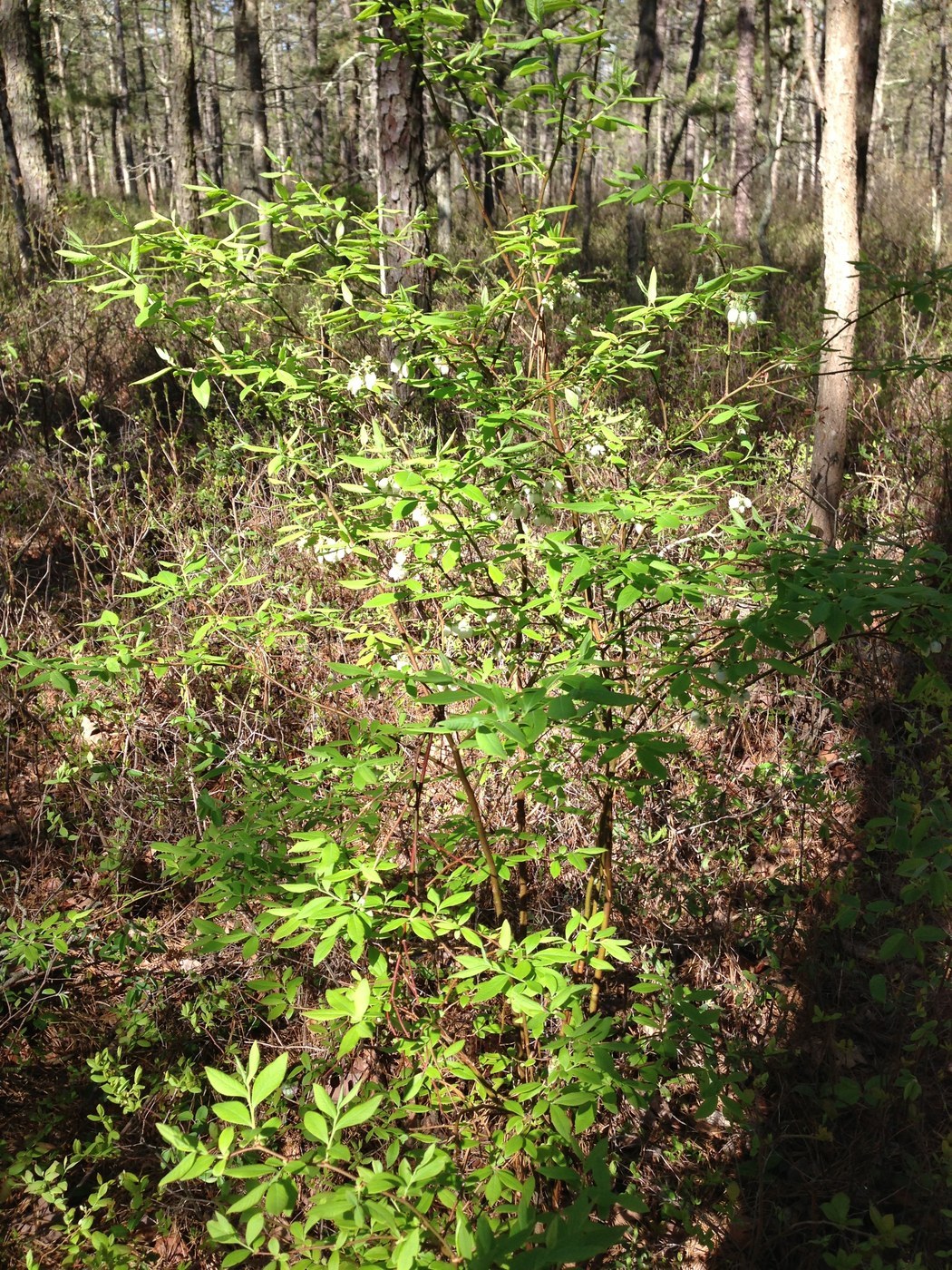
Key Identifying Features
Blueberries are woody shrubs in the genus Vaccinium (e.g., V. corymbosum highbush, V. angustifolium lowbush). Identify them by small oval simple leaves, clusters of white-to-pink urn-shaped (bell) flowers, and round blue-black berries crowned by a distinctive five-pointed star (calyx) at the tip.
- Twiggy shrub with thin, often reddish-green branches
- Small, smooth, oval, alternate leaves, often blue-green
- Urn/bell-shaped hanging white-pink flowers in clusters
- Berries with a persistent star-shaped crown and waxy bloom
Leaves & Stems
Leaves are simple, alternate, oval to elliptical (1-3 in), with smooth or finely toothed margins and a pointed tip. They are smooth, often waxy blue-green, turning brilliant red, orange, and purple in fall. Young twigs are slender and frequently flushed red or yellow-green, becoming gray and woody with age; highbush types form a multi-stemmed bush 4-8 ft, lowbush types stay under 2 ft and spread by rhizomes. The wood is fine and twiggy.
Flowers & Fruit
Flowers are the family's signature: small, hanging, urn- or bell-shaped, with the petal tips fused and slightly flared, colored white to pale pink, borne in drooping clusters in spring. Each flower's base becomes the berry. The fruit is a round berry, blue to blue-black with a pale waxy (glaucous) bloom, and crucially is topped by a small five-lobed crown (the dried calyx) that looks like a star, the single best feature for confirming a true blueberry. Inside are many tiny soft seeds and greenish-white flesh.
How to Tell It Apart from Look-Alikes
- Huckleberries (Gaylussacia): very similar shrubs and berries, but huckleberries have 10 larger, gritty seeds and resin dots on the leaves; blueberries have many tiny seeds.
- Bilberries (Vaccinium myrtillus): closely related, but bear berries singly rather than in clusters and have angled green twigs.
- Other dark-berried shrubs: plants like buckthorn or nightshade lack the crowned tip and urn flowers. The star-crowned berry on a twiggy shrub with bell flowers is the blueberry signature.
Where You'll Find It
Blueberries need acidic, moist, well-drained soil. Cultivated in gardens, farms, and orchards; wild lowbush blueberries blanket acidic barrens, heaths, bogs, and pine/oak woods in cooler climates. They are common across North America, with relatives worldwide.
Quick ID Checklist
- Twiggy shrub, slender often reddish branches
- Small oval smooth leaves, blue-green, red in fall
- Urn/bell-shaped white-pink flowers in clusters
- Blue berries with a 5-pointed crown and waxy bloom
- Acidic soil; garden, heath, or open woods
Frequently asked questions
What is the most reliable way to confirm a blueberry?
Look at the tip of the berry. True blueberries have a small five-pointed star-shaped crown (the dried calyx) at the blossom end, sit on a twiggy shrub with small oval leaves, and come from urn-shaped white-pink flowers. That crown is the key identification feature.
How do I tell a blueberry from a huckleberry?
They look alike on the bush, but inside, blueberries have many tiny soft seeds while huckleberries have about 10 larger, harder, gritty seeds. Huckleberry leaves often show tiny resin dots underneath.
What do blueberry flowers look like?
They are small, hanging, urn- or bell-shaped flowers with the petals fused into a rounded cup that flares slightly at the mouth, colored white to pale pink and borne in drooping clusters in spring.
Why are blueberry leaves turning red?
Brilliant red, orange, and purple foliage is the normal autumn color of blueberry shrubs. In spring and summer the leaves are smooth and blue-green; the fall color is a helpful seasonal identification cue.
Blueberry identified by the community
Recent Blueberry specimens identified with Plant Identifier.