
How to Care for Boneset
Grow boneset (Eupatorium perfoliatum), a moisture-loving native perennial with fluffy white blooms for pollinator gardens.
Read the full Boneset encyclopedia entry →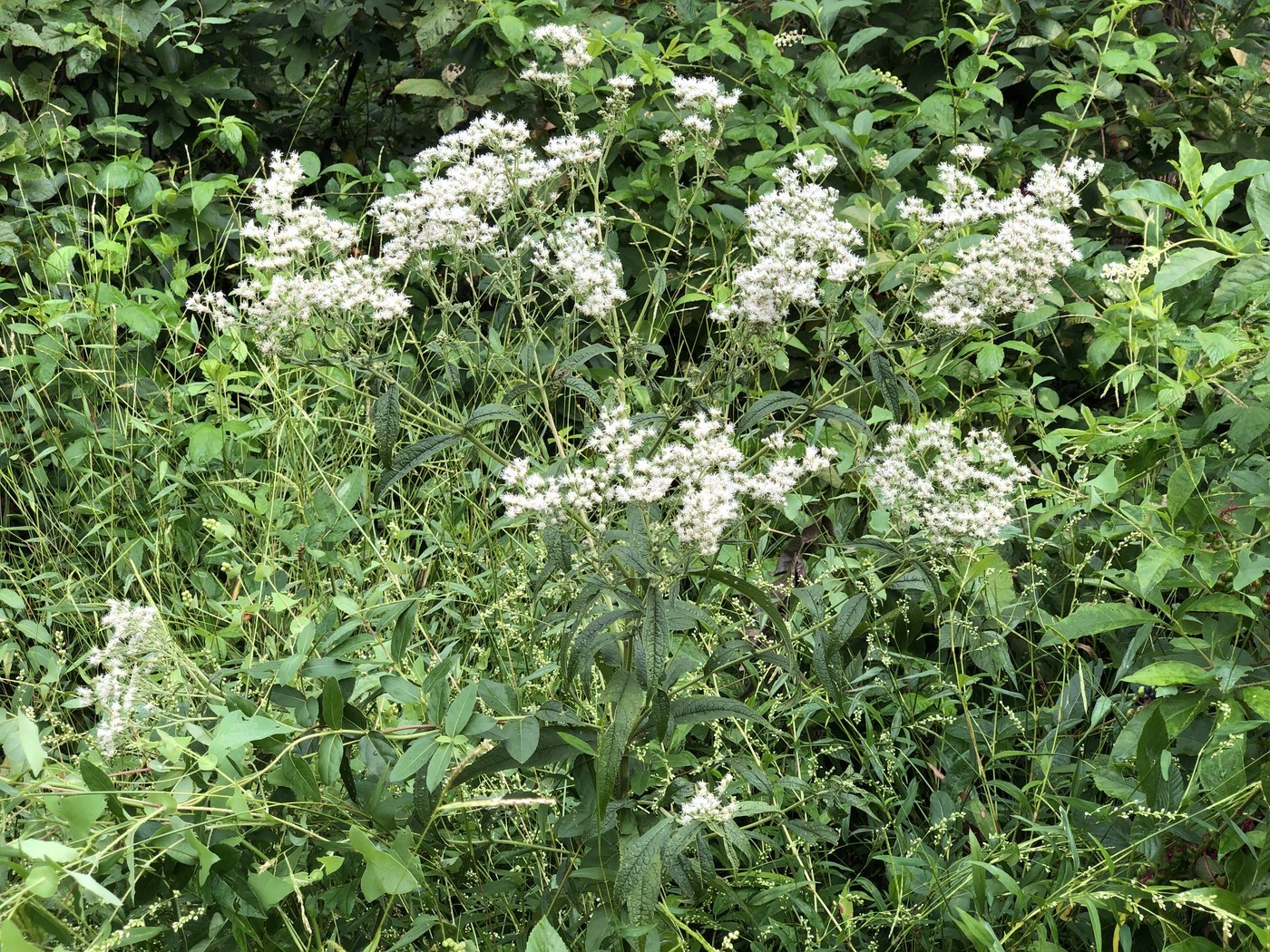
Boneset (Eupatorium perfoliatum) is a hardy North American perennial with distinctive clasping leaves and flat clusters of fluffy white flowers in late summer. Easy to grow and adaptable, it is a standout for rain gardens, pond edges, and pollinator plantings.
Light
Boneset grows in full sun to partial shade. It flowers most fully and stays sturdiest in full sun, though it tolerates dappled or afternoon shade, especially in hotter regions. In too much shade the stems may grow lanky and lean.
Water
This is a moisture-loving plant that prefers consistently moist to wet soil. It excels along streams, ponds, and low spots where the ground stays damp. In an ordinary bed, water regularly and mulch to retain moisture; boneset dislikes prolonged drought and will wilt and struggle in dry soil.
Soil & Potting
Boneset is easygoing about soil type as long as it holds moisture. Rich, loamy to clay soils that stay damp suit it best, and it handles the periodic saturation of rain gardens well. Amend sandy, fast-draining beds with compost to improve water retention.
Humidity & Temperature
As a temperate native, boneset is cold-hardy and thrives across a wide range of summer conditions. It handles humid summers with ease and dies back to the ground each winter, re-emerging in spring. No special humidity measures are needed outdoors.
Feeding
Boneset needs little supplemental feeding, particularly in fertile, moisture-retentive soil. A spring topdressing of compost is usually plenty. Avoid heavy nitrogen fertilizer, which encourages floppy growth that may need staking.
Propagation
Propagate by seed, division, or cuttings. Seed benefits from cold, moist stratification over winter and can be surface sown, as light aids germination. Established clumps can be divided in spring or fall, and softwood cuttings taken in early summer root in moist media.
Repotting / Pruning
Mostly a garden perennial rather than a container plant, boneset can be lifted and divided every few years to keep clumps vigorous. Cut spent stems back to the ground after they die down in late autumn or early spring. Pinching stems in early summer produces bushier, more self-supporting plants.
Common Problems & Pests
Boneset is largely trouble-free. In crowded, poorly ventilated conditions it may show powdery mildew or leaf spot; improving airflow and spacing helps. Aphids can gather on tender new growth but are easily rinsed off. Tall stems in rich soil or shade may flop and appreciate support.
Seasonal Care Tips
In spring, cut down old stems and topdress with compost as new shoots emerge. Through summer, keep the soil moist and pinch early for bushier growth, then enjoy the late-season blooms that draw butterflies and other pollinators. In autumn, leave some seed heads for wildlife interest before the winter cutback.
Frequently asked questions
Does boneset need wet soil?
It strongly prefers consistently moist to wet soil and thrives in rain gardens, pond edges, and low, damp spots. In ordinary beds, water regularly and mulch, since it dislikes prolonged drought.
How do I keep boneset from flopping over?
Grow it in full sun, avoid heavy nitrogen feeding, and pinch the stems back in early summer to encourage a bushier, more self-supporting form. Staking helps tall plants in rich soil.
How do I propagate boneset?
Divide established clumps in spring or fall, take softwood cuttings in early summer, or sow seed that has been cold-moist stratified over winter. Surface sow seed, since light aids germination.
When does boneset bloom?
It produces its flat clusters of fluffy white flowers in late summer, providing valuable late-season nectar for butterflies and other pollinators.