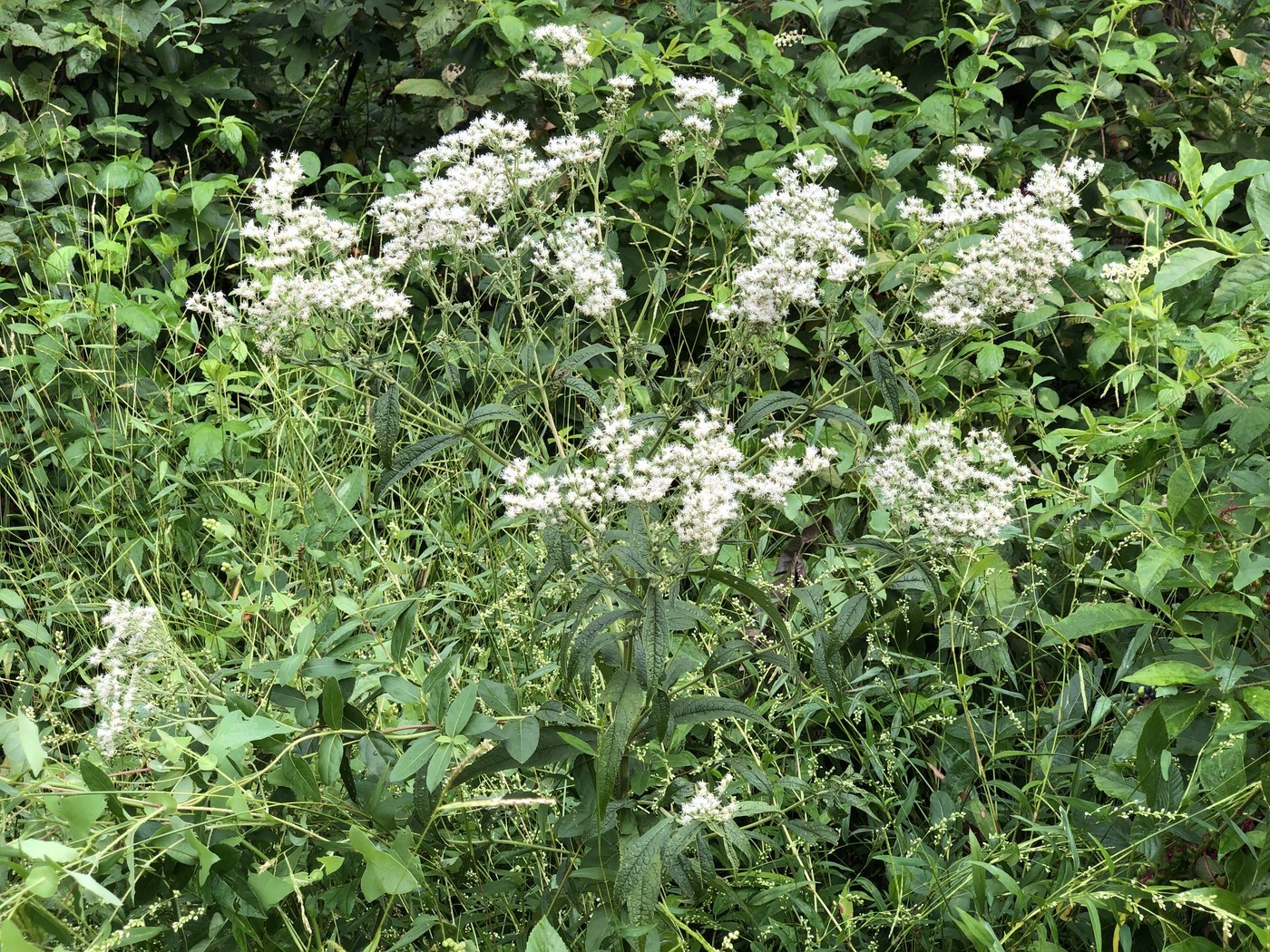
Boneset
Eupatorium perfoliatum
Boneset is a native North American wildflower with clusters of fuzzy white blooms and distinctive leaves that appear pierced by the stem. It is valued as a pollinator plant for moist gardens.
- Light
- Full sun to partial shade
- Water
- Moist to wet soil
- Difficulty
- Easy
Got a plant like this?
Identify any plant from a photo, free.
Overview
Boneset (Eupatorium perfoliatum) is an upright perennial herb in the aster family, native to eastern North American wetlands. It is easily recognized by its perfoliate leaves, paired leaves fused around the stem so the stem appears to pass through a single leaf.
In late summer it bears flat-topped clusters of small, dull-white flowers that draw a wide range of bees, butterflies, and beneficial insects.
Its upright, colony-forming habit and reliable late-season bloom make it a favorite for native plantings and moist borders.
How to identify it
Distinguishing features:
- Perfoliate leaves: opposite, lance-shaped, wrinkled leaves united at the base so the stem appears to pierce them
- Hairy, sturdy stems reaching 0.6 to 1.5 m (2 to 5 ft) tall
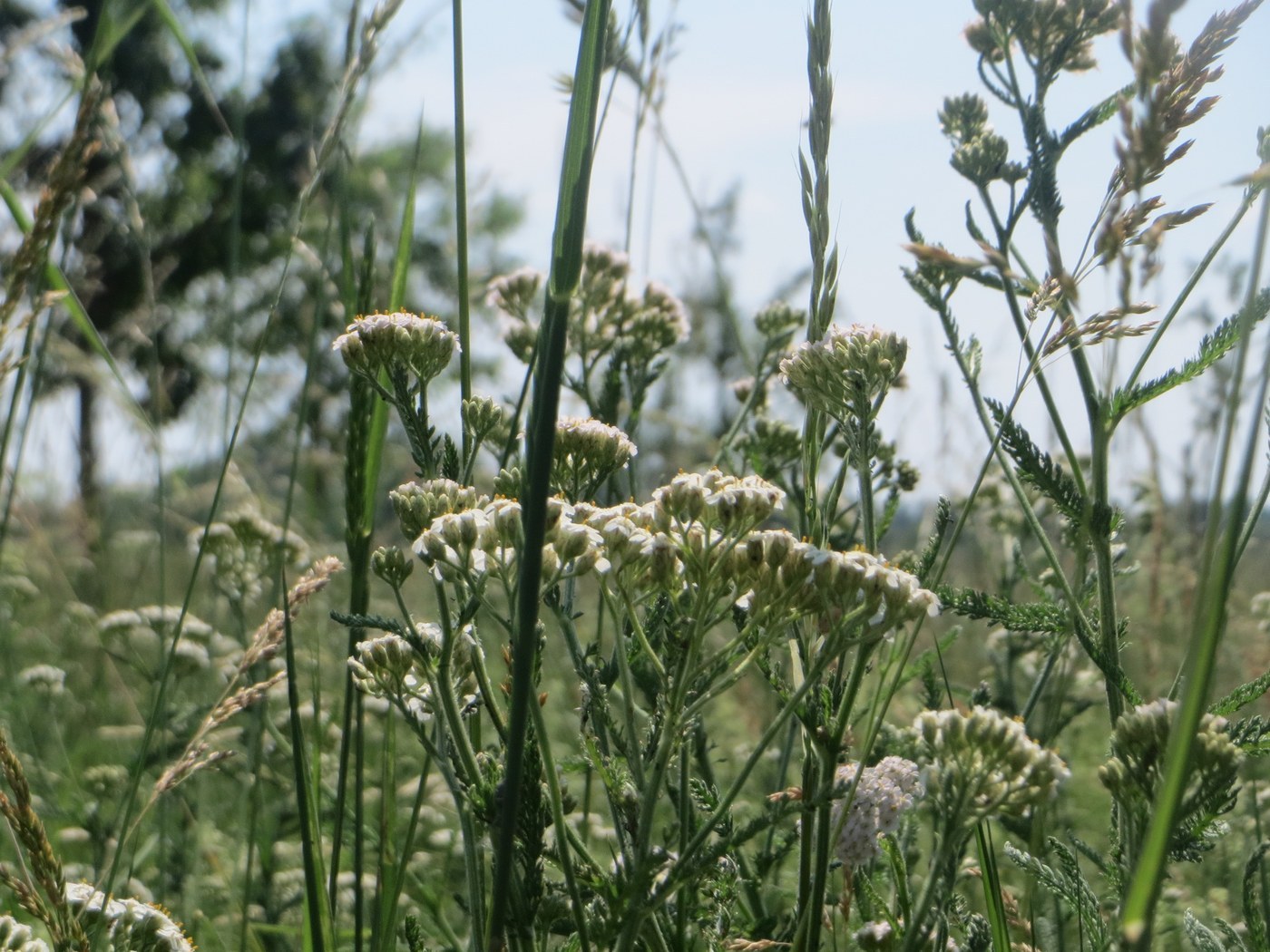
- Flat-topped clusters of fuzzy, dull-white flower heads in late summer to fall
- Leaves are rough-textured and conspicuously veined
- Grows in colonies in damp ground
Care & growing
An undemanding native perennial for moist, sunny spots.
- Light: Full sun yields the best flowering; tolerates light shade
- Water: Prefers consistently moist to wet soil; good for rain gardens and pond edges
- Soil: Adaptable; thrives in rich, damp loam but handles clay
- Temperature: Hardy roughly USDA zones 3 to 8
- Feeding: Generally unnecessary in decent soil
- Propagation: Easily grown from seed, division, or basal cuttings
Habitat & origin
Native to eastern and central North America, from Canada south to Florida and Texas.
It naturally occupies wet meadows, marsh edges, ditches, floodplains, and damp thickets. In gardens it is popular for native plantings, rain gardens, and pollinator borders in moist sites.
Frequently asked questions
Why do the leaves look like the stem goes through them?
The paired leaves are perfoliate, meaning they fuse at the base around the stem. This is the easiest way to identify Boneset.
Is it good for pollinators?
Yes, very. Its late-summer flowers attract a broad range of bees, butterflies, and beneficial insects.
What growing conditions does Boneset prefer?
It thrives in full sun and consistently moist to wet soil, making it well suited to rain gardens, pond edges, and damp native borders.
Boneset guides
In-depth guides for identifying, growing, and caring for Boneset.
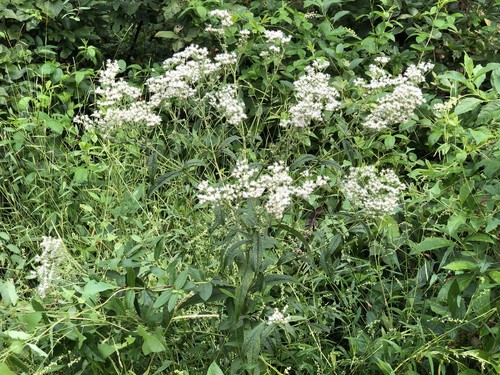
How to Care for Boneset
Grow boneset (Eupatorium perfoliatum), a moisture-loving native perennial with fluffy white blooms for pollinator gardens.
Boneset Identification Guide
How to identify common boneset (Eupatorium perfoliatum) by its distinctive perfoliate leaves that the stem appears to pass straight through.