
Boneset Identification Guide
How to identify common boneset (Eupatorium perfoliatum) by its distinctive perfoliate leaves that the stem appears to pass straight through.
Read the full Boneset encyclopedia entry →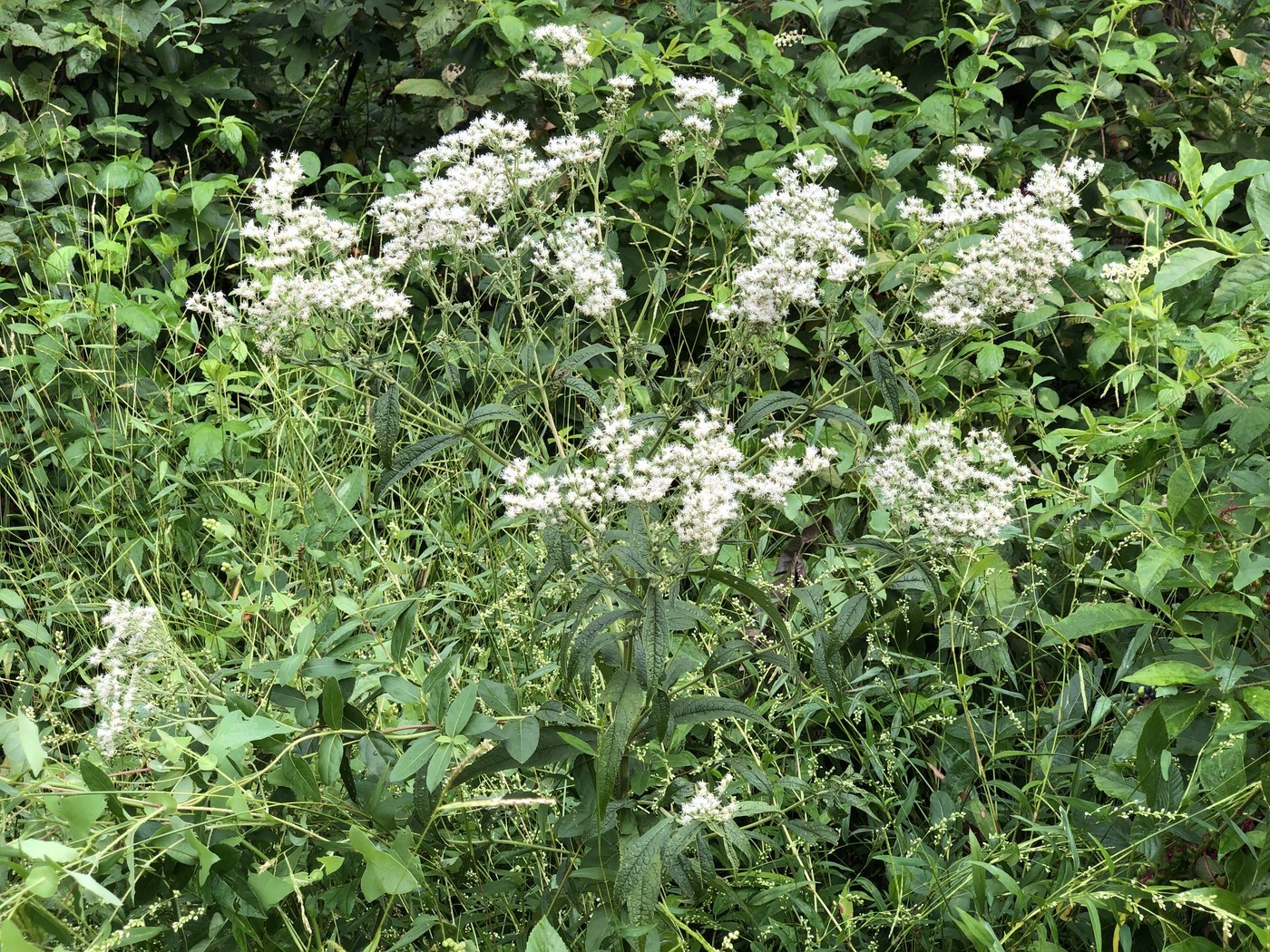
Key Identifying Features
Boneset (Eupatorium perfoliatum) is a native eastern North American wildflower of wet ground, easiest to recognize by one unusual trait:
- Perfoliate leaves — opposite leaves are fused at their bases so the hairy stem appears to pierce a single continuous leaf
- Flat-topped clusters of small, dull-white fuzzy flowers
- A rough-hairy stem 2-4 feet tall
The stem-through-the-leaf look is the single best field mark and instantly separates boneset from nearly everything else.
Leaves & Stems
Leaves are opposite, long and tapering (lance-shaped), wrinkled, and toothed, each pair joined at the base so the two appear to be one long leaf with the stem running through its center. They are 3-8 inches long, conspicuously veined, and rough to the touch. The stout, round stem is densely covered in spreading hairs and branches near the top. Crushed foliage has a faint bitter scent.
Flowers & Fruit
From mid-summer into fall (July-October), boneset produces broad, flat-topped to slightly rounded clusters (corymbs) of many tiny white flower heads. Each small head holds only disk florets (no ray petals), giving the cluster a fuzzy, off-white appearance attractive to bees, wasps, and butterflies. Seeds are small, dark, dry achenes tipped with white bristles for wind dispersal.
How to Tell It Apart from Look-Alikes
- Late-flowering thoroughwort (Eupatorium serotinum) and other white bonesets have separate, stalked leaves — the stem does NOT pass through them.
- Joe-Pye weeds (Eutrochium) have whorled (3-4 per node) leaves and pink-mauve, dome-shaped flower clusters.
- White snakeroot (Ageratina altissima) has stalked, heart-based, opposite leaves and grows in dry shade, not wet meadows.
If the opposite leaves fuse around the stem, it is boneset; if the leaves are individually stalked, it is a different thoroughwort.
Where You'll Find It
Boneset thrives in sunny, damp habitats: wet meadows, marsh and pond edges, ditches, low prairies, stream banks, and swamp borders throughout eastern and central North America. It tolerates standing moisture and is common where Joe-Pye weed and ironweed grow.
Quick ID Checklist
- Hairy stem 2-4 ft tall
- Opposite leaves fused around the stem (perfoliate)
- Leaves wrinkled, tapering, toothed, rough
- Flat-topped clusters of small dull-white flower heads
- Flower heads have no ray petals (fuzzy look)
- Blooming July-October in wet, sunny ground
When the stem clearly runs through a single joined leaf and the plant is topped with flat white flower clusters in a wet meadow, you have correctly identified boneset.
Frequently asked questions
What is the easiest way to identify it?
Look at the leaves: in true boneset the opposite leaf pair fuses at the base so the hairy stem appears to pierce a single long leaf — a perfoliate arrangement few other plants share.
How is it different from Joe-Pye weed?
Joe-Pye weeds have whorls of three to four leaves and pinkish dome-shaped flower clusters, while boneset has paired fused leaves and flat-topped white flowers.
Where does boneset grow?
In sunny, moist places like wet meadows, ditches, marsh edges, and stream banks across eastern and central North America.
What do boneset flowers look like?
From mid-summer into fall it bears broad, flat-topped clusters of many tiny dull-white flower heads made only of disk florets, giving a soft, fuzzy off-white look that draws bees and butterflies.